Which book changed the way you think, and what did it change?
Recorded Albie Sachs said elsewhere, not written here
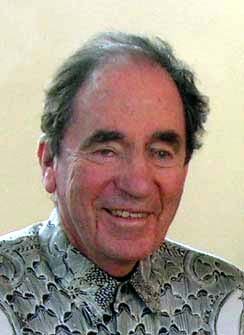
I’d been introduced to Freud through all this because I couldn’t understand why is it so difficult to be brave. There was something inside me that wanted to collaborate all the time with the people who wanted to destroy me, and I was searching for it, and I found there was a thing called the unconscious that everybody has. And you’ve got to be in touch with the unconscious to understand a lot of your behavior. And I read through volume after volume after volume of the collected works of Sigmund Freud.

Academy of Achievement recorded interview, American Academy of Achievement, 3 July 2009 source ↗

Others on this question

View all 25 →
Desmond Tutu Anglican Archbishop of Cape Town; chair of South Africa’s Truth and Reconciliation Commission; Nobel Peace Prize, 1984
But one of the things that my father did was to let me read comics. Now people used to say that’s bad because it isn’t — it spoils your English but, in fact, letting me read — I devoured all kinds of comics — fed my love for English and my love for reading but I suppose if he had been firm I might not have developed this deep love for reading and for English, which stood me in good stead when I later went into hospital for 20 months. I did have something to do. I had — as things maybe got a little bit more serious, I was given a diet — we didn’t have too many books but my father was keen that one read things like Aesop’s Fables and Lamb’s, Tales from Shakespeare . I didn’t read the originals but I read these stories that describe what Shakespeare was saying in the plays and that possibly was something that sharpened your appetite for later.
Recorded Academy of Achievement interview source ↗
Winston Churchill Prime Minister of the United Kingdom, 1940–1945 and 1951–1955; Member of Parliament 1900–1964
In history I decided to begin with Gibbon. Someone had told me that my father had read Gibbon with delight; that he knew whole pages of it by heart, and that it had greatly affected his style of speech and writing. So without more ado I set out upon the eight volumes of Dean Milman's edition of Gibbon's Decline and Fall of the Roman Empire . I was immediately dominated both by the story and the style. All through the long glistening middle hours of the Indian day, from when we quitted stables till the evening shadows proclaimed the hour of Polo, I devoured Gibbon. I rode triumphantly through it from end to end and enjoyed it all.
Recorded Chapter of his autobiography, written at Chartwell in 1930, Winston S. Churchill, My Early Life (Thornton Butterworth, 1930), Project Gutenberg Canada, October 1930 source ↗
Tim O'Reilly Founder and chief executive of O'Reilly Media
I think of another book that I read – what was it called? – Night Train to Lisbon. I wouldn’t say it’s in that same category, but sometimes there was just a line in a book that changed my life in some way, and it came at a critical juncture. The line was, “Given that there is so much in all of us, what happens to the rest?”
Recorded Tim Ferriss, The Tim Ferriss Show podcast, 3 February 2018 source ↗
Wendy Kopp Founder of Teach For America; chief executive of Teach For All
The Fountainhead , I think, pretty much saved me in the initial years of Teach For America. I loved that book, but I’m not sure books were the seminal thing that guided my path. ... I think it was sort of about “the creator against the world,” and I was probably feeling at that point that I was up against lots of boulders, to pull off the big idea of Teach For America.
Recorded Academy of Achievement recorded interview, American Academy of Achievement, 17 September 2013 source ↗

More from Albie Sachs

View profile →

More on taste & recommendation

Also answered this

Mohamed ElBaradei, Sebastian Junger, Winston Churchill, Edmund Hillary, George H. W. Bush, Jimmy Carter

Search the directory for somebody in particular.

Explore further

Report this answer