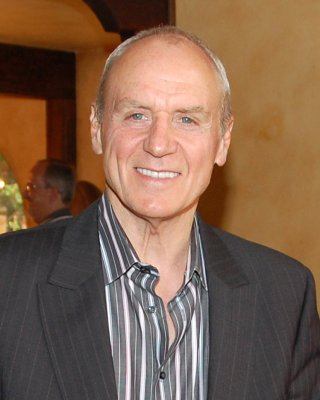
Every bad thing that’s happened, apart from Mum and Dad dying, it’s always led to something better. Always.
Matthew Amer, Official London Theatre, 17 April 2008 source ↗
Every bad thing that’s happened, apart from Mum and Dad dying, it’s always led to something better. Always.
Matthew Amer, Official London Theatre, 17 April 2008 source ↗
Well, I'll be honest with you. I was a theoretical physicist but my Ph.D. work was on a problem that was not particularly interesting to me at the time. And I used to subscribe to Scientific American and I found that there were all these wonderful discoveries happening in biology and I also knew that a number of physicists had gone into biology and been successful. So, I decided to switch.
Right, it’s true, it’s true. We didn’t think of ourselves as that, you know everybody … There’s an element of craft in the work, you know, we’re putting one foot in front of the other. Trying to get more experiments to work than fail but in hindsight, yes, there’s some truth in that.
No, no. Well, you know, biology is such a complex system. It’s totally different from the engineering. We cannot design. Many people tried to find the therapy for cancer, but all failed. And myself, I never expected my research, working on the immune system, would lead to the cancer therapy. But, in a sense, I’m very fortunate that I also thought about it. You know, you have to try many things and if you’re lucky you can hit, but you have to pursue. That’s my feeling.
That's a real challenge and a real issue. Reading the statistics, they had a ranking of quarterbacks, and the statistic was the percentage of a touchdown drive after an interception. To me, that is a telling statistic. The guys that have a high percentage are the guys that have short memories. They talk about having amnesia as a quarterback. You better move along from it. It is hard to say you forget about it, because you want to learn from it. You want to address it. You can't just say it never happened.
Breathlessness.
Retiring from playing rugby.
I have never been happier than I am now. As for when I was happiest in my work, playing King Arthur in Spamalot in the West End.
To never, never, never give up.
I would not get married until I was in my 30s.
Their clothes' lines. The oil crisis could be solved if people didn't use dryers.
François Ozon, David Lynch, Geoffrey Rush, Twyla Tharp, George Lucas, Agnès Varda
Search the directory for somebody in particular.