The question

What important truth do very few people agree with you on?

Originally asked

Peter Thiel, to job candidates, Zero to One, chapter 1, 2014

Peter Thiel, Zero to One, chapter 1, where it is introduced as his job-interview question. Thiel supplies his own standard: a good answer takes the form "most people believe x, but the truth is the opposite of x."

You answer as yourself. Nobody on FLAPSS answers as anybody else.

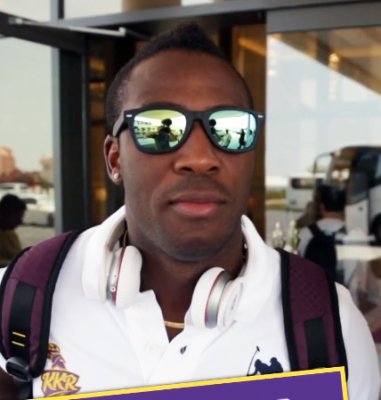
Andre Russell

Jamaican cricketer; West Indies all-rounder and twice a T20 World Cup winner

Recorded said elsewhere, not written here
I believe in Test cricket, but at the end of the day, I’m a professional. It wasn’t part of my journey. I have no regrets because it wasn’t me that turned my back.

interviewer, The Guardian interview, 5 June 2025 source ↗

Others on this question

View all 48 →
Hiroshi Mikitani Founder, chairman and chief executive of Rakuten
Because there are so many business we do across the boundaries. So, I think this is the only way a Japanese service company can really, truly become the global organization.
Recorded Zain Verjee, Talk Asia, CNN, 2 February 2011 source ↗
Adam Zagajewski Poet and essayist
Why ardor? Because, I think, there’s not enough of it in our time. Or, at least in our literature. There’s too much lukewarm irony, too much sophisticated indulgence. The tragic dimension disappears in this intellectual environment. That’s why ardor is to be defended.
Recorded Anna Maria Hong, Poets & Writers, 13 August 2004 source ↗
Cheryl Strayed Author of Wild and Tiny Beautiful Things
But a running theme has been how many men have said something along the lines of, “Wow, I was so surprised I loved your book, because I’m a man.” These men mean no harm—I don’t take those comments personally—and yet the fact that they were surprised that they loved a book by and about a woman is an indication of the sexism women writers are up against every time they write.
Recorded Elissa Bassist, Creative Nonfiction source ↗
Abby Wambach United States international footballer, 2001–2015
For power to stay in power, the powerful have to impose some level of fear over the people that they are in power over. If you have power, you make decisions and if you make decisions you can probably keep power.
Recorded Matthew Hall, Guardian interview, The Guardian, 9 April 2019 source ↗

More from Andre Russell

View profile →

More on values & belief

Also answered this

Peyton Manning, Andy Murray, Abby Wambach, Pete Rozelle, Amitav Ghosh, Henry R. Kravis

Search the directory for somebody in particular.

Explore further

Report this answer