What is the best advice you have ever received?

Originally asked

Vogue, to one guest at a time, on camera, 73 Questions

A repeated rapid-fire prompt in Vogue's 73 Questions, verified in separate English- and Korean-language episodes.

You answer as yourself. Nobody on FLAPSS answers as anybody else.

Recorded Helen Cammock said elsewhere, not written here
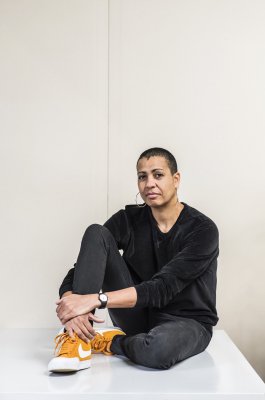
Right, I went back as a mature student to art school, and I was advised to use my train journeys and commutes, or to just take time in the morning before work to sit down and write something. That was, I think, the beginnings of understanding what it meant to have a writing practice.

The Talks, 19 March 2022 source ↗

Others on this question

View all 28 →
Bill Clinton 42nd President of the United States, 1993–2001
He knew that it would be unpopular in Arkansas. You know, we’re just a state dominated by the Scotch-Irish, who provided 25 percent of all the soldiers who ever fought in uniform for America since the revolution. One of our counties had the highest fatality rate of any county in America in World War II. A lot of poor African American kids were in the military, and their parents didn’t want to know it was for nothing. I mean it was like an across-the-board challenge, and he believed — he had a very clear view of it, and I thought it was unusual because Fulbright had been more willing than I wish he had been to trim his sails on civil rights for a long time. And he said, “Yes, I disagree with them on that too,” but he said, “If you want to be a representative, and they know something, as much about something as you do — and they do on this — sometimes you have to give in.” “But on this, if I know more than they do, I am doing an immoral thing to preserve my political position at the expense of doing what’s right for their children over the long run.” And in the end, it played a significant role in the undoing of his career, but he did an enormous service to the country in the meantime. And I think — he lived to be 87 — he lived long enough for me to become president and give him the Medal of Freedom, and I think he died at peace with himself and the decision he made.
Recorded Academy of Achievement interview source ↗
Jimmy Carter 39th President of the United States, 1977–1981; Governor of Georgia 1971–1975
And my sister, whose name is Ruth Stapleton, was a famous evangelist. She wrote four or five books, and she would give lectures to 50,000 people at a time. She and I had a long walk in the woods on my farm, and she said, “Jimmy, quite often, when you have a blow to your pride and a horrible defeat, you can either give up, or you can look on it as a way that God opens to you to do different and even better things.”
Recorded Academy of Achievement interview, Atlanta, Georgia, 25 October 1991 source ↗
Claudio Miranda Cinematographer
Harris taught me a lot in that way. Another piece of advice from him was: “Don’t be afraid if your initial plan is not the best plan.” Say you’ve spent all this time and resources in one way, and all of a sudden this little simple idea comes up — do that! Don’t get trapped! Keep your eyes always open.
Recorded The Talks, 14 January 2026 source ↗
Sonia Sotomayor Associate Justice of the Supreme Court of the United States, 2009–present
He asked me to go through the evidence of the cases, which I did. And at the end of it he said, “Well, you have one thing missing.” I said “What, I thought I covered all of the bases. I made the best arguments that I think the evidence would support.” And he looked at me, and he said, “That may all be true, but you’re missing passion. You related this crime and your evidence in a very impersonal way. How did you make the jury want to convict?” I said “Well, the judge charges them, tells them they have to convict if I prove my case.” And he said, “No, sentencing, not sentencing, finding someone guilty is a huge responsibility. You have to make people believe it’s what they have to do. And you have to make them believe that the evidence that you’ve presented gives them basically no choice.” And so I said, “How do you do that?” And he explained to me that it’s in the manner that you present your case. It’s in the manner that you show how passionately you believe in what you’re doing. And in how much you believe that you’ve actually proven your case and that they must return a verdict of guilty. And his words have led me to believe that that passion is what guarantees success in life.
Recorded Academy of Achievement interview, Washington, D.C., 6 December 2016 source ↗

More on time & hindsight

Also answered this

George H. W. Bush, Robert J. Lefkowitz, Jimmy Carter, Mellody Hobson, Frederick W. Smith, Hilary Swank

Search the directory for somebody in particular.

Explore further

Report this answer