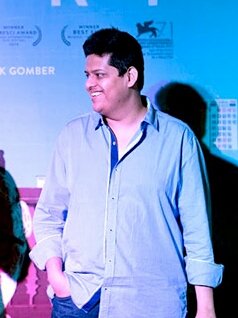
I start with the first sentence. A maddening answer, and, for my own sake, I wish I had a better one. But it’s the only way I know how: one sentence on top of the other, one foot in front of the other. In that way, writing does feel exploratory to me. I never start with a map in my head or even a destination. All I have is a sense that I’m heading in an interesting direction.
Originally asked
The Paris Review, to novelists and poets, The Art of Fiction
A recurrent craft question in The Paris Review's Art of Fiction interviews; wording varies between character, theme, first sentence, image, and idea.
You answer as yourself. Nobody on FLAPSS answers as anybody else.
The Talks interview, 22 December 2021 source ↗
Others on this question
View all 63 →Good question. The novel began with Sten and his story, which then suggested the rest. I always follow that first line and always write organically, in sequence. This allows me to make the discoveries I need to as I progress. I don’t really concern myself with questions of which character takes precedence—again, that lies outside my purview. I see this as a kind of ensemble piece, I suppose, like the novel that precedes it, San Miguel , told from the perspective of three women.
It’s completely spatial. I follow Graham on that a lot. I really think that painting is about space and proportions and where things go; it’s what painting is. Form, if it isn’t the right color, it is not in the right place. And you know you can actually change the relationships a lot by changing the color a little. Yesterday, something happened in my studio. I realized that new things come to you all the time when you work in art. I had forgotten that if Graham wanted to make something slightly off-white, he used violet instead of greying it, and it’s really good. So, last night I remembered that, and the painting worked out.
Yeah, I think it’s a combination of all those things, really. I think narrative is significant and important to me. And I think most of the narratives that really struck me were about history or were narratives that I received in ways that were abstract, so they were kind of nonlinear narratives that I pulled from, for example, music. You know, music was a huge inspiration to me growing up, I grew up listening to a lot of reggae music, a lot of dancehall, dub. If you listen to that music, I think one of the things you realize is that those particular artists, those legendary artists who were making that music in the ’70s and ’80s, and even to some degree in the ’60s, were really good at provoking you to go on your own journey with the information that they were giving you in the music. For me, one of the things about artistic practice is not about providing some solution, but instead provoking curiosity about some things that you should find on your own and not be led to.
More on craft & work
- What is the worst job you have done? 230 answers
- What do you consider your greatest achievement? 192 answers
- How do you know when a piece of work is finished? 67 answers
- What do you do when you feel creatively blocked or stuck? 66 answers
- How much rewriting or revision do you do? 46 answers
- What is the part of your job that people would be surprised is most of your job? 41 answers
Also answered this
Ephraim Asili, Sam Mendes, Alice Sheppard, Robert Wilson, Noah Baumbach, Ja’Tovia Gary
Search the directory for somebody in particular.
Explore further
- All craft & work questions
- The The Art of Fiction questionnaire — 3 questions from the same format
- Explore the archive — by field, age, era, and subject