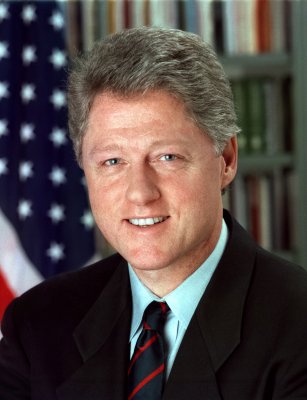
What is something you were told by a parent, teacher, or mentor that you still repeat to yourself?
Recorded Bill Clinton said elsewhere, not written here
And I think it had something to do with my grandmother and my mother being nurses, and my mother once said to me, “Once you see people bleed it’s hard to believe there’s much difference in race.

Academy of Achievement interview source ↗

Others on this question

View all 23 →
Anthony Fauci Physician and immunologist; director of the U.S. National Institute of Allergy and Infectious Diseases, 1984–2022
And what this person told me was that what you need to do is that, when you go to the White House, always say in the back of your mind that this may be the last time I’m going there because I might have to tell this president something he doesn’t like.
Recorded Academy of Achievement recorded interview, American Academy of Achievement, 22 August 2017 source ↗
Henry R. Kravis Financier; co-founder of Kohlberg Kravis Roberts & Co.
One person that is my role model is my father. ... He’s a man who taught me something very important. And that was — give back to society what you’ve taken out.
Recorded Academy of Achievement interview, 12 February 1991 source ↗
Neil Sheehan War correspondent and author; Pulitzer Prize winner, 1989
One of my editors once said to me, “If you get invited to the White House, take your notebook with you,” and he meant it. It’s something one has to always remember because when you stray off the path, you do a disservice to the American public.
Recorded Academy of Achievement recorded interview, American Academy of Achievement, 19 June 2007 source ↗
Susan Butcher Dog musher; four-time winner of the Iditarod Trail Sled Dog Race
One of my favorite lessons is best summed up in the words of an old Athabascan Indian who told me, “There are many hard things in life, but there is only one sad thing, and that is giving up.”
Recorded Academy of Achievement interview, 29 June 1991 source ↗

More from Bill Clinton

View profile →
Question Which book changed the way you think, and what did it change? Taste & recommendation
Oh, yeah. I spent a lot of time in the public library. When we moved I was seven years old, and I got a library card, and I used to go to the library all the time, and I loved all the, you know, standard children’s novels. I love those Biblical epics, but my favorite books when I was a child were books about Native Americans: tribal leaders; Osceola, who brought the alphabet to the Seminoles; Chief Joseph of the Nez Perce; and the standard ones that were heroes in all the Western movies. But I was fascinated. The Cherokee had moved across my state on the Trail of Tears when they were expelled from the East and then moved over to the reservation lands. I became fascinated with what happened to the Native Americans and the struggle that many were undertaking then — and they still try to preserve their traditions and their way of life, their ties to the land, and still provide education and participate in the life of the country. I was interested in it then. I’m interested in it now. The Native Americans in our country who don’t have casinos on their tribal lands still have the lowest per capita income of any ethnic group in America. It’s a disgrace, and when I became president I was the first president since James Monroe in the 1820s to invite all the tribal leaders to the White House, and it was fascinating. Some of the ones who came from lands that had casinos flew in on their private jets. A lot of the others had to pass the hat in the reservation to raise enough money to pay for a plane ticket, and they all came, and we began to meet, and I learned a lot from them.
Recorded Academy of Achievement interview source ↗
Question What is the hardest thing that has happened to you, and what did you carry out of it? Failure & regret
And because Fulbright was the chairman of the committee he had an automated — some sort of automated device that allowed the Pentagon to send him, every day, a list of the people who’d been killed in Vietnam from Arkansas. So I would go check it every day. Four of my high school classmates were killed, including, as I said, the son of my guy who was my Sunday school teacher for nine years. And I also knew, because I had to carry the stuff around, that not everything the government was claiming about the progress on the battlefield was true, and it’s kind of a crazy burden for a kid my age. I felt guilty I wasn’t there, and it felt futile to go. It was an awful feeling.
Recorded Academy of Achievement interview source ↗
Question What is the thing you are best at that nobody watching can see? Craft & work
Well, it wasn’t a game to me. We were taught, interestingly enough, given the current state of political affairs, that you should try not to hate anyone, that hatred was a sickness and a weakness, and that there were very few people who were completely evil, so you should go out of your way to figure out what makes them tick and see if you can find some way to communicate with them. I learned that more with my family — even before I was old enough to know what I was doing —when I was eating meals, my grandmother’s brother and his family had — they had four kids, and they always fed a lot of people, and we ate there a lot, and they would talk about whatever had happened that week. And the kids could talk, but they had to prove they could listen first, so before I could tell a story I had to recount what I had just heard, because if you weren’t listening, nobody wanted to listen to you. And it was like a primer in human nature, and I was fortunate in having people all along the way who tried to help explain other people to me, and I developed an obsessive interest in doing it.
Recorded Academy of Achievement interview source ↗
Question If you could edit your past, what would you change? Failure & regret
There was another bill that I think did make a contribution to the crash that I wish I had vetoed for symbolic reasons. They would have overturned my veto. And that was a bill that allowed banks to engage in all these derivatives, like collateralized debt obligations, without sufficient collateral. Now, it passed overwhelmingly. Almost every Democrat voted for it, and we all wanted it because it reauthorized something I’ll call the Community Reinvestment Act. The Community Reinvestment Act, if the government enforces it, requires every bank in America to reinvest some money where they take deposits. And we’ve got 800 billion dollars of investment under it when I was president. Ninety-six percent of all the money that had ever been invested under it, going back to the 1970s, was in those eight years. See, it was a goldmine of broad-based prosperity, and I wanted it badly, and a lot of other Democrats did, and we voted for it, but it would have been overridden, the veto. And I wish I had vetoed it because I never believed — I had a big argument with Alan Greenspan. He said, “But these things only affect investors with 100 million dollars or more. They can take care of themselves.” I said, “Yeah, I don’t care if they lose 100 million, but you don’t understand. If 100 of them lose 100 million, or 1,000 of them lose 100 million, it can wreck the whole rest of the economy,” which is essentially what happened in the housing crisis. So I wish — it would have become law anyway. I wish I had vetoed that and sounded the alarm.
Recorded Academy of Achievement interview source ↗
Question What is one of the best or most worthwhile investments you have ever made — of money, time, or energy? Money & investment
My job was basically to be a delivery boy for all kinds of things, but they also — because I was at Georgetown and studying international affairs, I was assigned to read six newspapers a day and clip the most relevant articles. This is the technology we used. You couldn’t scan articles. There was no “online.” There was nothing, right? So I would read the newspapers, clip the articles I thought they ought to read, put them on a routing slip, which had on it the names of the senior staff of the committee and all the senators who were committee members. And I would send it to the senior staff, and they would decide whether to send any of them on, but I don’t think I’d have won a Rhodes Scholarship if I hadn’t been a clerk on the Foreign Relations Committee. Nobody else I was competing with read six newspapers a day, and they actually paid me good money to read The Washington Post, The New York Times, The Washington Star, which existed then, The Baltimore Sun , The St. Louis Post Dispatch , and then we alternated — and — oh, and The Wall Street Journal . We read them every day. Those were the six papers we read. I did, and then that’s what the senators got.
Recorded Academy of Achievement interview source ↗

More on time & hindsight

Also answered this

Jimmy Carter, Norman Borlaug, Henry R. Kravis, Willie Mays, Suzanne Farrell, Edmund Hillary

Search the directory for somebody in particular.

Explore further

Report this answer