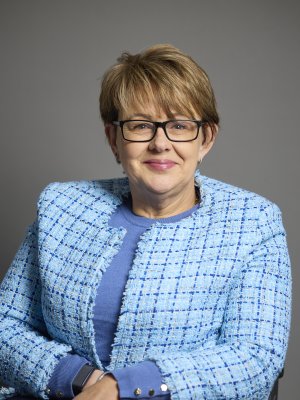
What is one of the best or most worthwhile investments you have ever made — of money, time, or energy?
Recorded Tanni Grey-Thompson said elsewhere, not written here
In the whole of my career, there were very few training sessions that I missed. Even when I was pregnant, I trained all the way through. I was back training when my daughter was two weeks old. You've got to commit to this, because it can be really easy to walk away from the track, convince yourself, "Oh, well, I'll do it tomorrow, I'll catch up". You can't and what I say is it's all pennies in the bank. When I say that to my daughter, she rolls her eyes at me, but you put a couple of pennies in every day and when it matters, then you've got this bank to call on, as opposed to you can't stick them all in two weeks before.

Pursuing Better Together podcast, Arch Insurance, 25 May 2022 source ↗

Others on this question

View all 41 →
Nobu Matsuhisa Chef and restaurateur
My training took seven years. I didn’t learn how to make sushi for the first three years. I only got two days off a month, and slept on the restaurant floor. But I loved the job. I’d go to the fish market every morning. I got to open the restaurant and see the customers. I’d watch my mentor making sushi and would copy him under the table, practising with my fingers.
Recorded The Observer / The Guardian, 12 April 2025 source ↗
Neil Sheehan War correspondent and author; Pulitzer Prize winner, 1989
I’m glad now I did it. It took up all my middle years. I started it in 1972, and I published it in 1988, and my middle years all went into it, but I am glad I put them into it. Otherwise I’d have just been writing newspaper stories. It’s a worthy profession. It’s a good profession, but the newspaper, after it’s published, is something to wrap the fodder in the next day. ... A book sits on the shelf, and I really wanted to do this. I’m glad that I had done it.
Recorded Academy of Achievement recorded interview, American Academy of Achievement, 19 June 2007 source ↗
Shinya Yamanaka Stem cell biologist; Nobel laureate in Physiology or Medicine, 2012
However, it was very natural that a failed surgeon with little experience in molecular biology had a hard time finding a position. A turning point came when I got a fax from Thomas Innerarity at the Gladstone Institute of Cardiovascular Diseases in San Francisco. After a short telephone conversation, Tom was brave enough to give me a postdoctoral position in his lab! Working at Gladstone was one of the best decisions I ever made in my life.
Recorded Laureate-written autobiography for Les Prix Nobel, Nobel Prize Outreach, 1 December 2012 source ↗
Elizabeth Iro Nurse and midwife; first Chief Nursing Officer of the World Health Organization, 2017–2022
And like most nurses, I found myself running into certain frustrations. I started to look for ways to make a better argument, to advocate more convincingly for the people under my care. That led me to read up on civil law and produce a few research papers, and then I did a master’s degree in health science and also an MBA. All of that allowed me to see other sides of the problem. It also showed me how issues affecting nurses could be elevated by approaching ministers and other people in power with sound, evidence-based arguments.
Recorded Published Q&A, Proto Magazine (Massachusetts General Hospital), 20 May 2021 source ↗

More from Tanni Grey-Thompson

View profile →
Question What is the part of your job that people would be surprised is most of your job? Craft & work
We were training 12 to 15 times a week, 50 weeks of the year. I think sometimes people see you compete at the Paralympics or other amazing places around the world and think that is what you do all the time. There is an element of that, but a lot of it is just really boring and repetitive. The vast majority of your time as an athlete is spent on the road or in the gym.
Recorded International Paralympic Committee, 15 September 2016 source ↗
Question What is an unusual habit or an absurd thing that you love? Daily life
One thing that I did was race against the British men a lot and they used to push me round the road; they used to make my life really hard but then when I was racing against the best women in the world, I'd been through just about every experience you could imagine. I remember this one race – a half marathon – where my husband literally pushed me into every kerb he could find, he pushed me into every corner, you know, messed around and tried to drop me out the back of the pack. Then when you're in a race that really matters, if that happens, you've got the skills to deal with it… you need to have practised everything you possibly could in the lead up to it.
Recorded Bernardo Moya, The Best You Magazine, 21 August 2015 source ↗

More on money & investment

Also answered this

Sachin Tendulkar, Lewis Hamilton, Kobe Bryant, Dan Carter, Katie Taylor, Roger Federer

Search the directory for somebody in particular.

Explore further

Report this answer