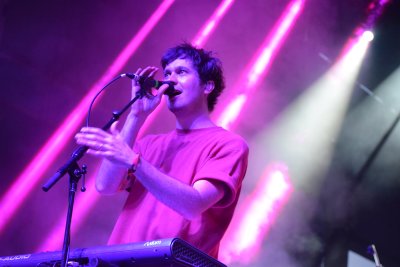
I usually start with a structure. The structure is quite rigid. So I have a strong form or frame. A work like Einstein on the Beach is like that: Act One, Two, Three, Four. Act One is A and B. Act Two is C and A. Act Three is B and C. And Act Four is all three together, A, B, and C. So, I knew it was going to be based on theme and variation, and once I get that, I can be freer to fill in the form. Without it, I don’t know how to fill it in – it’s like an architect builds an apartment building: you can live in the building, I can live in the building, other people can live in the building. They each have their apartment to their own liking, but the building has a cohesion because the architect has built it.
Originally asked
The Paris Review, to novelists and poets, The Art of Fiction
A recurrent craft question in The Paris Review's Art of Fiction interviews; wording varies between character, theme, first sentence, image, and idea.
You answer as yourself. Nobody on FLAPSS answers as anybody else.
Max Freedman, The Creative Independent interview, 27 September 2024 source ↗
Others on this question
View all 70 →At first I’ll think of stuff in my head for a while. The more I think of an idea, the more promising it is— it just naturally occupies space in my brain. Then I start making notes with pen and paper. If it’s a story, it’s more like a moment, or just it’s kind of a more fleeting idea. And if it’s a novel, it’s something that I can see approaching in a lot of different ways, and sticking with for two or three years. I might write a scene or two and just kind of see how it feels. Then I will type an outline. That’s when I really feel like I have a path forward, even though I don’t feel like I have to stick to the outline, but it is very reassuring to me to have it.
I’m very much like Hans, yes! I think part of the reason is just because I learned from Hans, he has been a big mentor and a great friend for me, and I remember when he told me this, it actually made me feel comfortable in my process! We’re the same way, and so that actually made me relax a bit. Once I realized that, it helped me to see that the steps I need to take, you know, sitting down, thinking about what were my initial ideas? What instrumentation do I need? You just place yourself into the project and the ideas will hopefully come. Sometimes it comes easier than other times, sometimes it’s tough especially when a deadline is looming… But that’s the nature of the game. I just try to do the best I can do in the moment.
Having bought the colours, an easel, and a canvas, the next step was to begin. But what a step to take! The palette gleamed with beads of colour; fair and white rose the canvas; the empty brush hung poised, heavy with destiny, irresolute in the air. My hand seemed arrested by a silent veto.
More on craft & work
- What is the worst job you have done? 232 answers
- What do you consider your greatest achievement? 193 answers
- How do you know when a piece of work is finished? 69 answers
- What do you do when you feel creatively blocked or stuck? 69 answers
- How much rewriting or revision do you do? 51 answers
- What is the part of your job that people would be surprised is most of your job? 47 answers
Also answered this
Haley Blais, Danny Elfman, Black Belt Eagle Scout, Ramin Djawadi, Jóhann Jóhannsson, Bells Larsen
Search the directory for somebody in particular.
Explore further
- All craft & work questions
- The The Art of Fiction questionnaire — 3 questions from the same format
- Explore the archive — by field, age, era, and subject