My mother in that way I’ve described. My daddy taught me how much a man could do in dealing directly with a multiplicity of responsibilities. Outside my family, the main person, outside of my father, the main man who has had an influence on my life is Admiral Hyman Rickover. I was one of the two young officers in the program to build atomic submarines. There were two built: the Nautilus and the Sea Wolf. I was in charge of the crew that was helping to build the Sea Wolf and building the nuclear power plant that later became a prototype. Rickover was a man who demanded absolute excellence and total dedication from all those who worked under him. He demanded as much from himself. And so he set a standard of commitment and perfection in life that I had never experienced before. He really had a great impact on my life.
Which teacher, parent, coach or friend most made you who you are, and what did you learn from them?
Question
What is something everyone in your world agrees about that you think is wrong?
Values & belief
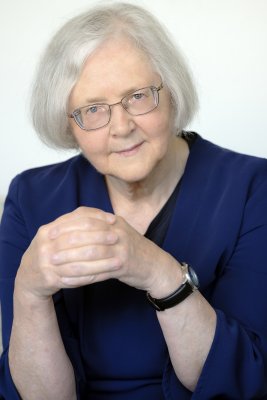
My parents were both physicians. The family physician type, not fancy researchers or anything like that. I picked up a sense of this idea that you do serve, you serve people actually. It’s an interesting thing. I don’t think they ever said that in any explicit term, but you could just see in terms of how — individual patients weren’t discussed — but just certain things were discussed, and you could see that that was important that you were doing something bigger than yourself. You were doing something for society. For some reason I was able to pick up on that, so I think that influenced. Especially my mother, who was a physician, who spent a lot of her hours in the office talking to her patients, and she would say talking was so important for many of her patients. Sometimes there weren’t even obvious things that a physician could do something about, but she said it meant a lot to them.
Academy of Achievement interview source ↗
Others on this question
View all 59 →
Jimmy Carter
39th President of the United States, 1977–1981; Governor of Georgia 1971–1975
Willie Mays
Baseball centre fielder; twice National League Most Valuable Player
I had an uncle that played a great role in my life as far as sports. Like I said, in the South we would always play like three or four o’clock in the afternoon. I would have to go to school, and he would do my chores. When I say chores, that means I had to cut the wood, I had to wash the clothes; I had to do everything that everybody in the house had to do. So he would do all that stuff for me, and I was very happy about it because I wasn’t about to mess my arms up and my hands, so I could go and play ball and didn’t have to do too much.
Denton Cooley
Cardiothoracic surgeon; founder of the Texas Heart Institute
The man who inspired me most, I think, was Dr. Alfred Blalock, who was professor of surgery at Johns Hopkins. He was a rather simple man with a burning curiosity. It was through his curiosity that he made many real contributions to medical science. I didn’t think he was an especially brilliant man, I just admired him for his curiosity, and for his perseverance.
Robert J. Lefkowitz
Physician and biochemist; Nobel laureate in chemistry for work on G protein-coupled receptors
One in particular, Mrs. Gordon. I hated her. I took AP English. The AP courses were just starting in the ’50s. And you could take a maximum of two. I took Chemistry and AP English. Today, the kids come into Duke, they have ten, 12, 15 AP courses. They start taking AP courses in their first year of high school. It’s absolutely amazing. Mrs. Gordon taught AP English. And she took a disliking to me for some reason early on, and she didn’t like the way I wrote, so she gave me very bad grades on all my essays. She pounded into me about how to write clear, effective, succinct English. And I learned those lessons well. But what I remember — and I pay her a tremendous tribute for that because there’s no more important skill, certainly for a scientist, but really for almost any profession, than to be able to express yourself clearly and succinctly. And I think she really taught me that.
More from Elizabeth Blackburn
View profile →Yes, and, I'll turn your comment around and say it's fairly close to the biological ratio of men and women. It's all the other fields that are aberrant. … This is the normal field, right? Because it is a much more even distribution between men and women, absolutely.
Recorded
Adam Smith, Telephone interview recorded immediately after the prize announcement, Nobel Prize Outreach, 5 October 2009
source ↗
More on relationships
Also answered this
Christiane Nüsslein-Volhard, Paul Farmer, Eric Lander, Robert S. Langer, Benjamin Carson, Gertrude B. Elion
Search the directory for somebody in particular.
Explore further
- All relationships questions
- Explore the archive — by field, age, era, and subject