My job was basically to be a delivery boy for all kinds of things, but they also — because I was at Georgetown and studying international affairs, I was assigned to read six newspapers a day and clip the most relevant articles. This is the technology we used. You couldn’t scan articles. There was no “online.” There was nothing, right? So I would read the newspapers, clip the articles I thought they ought to read, put them on a routing slip, which had on it the names of the senior staff of the committee and all the senators who were committee members. And I would send it to the senior staff, and they would decide whether to send any of them on, but I don’t think I’d have won a Rhodes Scholarship if I hadn’t been a clerk on the Foreign Relations Committee. Nobody else I was competing with read six newspapers a day, and they actually paid me good money to read The Washington Post, The New York Times, The Washington Star, which existed then, The Baltimore Sun , The St. Louis Post Dispatch , and then we alternated — and — oh, and The Wall Street Journal . We read them every day. Those were the six papers we read. I did, and then that’s what the senators got.
What is one of the best or most worthwhile investments you have ever made — of money, time, or energy?
Question
What made you decide to stop something you were known for, and how did you know it was time?
Time & hindsight
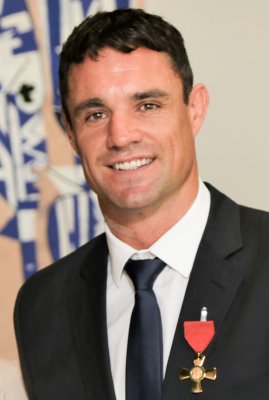
When I started getting my first fan letters, I made a point to try to respond to every single one. The wins always felt that much more special because I knew I was making so many people happy. And losses hurt that much worse because I truly was invested in not wanting to disappoint those who supported my side. But more than anything, I always appreciated the fact so many fans invested their emotions in my performance.
Retirement letter, The Players' Tribune, 20 February 2021 source ↗
Others on this question
View all 40 →
Bill Clinton
42nd President of the United States, 1993–2001
Demis Hassabis
Co-founder and chief executive of Google DeepMind; Nobel laureate in Chemistry
I think chess — actually, a number of things that I learned when I was young — it wasn't so much the chess itself; it was the skills that you were training while you were playing chess. So problem-solving, imagination, creative thinking, strategic thinking, all of these things — if you play chess to a high level, what you're really honing is those meta-skills. And I realized from quite young, that's one of the reasons I liked chess was this is a great practice for me to get good — sort of like a mental gym, if you like — to get really good at those other skills, which you could then translate to all sorts of other subjects like science or business.
Anne Enright
Novelist and short-story writer
Remember, if you sit at your desk for 15 or 20 years, every day, not counting weekends, it changes you. It just does. It may not improve your temper, but it fixes something else. It makes you more free.
Yvon Chouinard
Founder of Patagonia
I never wanted to be a businessman. I started as a craftsman, making climbing gear for my friends and myself, then got into apparel. As we began to witness the extent of global warming and ecological destruction, and our own contribution to it, Patagonia committed to using our company to change the way business was done. If we could do the right thing while making enough to pay the bills, we could influence customers and other businesses, and maybe change the system along the way.
More from Dan Carter
View profile →But I'm ready for what's next after rugby. Being able to not just say that, but to truly feel it, is a privilege. Ultimately, getting to leave your sport on your own terms is all you can really hope for as an athlete.
More on money & investment
Also answered this
Katie Taylor, Tanni Grey-Thompson, Roger Federer, Sachin Tendulkar, Lewis Hamilton, Kobe Bryant
Search the directory for somebody in particular.
Explore further
- All money & investment questions
- Explore the archive — by field, age, era, and subject