How do you know when a piece of work is finished?

Originally asked

The Creative Independent, to working artists, its interview series

A repeated process question in The Creative Independent, asked across visual art, music, writing, performance, and mixed media.

You answer as yourself. Nobody on FLAPSS answers as anybody else.

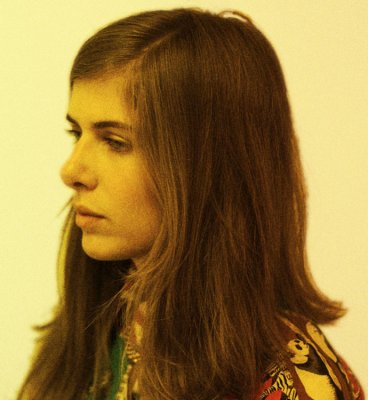
Recorded Laurel Halo said elsewhere, not written here
It’s always hard to decide when something’s done. To go back to the painting metaphor, maybe deciding something’s done is just letting the canvas dry and stepping away. There is this simple resignation that takes place. The benefit of working with collaborators is you get the take and that’s what you have. So that’s also something that helps push projects to completion. And also, scary deadlines. Scary deadlines are always a great way to finish projects, which is why composing can sometimes be a great antidote to whatever baked-in perfectionism I might have. With artist records, you can take years and you can say this isn’t good enough, but then you have a deadline for a project and they’re like, “We need the stems by Tuesday at midnight,” and you have to do it. Accepting something is good enough is a skill in and of itself.

Arielle Gordon, The Creative Independent, 23 March 2026 source ↗

Others on this question

View all 69 →
Catherine Lacey English actress
I’m the worst about this. I often don’t know. I’ll have 14 small victories while I’m working on something. I’m like, “It’s done,” and I show it to somebody and they’re like, “Is it?” They ask me a couple questions, or I’ll realize myself like, “I think it’s done,” and then a few days later I’ll realize that, “Oh no, I’m still having ideas about it.”
Recorded Maura M. Lynch, The Creative Independent interview source ↗
David Lynch Film director, screenwriter and painter
It just, um, starts feeling correcter and correcter until it's done.
Recorded Sean O'Hagan, The Guardian, 25 February 2007 source ↗
Stephen Talasnik Installation artist and sculptor
The quote of “unfinished, but complete” was first introduced to my lexicon when I was studying the drawings of Michelangelo. I read about his work, and one of the art historians of the time said his drawings were purposefully left unfinished, but there was a sense of completeness to them. That was the philosophy I used as my religion, which was to create something that appeared unfinished but had a spiritual completeness to it.
Recorded Max Freedman, The Creative Independent, 27 March 2024 source ↗
Circuit des Yeux American musician
Sometimes I know, sometimes I don’t. It depends artistically, or pragmatically, on the steps that I’m taking. “How am I creating this?” Sometimes I set parameters to cut myself off, and I find mixed results. For this album, specifically, I worked closely with Cooper Crain, who co-produced it. Most of the time, I wanted to go five steps further and he said, “No. This is it. It’s done.” I found myself trusting his judgment in that. In hindsight, I think it was important for this album. It would be totally different if I just kept digging and digging. A lot of times, I dig until it’s totally decimated. Really, I’ve just turned something into nothing again. For this album, I utilized Cooper as kind of a guide. It was much more collaborative in that way, where he was like, “This is done.” Or, “Let’s push this further.” He gave me that foresight.
Recorded Gary Canino, The Creative Independent interview source ↗

More on craft & work

Also answered this

Taja Cheek, Regina Spektor, Sam Amidon, Lizzy McAlpine, Kevin Shields, Ellen Arkbro

Search the directory for somebody in particular.

Explore further

Report this answer