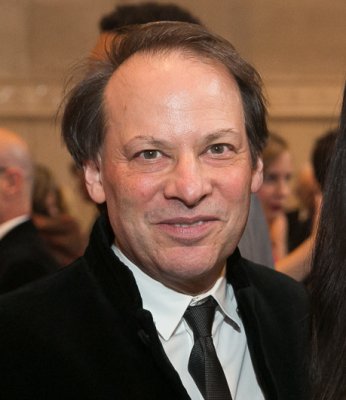
Professor Randall was a great advisor and a great mentor. He taught me, I think, in the best possible way. He was not a brilliant lecturer. His courses were fairly pedestrian. I didn’t think his seminars were particularly interesting. But working with him on a one-to-one basis as his assistant, I think that’s the way one has to learn to be a historian. That is, he was writing, and if he needed some particular reference, I had to go find it and get it. If he was writing, he wanted everything checked meticulously over and over again. So I had to take the manuscript over to the library and check it all out. So that by working closely with him, I got to see, first of all, a lot of the library and its extensive holdings, but I got, even more important, to understand what a scholar is about. It is about care. It is about “pains-taking.” It is about judgment as well as it’s about very skillful writing. He was an excellent writer as well. So in that sense, Professor Randall and Mrs. Randall shaped my future career.
Originally asked
The Paris Review, to novelists and poets, The Art of Fiction
A durable Art of Fiction question asked through named literary influences and artistic models.
You answer as yourself. Nobody on FLAPSS answers as anybody else.
On Being, interviewed by Krista Tippett, 21 December 2017 source ↗
Others on this question
View all 42 →Well, my mom had me at 22 and my sister at 24. When I think about her trying to raise these two young girls in Manhattan, having grown up in an incredibly conservative family and her having a more progressive calling for a more liberal life… It was my mother’s bravery, and my mother’s pursuit of her creative life that made it possible for me to have the one I currently have.
Well, I saw Mies van der Rohe and then I was introduced to Shiro Kuramata’s work and that brought me even further into this world. I’m interested in everything. I mean, Peter Zumthor is obviously very talented, he does interesting work — but I don’t study my contemporaries in architecture and design so much.
The music of the “I Have a Dream” speech is a replication of the music which comes out of the mouths of the African American preacher. Preacher, singer, blues singer, jazz singer, rap person, it is so catching, so hypnotic, so wonderful that, as a poet, I continue to try to catch it, to catch the music.
More from Adam Gopnik
View profile →My very wise and politically savvy 17-year-old daughter says I get too emotional about political issues. I think she’s right. She knows that if she sees me race across a room, I have just read something about Trump. Turning ideas into feelings is the thing an essayist is supposed to do, but political punditry should probably be more detached.
Writers we think are all wrong and want to read anyway come in two kinds: those who are good writers and bad thinkers — Christopher Hitchens, Norman Podhoretz, and Gore Vidal, each in his terribly different way, are instances of that — and those who may not be original stylists but who we admire for trying to be better thinkers than they were before, stumbling toward truth from a starting place very different from the one we happened to inherit. I disagree, for instance, with David Frum about almost everything, from Iraq to the legacy of Pierre Trudeau in our native Canada, but never doubt his integrity or desire to tell the truth about the world.
More on taste & recommendation
Also answered this
Amy Tan, Noah Baumbach, Kazuo Ishiguro, Gore Vidal, Maya Angelou, adrienne maree brown
Search the directory for somebody in particular.
Explore further
- All taste & recommendation questions
- The The Art of Fiction questionnaire — 3 questions from the same format
- Explore the archive — by field, age, era, and subject