Which writers or artists most influenced your work?

Originally asked

The Paris Review, to novelists and poets, The Art of Fiction

A durable Art of Fiction question asked through named literary influences and artistic models.

You answer as yourself. Nobody on FLAPSS answers as anybody else.

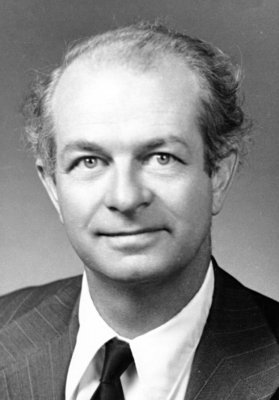
Recorded Linus C. Pauling, Ph.D. said elsewhere, not written here
One was Roscoe Gilkey Dickinson. He had got his doctorate in physical chemistry — x-ray crystallography — in 1920. He was the first person to get a Ph.D. from California Institute of Technology. And he was continuing with x-ray crystallography, determining the structure of inorganic crystals. After I had accepted appointment as a graduate student at California Institute of Technology, A.A. Noyes, the head of the division of chemistry and chemical engineering, wrote to say that he had decided I should work with Roscoe Dickinson on determining the structure of crystals. This was really extremely fortunate for me, in my opinion. I don’t think that there was any field that was more suited to my interests, and I don’t really know why Dr. Noyes selected me out of eight or ten new graduate students to do x-ray crystallography. Dickinson had a remarkable mind. He was a very careful investigator and thinker, a very logical thinker. When he was teaching me x-ray crystallography, he also taught me to ask at each stage in the argument, “What assumptions are being made? How reliable is the conclusion that you draw? What chance is there that one of the assumptions you have made is not correct?” “You should recognize,” he said to me, “that there is in almost every investigation a lack of complete rigor. You should understand just how reliable the arguments are that you are presenting.

Academy of Achievement interview, Big Sur, California, 11 November 1990 source ↗

Others on this question

View all 42 →
John Lewis U.S. Representative from Georgia, 1987–2020; Chairman of the Student Nonviolent Coordinating Committee 1963–1966
Jim Lawson. Jim Lawson was an unbelievable human being. Born in Ohio. He was a pacifist. He studied Gandhi. He was part of the Methodist Student Movement. He lived in India. He became an organizer for FOR, the Fellowship of Reconciliation.
Recorded Julian Bond, Explorations in Black Leadership interview, Explorations in Black Leadership, University of Virginia source ↗
David McCullough Historian and biographer; twice winner of the Pulitzer Prize
We had the classics, published by Scribners, all the great stories by Robert Louis Stevenson and the rest which were illustrated by the great N.C. Wyeth. In those days, when childhood diseases were extended, you were home with the measles or mumps or chicken pox for two or three weeks at a time, and you were supposed to stay in bed. There wasn’t any television, there wasn’t much to do, so I would stare at those paintings in those books by the hour. I didn’t read them all. I loved to just look at those pictures and study every detail. I could sit down and draw most of those pictures right now without having to refresh my memory because they were so exciting to me.
Recorded Academy of Achievement interview, Williamsburg, Virginia, 3 June 1995 source ↗
Well, there were, you know, several poses that was known for everybody, that is known for certain poses. And to me it was the three-quarter back pose. And it was a very difficult pose to do, to twist your body and to show the small waist and to show at the same time your wide shoulders, your back. And you also see the front and you see the abs and you see the calf and the thighs and all of those things. But it was a difficult pose to do. Very few bodybuilders could master it. I copied basically Reg Park, who was my idol and who won three times the Mr. Universe competition. And he was known for that pose in a kneeling position and in a standing position. And so because he was my idol, I was, you know, absolutely fanatic to copy his poses and then to kind of improve on that. And that's exactly what I did.
Recorded David Greene, Talk of the Nation, NPR, 2 October 2012 source ↗
Charles H. Townes Physicist; Nobel laureate in physics for the invention of the maser and laser
Most scientists do. Of course there are the classical figures. I might talk about Einstein a little bit, for example. Now, when I was in college, I was taking my second course in physics, I remember very well, and it had a chapter on relativity. And I took this relativity on a vacation in the mountains; my family went with me. And I remember very well sitting on a rock up in the hills there overlooking a stream, reading this relativity derivation. And it was just very exciting and interesting. It was a strange new world, relativity. I even thought I had found where Einstein made a mistake. And I went back for lunch, and I thought about it, came back. And I said, “No, he was right after all,” but it was still very exciting. To see a completely different kind of idea and world from what one’s normal intuition shows. Of course, Einstein was one of the great scientists; I’ve always admired him. I fortunately had a chance to talk with him and interact with him a little bit as well.
Recorded Academy of Achievement interview, Berkeley, California, 18 March 1991 source ↗

More on taste & recommendation

Also answered this

Charles H. Townes, Frances Arnold, Gertrude B. Elion, Philip Johnson, John Lewis, Mohamed ElBaradei

Search the directory for somebody in particular.

Explore further

Report this answer