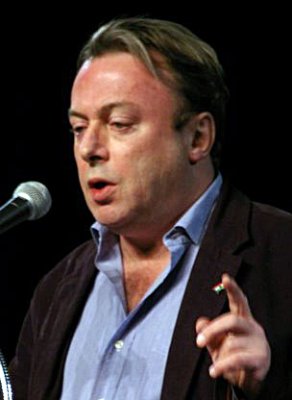
Before I was diagnosed with esophageal cancer a year and a half ago, I rather jauntily told the readers of my memoirs that when faced with extinction I wanted to be fully conscious and awake, in order to “do” death in the active and not the passive sense. And I do, still, try to nurture that little flame of curiosity and defiance: willing to play out the string to the end and wishing to be spared nothing that properly belongs to a life span. However, one thing that grave illness does is to make you examine familiar principles and seemingly reliable sayings. And there’s one that I find I am not saying with quite the same conviction as I once used to: In particular, I have slightly stopped issuing the announcement that “Whatever doesn’t kill me makes me stronger.”
Not claimed by Christopher Hitchens
Christopher Hitchens has not joined FLAPSS and has not endorsed it. This page is a reference record assembled from published interviews and public remarks. Every answer below is a direct quotation with the source and date shown next to it.
Christopher Hitchens
Essayist, critic and journalist
United Kingdom · 1949–2011
Arts and letters
About
British-American essayist, literary critic and polemicist, a columnist for Vanity Fair, The Atlantic and Slate and the author of God Is Not Great. Diagnosed with stage four oesophageal cancer in June 2010 while on tour for his memoir Hitch-22, he wrote a sequence of essays about his own dying for Vanity Fair until shortly before his death in December 2011; they were collected as Mortality.
9 answers
The chief side effect of this pain is numbness in the extremities, filling me with the not irrational fear that I shall lose the ability to write. Without that ability, I feel sure in advance, my “will to live” would be hugely attenuated. I often grandly say that writing is not just my living and my livelihood but my very life, and it’s true. Almost like the threatened loss of my voice, which is currently being alleviated by some temporary injections into my vocal folds, I feel my personality and identity dissolving as I contemplate dead hands and the loss of the transmission belts that connect me to writing and thinking.
Deprivation of the ability to speak is more like an attack of impotence, or the amputation of part of the personality. To a great degree, in public and private, I “was” my voice. All the rituals and etiquette of conversation, from clearing the throat in preparation for the telling of an extremely long and taxing joke to (in younger days) trying to make my proposals more persuasive as I sank the tone by a strategic octave of shame, were innate and essential to me. I have never been able to sing, but I could once recite poetry and quote prose and was sometimes even asked to do so.
My chief consolation in this year of living dyingly has been the presence of friends. I can’t eat or drink for pleasure anymore, so when they offer to come it’s only for the blessed chance to talk. Some of these comrades can easily fill a hall with paying customers avid to hear them: they are talkers with whom it’s a privilege just to keep up. Now at least I can do the listening for free. Can they come and see me? Yes, but only in a way. So now every day I go to a waiting room, and watch the awful news from Japan on cable TV (often closed-captioned, just to torture myself) and wait impatiently for a high dose of protons to be fired into my body at two-thirds the speed of light. What do I hope for? If not a cure, then a remission. And what do I want back? In the most beautiful apposition of two of the simplest words in our language: the freedom of speech.
Nobody wants to be told about the countless minor horrors and humiliations that become facts of “life” when your body turns from being a friend to being a foe: the boring switch from chronic constipation to its sudden dramatic opposite; the equally nasty double cross of feeling acute hunger while fearing even the scent of food; the absolute misery of gut-wringing nausea on an utterly empty stomach; or the pathetic discovery that hair loss extends to the disappearance of the follicles in your nostrils, and thus to the childish and irritating phenomenon of a permanently runny nose. Sorry, but you did ask … It’s no fun to appreciate to the full the truth of the materialist proposition that I don’t have a body, I am a body.
There is an even longer shot that I do propose to attempt even though its likely efficacy lies at the outer limits of probability. I am going to try to have my entire DNA “sequenced,” along with the genome of my tumor. ... So perhaps I will be able to contribute a little bit to enlarging the knowledge that will help future generations.
And even if my voice goes before I do, I shall continue to write polemics against religious delusions, at least until it’s hello darkness my old friend. In which case, why not cancer of the brain? As a terrified, half-aware imbecile, I might even scream for a priest at the close of business, though I hereby state while I am still lucid that the entity thus humiliating itself would not in fact be “me.” (Bear this in mind, in case of any later rumors or fabrications.)
Myself, I love the imagery of struggle. I sometimes wish I were suffering in a good cause, or risking my life for the good of others, instead of just being a gravely endangered patient. Allow me to inform you, though, that when you sit in a room with a set of other finalists, and kindly people bring a huge transparent bag of poison and plug it into your arm, and you either read or don’t read a book while the venom sack gradually empties itself into your system, the image of the ardent soldier or revolutionary is the very last one that will occur to you. You feel swamped with passivity and impotence: dissolving in powerlessness like a sugar lump in water.
I have more than once in my time woken up feeling like death. But nothing prepared me for the early morning last June when I came to consciousness feeling as if I were actually shackled to my own corpse. The whole cave of my chest and thorax seemed to have been hollowed out and then refilled with slow-drying cement. I could faintly hear myself breathe but could not manage to inflate my lungs. My heart was beating either much too much or much too little. Any movement, however slight, required forethought and planning.
Every quotation above is reproduced from the source shown beside it and has not been edited. Christopher Hitchens did not write these answers for FLAPSS. Request a correction or removal.