What single thing would improve the quality of your life?

Originally asked

The Guardian, to a different person each week, The Q&A

Verbatim recurring item in The Guardian Q&A; two fully readable publisher-hosted respondent pages establish institutional recurrence.

You answer as yourself. Nobody on FLAPSS answers as anybody else.

Recorded Christopher Hitchens said elsewhere, not written here
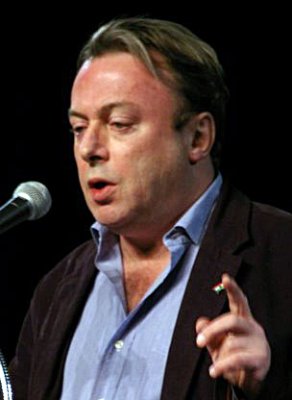
My chief consolation in this year of living dyingly has been the presence of friends. I can’t eat or drink for pleasure anymore, so when they offer to come it’s only for the blessed chance to talk. Some of these comrades can easily fill a hall with paying customers avid to hear them: they are talkers with whom it’s a privilege just to keep up. Now at least I can do the listening for free. Can they come and see me? Yes, but only in a way. So now every day I go to a waiting room, and watch the awful news from Japan on cable TV (often closed-captioned, just to torture myself) and wait impatiently for a high dose of protons to be fired into my body at two-thirds the speed of light. What do I hope for? If not a cure, then a remission. And what do I want back? In the most beautiful apposition of two of the simplest words in our language: the freedom of speech.

Vanity Fair, 9 May 2011 source ↗

Others on this question

View all 206 →
Joss Stone English singer, songwriter, and actress
Having my family in closer proximity, but that’s what comes with living in another country.
Recorded The Guardian, The Q&A, The Guardian, 24 April 2021 source ↗
Lleyton Hewitt Australian professional tennis player
To move like I did in my early 20s. I’ve had knee and hip surgery, and my toe joint fused since.
Recorded The Guardian, The Q&A, The Guardian, 9 July 2016 source ↗
Sarah Parish English actress
I have a great quality of life, there is nothing that I want for.
Recorded The Guardian, The Q&A, The Guardian, 28 December 2019 source ↗

More from Christopher Hitchens

View profile →
Question What is the hardest thing that has happened to you, and what did you carry out of it? Failure & regret
Deprivation of the ability to speak is more like an attack of impotence, or the amputation of part of the personality. To a great degree, in public and private, I “was” my voice. All the rituals and etiquette of conversation, from clearing the throat in preparation for the telling of an extremely long and taxing joke to (in younger days) trying to make my proposals more persuasive as I sank the tone by a strategic octave of shame, were innate and essential to me. I have never been able to sing, but I could once recite poetry and quote prose and was sometimes even asked to do so.
Recorded Vanity Fair, 9 May 2011 source ↗
Question What is the biggest obstacle you have faced professionally? Craft & work
Myself, I love the imagery of struggle. I sometimes wish I were suffering in a good cause, or risking my life for the good of others, instead of just being a gravely endangered patient. Allow me to inform you, though, that when you sit in a room with a set of other finalists, and kindly people bring a huge transparent bag of poison and plug it into your arm, and you either read or don’t read a book while the venom sack gradually empties itself into your system, the image of the ardent soldier or revolutionary is the very last one that will occur to you. You feel swamped with passivity and impotence: dissolving in powerlessness like a sugar lump in water.
Recorded Vanity Fair, First Person column, September 2010 issue, 4 August 2010 source ↗
Question What is the most important lesson life has taught you? Time & hindsight
Before I was diagnosed with esophageal cancer a year and a half ago, I rather jauntily told the readers of my memoirs that when faced with extinction I wanted to be fully conscious and awake, in order to “do” death in the active and not the passive sense. And I do, still, try to nurture that little flame of curiosity and defiance: willing to play out the string to the end and wishing to be spared nothing that properly belongs to a life span. However, one thing that grave illness does is to make you examine familiar principles and seemingly reliable sayings. And there’s one that I find I am not saying with quite the same conviction as I once used to: In particular, I have slightly stopped issuing the announcement that “Whatever doesn’t kill me makes me stronger.”
Recorded Vanity Fair, January 2012 source ↗
Question What do you expect to regret, and is there still time to do something about it? Death & what remains
Instead, I am badly oppressed by a gnawing sense of waste. I had real plans for my next decade and felt I’d worked hard enough to earn it. Will I really not live to see my children married? To watch the World Trade Center rise again? To read—if not indeed write—the obituaries of elderly villains like Henry Kissinger and Joseph Ratzinger? But I understand this sort of non-thinking for what it is: sentimentality and self-pity.
Recorded Vanity Fair, 4 August 2010 source ↗
Question How would you like to die? Death & what remains
And even if my voice goes before I do, I shall continue to write polemics against religious delusions, at least until it’s hello darkness my old friend. In which case, why not cancer of the brain? As a terrified, half-aware imbecile, I might even scream for a priest at the close of business, though I hereby state while I am still lucid that the entity thus humiliating itself would not in fact be “me.” (Bear this in mind, in case of any later rumors or fabrications.)
Recorded Vanity Fair, 2 September 2010 source ↗

More on daily life

Also answered this

Monty Don, Sandi Toksvig, Sue Perkins, John Grisham, Andrew O'Hagan, Ram Dass

Search the directory for somebody in particular.

Explore further

Report this answer