The question

How does a new piece of work usually begin for you?

Originally asked

The Paris Review, to novelists and poets, The Art of Fiction

A recurrent craft question in The Paris Review's Art of Fiction interviews; wording varies between character, theme, first sentence, image, and idea.

You answer as yourself. Nobody on FLAPSS answers as anybody else.

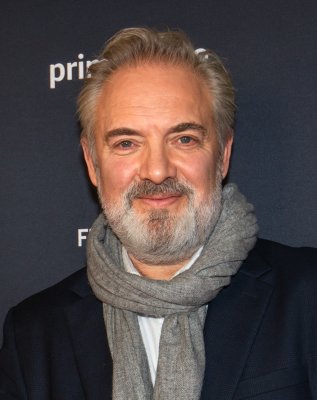
Sam Mendes

British filmmaker and stage director

Recorded said elsewhere, not written here
It’s like a kind of boiling kettle, you know: you don’t want to make your tea until the kettle’s boiled and it’s the same thing, you don’t want to make your movie until you’re boiling with something you need to say. And theater, for instance, has always given me the opportunity to wait for that moment. It’s the same with film actually — film has given me an opportunity to wait until I’m ready to do a play. One fuels the other. Even the decision to write and make 1917 , weirdly, came out of doing the Bond movies.

The Talks interview, 9 February 2020 source ↗

Others on this question

View all 60 →
Dawn Clements American contemporary artist and educator
When I start out to make a panoramic piece, I often work from left to right. But when a small scrap of a drawing turns into a giant drawing the progress is less linear, a more intuitive process. “Untitled (Color Kitchen)” started with the flowers. Mariah Corrigan cut me these beautiful old roses, which I put in a yellow pitcher. The next day I was all packed up and walking out the door to go to my studio when I saw the roses and thought, “Those flowers are going to be gone by tomorrow.” So I stayed home and painted them just to always remember them. Eventually the drawing grew to include the table, the wall, the curtain, and the next wall
Recorded Eve Aschheim, The Brooklyn Rail, In Conversation, 1 October 2007 source ↗
I was about to answer cheesily, “It starts me,” but it actually does. I search. I put in a lot of time reading, taking notes, writing in that grasping way that feels mostly wrong. Usually it begins with an image and then the voice comes. Once I have the voice, the book presents. Annie Ernaux talked about it as channeling, and I don’t want to over romanticize it, because there’s a lot of bodily discipline that goes into the making. But I do think that, for me, that’s how a first draft feels. It’s like just keeping up with the voice in my head, being true to it, clinically so—like a pact. I love that first draft, because it’s pre-scrutiny, pre-analysis.
Recorded Shy Watson, The Creative Independent interview, 26 January 2024 source ↗
Willem Kolff Physician and inventor; builder of the first practical artificial kidney
When I was this young assistant at the University of Groningen my responsibility was for four beds, or rather the patients in four beds. That was all I had to do. And, one of these patients was a young man, 22 years old, who slowly and miserably died from renal failure. He became blind, he vomited, and it was a miserable death. And I, as a very, very young physician, had to tell his mother, in a black dress and a little white cap like the farmers have, that her only son was going to die. I couldn’t do a damn thing about it. So, I began to think, “If I could just every day remove as much urea as this boy creates, which is about 20 grams, then the boy could live.” Well, he died, but I began to work on that.
Recorded Academy of Achievement interview source ↗
Alice Sheppard Dancer, Choreographer
Obviously, it’s different for everyone. And actually there is a difference for each thing I do. But one way it happens is to just move. [ laughs ] I mean, obviously, you don’t just sort of randomly throw yourself around the room. You move with these ideas and sometimes I find that I’ve already got images in my head that I imagine my body in, or sometimes I have sequences in my head. I think a lot of time I’m listening to what comes next because sometimes the body will tell you that. Often I don’t document it too early in the process because sometimes if you forget stuff it’s worth knowing that the things that you forget maybe weren’t worth keeping. The things that have settled are the things that need to be kept because they seem most urgent. I don’t know. I mean, sometimes it’s about going to the studio and nothing happens for a long time and you just sit there and you’re not feeling it. That’s awful. It’s like when you’re writing and sometimes you go to the coffee shop and you’re like, “So, we’ll just see what happens.” And you end up on Facebook. I think the answer to this is… I really think the answer to this is I don’t know. [ laughs ]
Recorded T. Cole Rachel, The Creative Independent interview, 7 March 2018 source ↗

More on craft & work

Also answered this

Alice Sheppard, Chaitanya Tamhane, Ephraim Asili, Robert Wilson, Noah Baumbach, Ja’Tovia Gary

Search the directory for somebody in particular.

Explore further

Report this answer