How has a failure, or apparent failure, set you up for later success? Do you have a favourite failure?
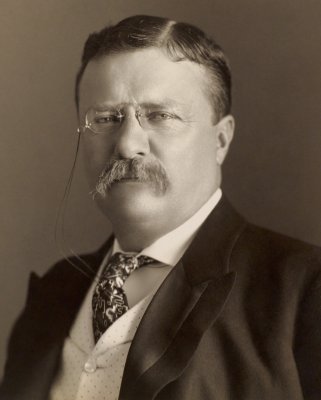
Recorded Theodore Roosevelt said elsewhere, not written here
It is not the critic who counts; not the man who points out how the strong man stumbles or where the doer of deeds could have done them better. The credit belongs to the man who is actually in the arena, whose face is marred by dust and sweat and blood; who strives valiantly; who errs, and comes short again and again, because there is no effort without error and shortcoming; but who does actually strive to do the deeds; who knows the great enthusiasms, the great devotions; who spends himself in a worthy cause; who at the best knows in the end the triumph of high achievement, and who at the worst, if he fails, at least fails while daring greatly, so that his place shall never be with those cold and timid souls who know neither victory nor defeat.

Sorbonne, Paris, The American Presidency Project, University of California Santa Barbara, 23 April 1910 source ↗

Others on this question

View all 69 →
Howard Schultz Chief executive of Starbucks, 1987–2000, 2008–2017 and 2022–2023
But in 2007, the music stopped. We had lost sight of our shared purpose and our guiding principles, in which growth and success began to cover up mistakes and a disease set into Starbucks. That disease, hubris. We lost our way and believe it or not, we almost lost the entire company.
Recorded Arizona State University commencement, Speakola, 2017 source ↗
Nora Ephron Journalist, essayist, screenwriter and film director
I wish I had learned more from failure than just mortification. I don’t think you learn much from success, and I don’t think you learn much from failure, unfortunately. It’s one of the sad things. You certainly learn that it’s more fun to have a hit than a flop.
Recorded Academy of Achievement interview, 21 June 2007 source ↗
J.K. Rowling Novelist and screenwriter
So why do I talk about the benefits of failure? Simply because failure meant a stripping away of the inessential. I stopped pretending to myself that I was anything other than what I was, and began to direct all my energy into finishing the only work that mattered to me. Had I really succeeded at anything else, I might never have found the determination to succeed in the one arena I believed I truly belonged. I was set free, because my greatest fear had been realised, and I was still alive, and I still had a daughter whom I adored, and I had an old typewriter and a big idea. And so rock bottom became the solid foundation on which I rebuilt my life.
Recorded Harvard University Commencement, 2008, Harvard Gazette, 5 June 2008 source ↗
Kurt Vonnegut Novelist and essayist
I would try to write my war story, whether it was interesting or not, and try to make something out of it. I describe that process a little in the beginning of Slaughterhouse Five; I saw it as starring John Wayne and Frank Sinatra. Finally, a girl called Mary O’Hare, the wife of a friend of mine who’d been there with me, said, “You were just children then. It’s not fair to pretend that you were men like Wayne and Sinatra, and it’s not fair to future generations, because you’re going to make war look good.” That was a very important clue to me.
Recorded George Plimpton, David Hayman, David Michaelis and Richard Rhodes, The Paris Review, issue 69, Spring 1977, 1 January 1977 source ↗

More from Theodore Roosevelt

View profile →

More on failure & regret

Also answered this

Richard Feynman, Ben Bradlee, Tony Fadell, N. R. Narayana Murthy, Melanie Perkins, Jocelyn Bell Burnell

Search the directory for somebody in particular.

Explore further

Report this answer