How do you know when a piece of work is finished?

Originally asked

The Creative Independent, to working artists, its interview series

A repeated process question in The Creative Independent, asked across visual art, music, writing, performance, and mixed media.

You answer as yourself. Nobody on FLAPSS answers as anybody else.

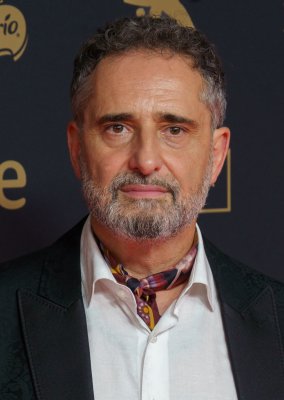
Recorded Jorge Drexler said elsewhere, not written here
I keep messing with it until it gets to the mix table. Sometimes you can’t just change the whole song, but maybe I can change a verse in the very last moment or a chord or the introduction to the song, or the song’s order, some fade-ins or fadeouts. It’s a tough process letting go, saying, “This is it. It’s going to be this way. There were multiple choices, but we’ve chosen this one.” But it’s also a relief because it means you stop wondering. You stop thinking about it and you just let the songs find their own way and say goodbye to them and hello at some point because you’re going to start playing them live and it’s a way to actually get to know your song once you finished it. I usually know. It feels like a release to let go of a song.

Miriam Garcia, The Creative Independent interview source ↗

Others on this question

View all 67 →
Stephen Talasnik Installation artist and sculptor
The quote of “unfinished, but complete” was first introduced to my lexicon when I was studying the drawings of Michelangelo. I read about his work, and one of the art historians of the time said his drawings were purposefully left unfinished, but there was a sense of completeness to them. That was the philosophy I used as my religion, which was to create something that appeared unfinished but had a spiritual completeness to it.
Recorded Max Freedman, The Creative Independent, 27 March 2024 source ↗
Koho Yamamoto Sumi-e painter, calligrapher and teacher
Well, I feel it. If I don’t feel it just the way I want it, then I’d rather destroy it than to keep it.
Recorded Amanda Millet-Sorsa, Koho Yamamoto with Amanda Millet-Sorsa, The Brooklyn Rail, 1 April 2022 source ↗
Marya Hornbacher American journalist and author
Michael Chabon talks about staying with projects that you should abandon. He talks ignoring what he called “the hand of dread,” which would grip his throat every time he sat down to write. He worked on this project for five years and I took that to heart. I’m like, “Don’t ignore the hand of dread. If you know, the project is wrong, walk away or you’re not ready to write the project walk away.” And it doesn’t, at that point, matter whether the publisher thinks it needs to come out or not.
Recorded Elle Nash, The Creative Independent interview source ↗
Ryuichi Sakamoto Composer, pianist and record producer
I guess it’s by some degree of my own satisfaction. It’s not numeric. For instance, I’m very proud of async , but in the 90s, I was making fake R&B, fake House music, and fake Hip-Hop music. I don’t like that. I’m not happy about it. I wish I could erase that time. Making film music is different. It’s for other people, not yourself. It is still my own music, but it’s for other people. My solo work is entirely for myself, so it’s judged by my own satisfaction and whether I have proceeded enough, if I have pushed myself to another level. That’s how I judge it.
Recorded Brandon Stosuy, The Creative Independent, 15 January 2021 source ↗

More from Jorge Drexler

View profile →
Question What do you do when you feel creatively blocked or stuck? Craft & work
I know what you mean, but there are two kinds of voids, the one that you work with and the one that you bear. I work with and try to generate a void. I pick up the guitar and I let my mind wander until it gets distracted and suddenly it lost its purpose. It’s just wondering between one chord and the other, one subject or the other, or maybe I would just be distracted watching a film and something moves me, or the light in the window and then I let that feeling guide me. I always use this metaphor. It’s like getting into a garden at night and suddenly perceiving a perfume of a tree or a flower. You don’t know exactly where it’s coming from, but you know there’s something there, so you start sniffing around until you find it. You get closer and closer to the source until you identify it. That’s the way I write. What I mean is that suddenly something crosses my mind and I just follow that. I try not to lead at the beginning. I try to follow and then whenever I find that I take, I use reason and I organize. I say, “Wait, I need a second part with the same structure. I need a bridge. I need a chorus. Let’s go. Let’s move to this place. Let’s change this rationally,” but the core has to be subconscious.
Recorded Miriam Garcia, The Creative Independent, 26 July 2022 source ↗
Question How does a new work begin for you? Craft & work
I know what you mean, but there are two kinds of voids, the one that you work with and the one that you bear. I work with and try to generate a void. I pick up the guitar and I let my mind wander until it gets distracted and suddenly it lost its purpose. It’s just wondering between one chord and the other, one subject or the other, or maybe I would just be distracted watching a film and something moves me, or the light in the window and then I let that feeling guide me. I always use this metaphor. It’s like getting into a garden at night and suddenly perceiving a perfume of a tree or a flower. You don’t know exactly where it’s coming from, but you know there’s something there, so you start sniffing around until you find it. You get closer and closer to the source until you identify it. That’s the way I write. What I mean is that suddenly something crosses my mind and I just follow that. I try not to lead at the beginning. I try to follow and then whenever I find that I take, I use reason and I organize. I say, “Wait, I need a second part with the same structure. I need a bridge. I need a chorus. Let’s go. Let’s move to this place. Let’s change this rationally,” but the core has to be subconscious.
Recorded Miriam Garcia, The Creative Independent interview, 26 July 2022 source ↗

More on craft & work

Also answered this

Ellen Arkbro, Beverly Glenn-Copeland, Toro y Moi, Georgia Harmer, Angélica Negrón, Regina Spektor

Search the directory for somebody in particular.

Explore further

Report this answer