Showing off onstage, with everyone laughing and applauding.
Originally asked
Vanity Fair, to its interview subject, The Proust Questionnaire
A fixed final question in Vanity Fair's Proust Questionnaire, repeated verbatim across respondent pages.
You answer as yourself. Nobody on FLAPSS answers as anybody else.
Vanity Fair, The Proust Questionnaire, Vanity Fair, 9 March 2023 source ↗
Others on this question
View all 46 →In my sleep in my 90s, after a great gig.
When I’m extremely old during a huge family celebration where everyone is playing games and giving pre-written toasts … to me.
And even if my voice goes before I do, I shall continue to write polemics against religious delusions, at least until it’s hello darkness my old friend. In which case, why not cancer of the brain? As a terrified, half-aware imbecile, I might even scream for a priest at the close of business, though I hereby state while I am still lucid that the entity thus humiliating itself would not in fact be “me.” (Bear this in mind, in case of any later rumors or fabrications.)
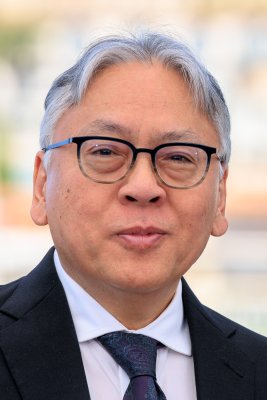
More from Kazuo Ishiguro
View profile →I always dreamt of having a second stomach I could carry around in a bag, which I could attach to my real stomach when I sat down in restaurants. That way, I could eat a huge amount, never gaining weight.
Actually, I had done what I thought was more or less a finished version of The Remains of the Day , but the very buttoned-up narrator, the butler — in that earlier version, he doesn’t quite come through confessing his true emotions. He maintains his front a little bit more effectively than he does in the final version. What made me change my mind was that, between that penultimate version and the final version I handed in, I listened to a song by Tom Waits — another great singer-songwriter, remarkable artist. And this is the power of that art form: it’s performance as well as the actual writing.
Sitting down to a leisurely conversation in an English tearoom with my wife, a friend, or even an interesting stranger. Good cake is essential.
I’ve been emphasising here the small and the private, because essentially that’s what my work is about. One person writing in a quiet room, trying to connect with another person, reading in another quiet – or maybe not so quiet – room. Stories can entertain, sometimes teach or argue a point. But for me the essential thing is that they communicate feelings. That they appeal to what we share as human beings across our borders and divides. There are large glamorous industries around stories; the book industry, the movie industry, the television industry, the theatre industry. But in the end, stories are about one person saying to another: This is the way it feels to me. Can you understand what I’m saying? Does it also feel this way to you?
It’s funny you say that because I never have this moment when I feel, “Ah, I’ve finished!” I watch footballers at the end of the match, you know, the whistle goes and they’ve won or lost. Until then they’ve been giving everything and at that moment they know it’s over. It’s funny for an author. There’s never a finishing whistle. It’s not very spectacular.
I always suspected that she was the biggest influence on me. It seems unlikely, but I always suspected that. I used to say that in interviews, and people would think I was just being smart and evasive. But I reread Jane Eyre recently, and also Villette , her other great novel. I just came across episode after episode where I thought “Oh my goodness, I just ripped that off from this book!” Perhaps you wouldn’t recognize it, but I did. Certain kinds of techniques, certain moments when you understand that the narrator is crying, not because she tells you, but because somebody watching her makes a remark. All these little things that I thought, “Oh, I used that in that book,” or “Oh, that trick.” I think Charlotte Brontë had an enormous influence on me, and I think it’s something to do with that use of first-person and the evasiveness, the indirectness, of her first-person narrative. I mean this phrase, “the unreliable narrator,” has become very popular in creative writing. So it’s not quite that, but a very subtle use of the relationship between the writer and the book and the reader — something I tuned in on, I homed in on instantly, when I started to read Charlotte Brontë. But I’ll tell you, my favorite author — novelist — is somebody who you probably wouldn’t think had any relationship to me, which is Dostoyevsky. I’ve always loved Dostoyevsky, ever since I first read him. I think he’s one of the reasons I started to read, you know, when I read Crime and Punishment when I was about 17 or 18. Dostoyevsky and Chekhov for me remain like two poles in terms of a way to approach things. I love the messiness of Dostoyevsky, the improvised — I mean a lot of it is a mess, but I like the way that strange, unexpected things have obviously come tumbling out of him that he didn’t want to necessarily have come tumbling out. On the other hand, you know, Chekhov, another great Russian writer, exemplifies the calm, controlled, very carefully structured, understated kind of work. I aspire to them both. They’re two of my great heroes.
More on death & what remains
- What would you like to be remembered for? 228 answers
- How close have you come to death? 214 answers
- What song would you like played at your funeral? 179 answers
- What happens when we die? 56 answers
- If you had only one day left to live, how would you spend it — and what would you deliberately avoid doing? 54 answers
- What would you like to leave your children? 53 answers
Also answered this
Christopher Hitchens, Stephen Fry, Cory Taylor, Eugene Levy, Judy Blume, Zadie Smith
Search the directory for somebody in particular.
Explore further
- All death & what remains questions
- The The Proust Questionnaire questionnaire — 5 questions from the same format
- Explore the archive — by field, age, era, and subject