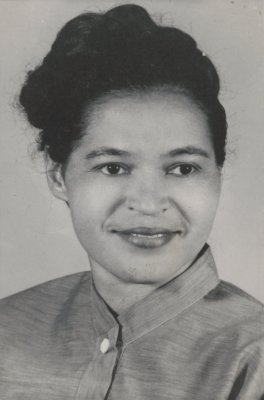
I try to not think of those things that we cannot control, but I think if we continue to work with positive attitudes, conditions will be better for more people.
Academy of Achievement interview source ↗
The question
What do you need to believe in order to get through an ordinary day?Originally asked
Vox, to writers and thinkers, 9 Questions, 2017
Vox used this exact prompt throughout its named 9 Questions series on intellectual habits.
You answer as yourself. Nobody on FLAPSS answers as anybody else.
I try to not think of those things that we cannot control, but I think if we continue to work with positive attitudes, conditions will be better for more people.
Academy of Achievement interview source ↗
It's not possible to get any distance from my project: being alive. Objectively, from the outside you might say, my life is terrible, unbelievable. And it's true, I hate this. I hate the way I am at the moment. But there is no objective view, I am here, in it, and there is nothing else, and this fact brings with it many things that make it of course easier. And beyond that there are many other things to think about.
I don’t believe I can really do without teaching. The reason is, I have to have something so that when I don’t have any ideas and I’m not getting anywhere I can say to myself, “At least I’m living; at least I’m doing something; I’m making some contribution”—it’s just psychological.
I sing yes sure and I garden, I have a large garden and I really recreate myself by doing gardening and thinking about something else so that when your mind gets free from all the burden of the daily troubles and then you can start putting something fresh in, you know.
Technology is nothing. What’s important is that you have a faith in people, that they’re basically good and smart, and if you give them tools, they’ll do wonderful things with them.
I would have to take longer than a minute to give my whole synopsis of my life, but I want to let you know that all of us should be free and equal and have equal opportunity and that is what I’m trying to instill and encourage and inspire young people to reach their highest potential.
Back in Montgomery during my growing up there, it was completely legally enforced racial segregation, and of course, I struggled against it for a long time. I felt that it was not right to be deprived of freedom when we were living in the Home of the Brave and Land of the Free. Of course, when I refused to stand up, on the orders of the bus driver, for a white passenger to take the seat, and I was not sitting in the front of the bus, as so many people have said, and neither was my feet hurting, as many people have said. But I made up my mind that I would not give in any longer to legally-imposed racial segregation and of course my arrest brought about the protests for more than a year.
We work with young people, from the ages of 11 to 17. Our main program is the Pathways to Freedom. And we’ll be going from Memphis, Tennessee through ten other states, and Washington, DC, and to Canada. It began July 13th and ends August 8th. We hope to take as many young people and their chaperons as possible throughout these areas, and stop and have workshops and programs. They’ll be traveling in buses, and we hope that will inspire and give them a sense of history and also to encourage them to be concerned about their self and history and motivated to reach their highest potential.
My family, I would say, my mother, and my maternal grandparents. I grew up with them. My mother was a teacher in a little school, and she believed in freedom and equality for people, and did not have the notion that we were supposed to live as we did, under legally enforced racial segregation. She didn’t believe in it.
The advice I would give any young person is, first of all, to rid themselves of prejudice against other people and to be concerned about what they can do to help others. And of course, to get a good education, and take advantage of the opportunities that they have. In fact, there are more opportunities today than when I was young.
We still have a long way to go, we still have many obstacles and many challenges to face. It’s far from perfect, and it may never be, but I think as long as we do the best we can to improve conditions, then people will be benefited.
Bill Clinton, Desmond Tutu, Steve Jobs, Richard Feynman, Tony Judt, Christiane Nüsslein-Volhard
Search the directory for somebody in particular.