What is the hardest thing that has happened to you, and what did you carry out of it?
Recorded Rosa Parks said elsewhere, not written here
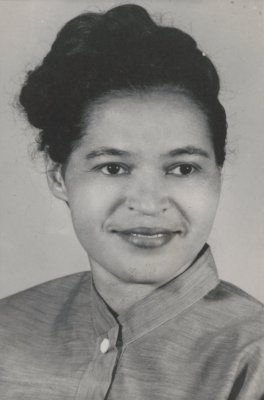
Back in Montgomery during my growing up there, it was completely legally enforced racial segregation, and of course, I struggled against it for a long time. I felt that it was not right to be deprived of freedom when we were living in the Home of the Brave and Land of the Free. Of course, when I refused to stand up, on the orders of the bus driver, for a white passenger to take the seat, and I was not sitting in the front of the bus, as so many people have said, and neither was my feet hurting, as many people have said. But I made up my mind that I would not give in any longer to legally-imposed racial segregation and of course my arrest brought about the protests for more than a year.

Academy of Achievement interview source ↗

Others on this question

View all 36 →
Nicholas Kristof Journalist and columnist, The New York Times; two-time Pulitzer Prize winner
And in the end they robbed us, but they did let us go. But I think that that was a very useful lesson early in my journalism career, that things can go very badly wrong. At one moment you can be going down a road and things are perfect, and the next moment you’ve got some drunk soldiers who just may kill you. That fear that I felt when they were holding us for maybe 45 minutes or so in the jungle, that has never entirely left me.
Recorded Academy of Achievement recorded interview, American Academy of Achievement, 3 July 2008 source ↗
Ram Dass Spiritual teacher and author
everyone saw me as a victim of a terrible illness. But what happened to my body was far less frightening than what happened to my soul. The stroke wiped out my faith. It took me so far from my guru that I felt my oxygen cord had been cut. ... I couldn't put the two together. Then I thought, maybe the stroke is a form of grace, and I hunted for that: how could the stroke be seen as grace? ... The stroke was giving me lessons, advanced lessons. ... It brought me into my soul, and that's grace.
Recorded Sara Davidson, Keynote talk at a conference on body and soul, Hyatt Regency, San Francisco, reported in the New York Times Magazine, The New York Times Magazine, 21 May 2000 source ↗
Sonny Rollins Jazz tenor saxophonist and composer
I went through some really terrible times. I don’t know whether I should really even mention it, but you mentioned that I had to go to prison and all that stuff. I was in a state where they had me in a straitjacket at one time. Can you understand what it would feel like to be in a straitjacket? I know. I couldn’t either, but I was, and it was brought about by sort of a drug psychosis in prison. I mean I just went completely… But it was tough, it was tough. I mean at that time they put you in — there’s a place in New York they used to call the Tombs. You’ve probably heard of it. I mean it was like a living tomb, with all the people. So I was there, and the withdrawal — physical symptoms, which were unbelievable.
Recorded Academy of Achievement (achievement.org) source ↗
Elie Wiesel Writer and human rights advocate; Nobel Peace Prize laureate, 1986
After the war — I was 15 when I entered the camp, I was 16 when I left it, and all of a sudden you become an orphan and you have no one. I had a little sister and I knew, with my mother the first night, that they were swept away by fire. My older sisters I discovered by accident after the war in Paris, where I was in an orphanage. But to be an orphan — you can become an orphan at 50, you are still an orphan. Very often I think of my father and my mother. At any important moment in my life, they are there, thinking, “What an injustice.”
Recorded Academy of Achievement recorded interview, American Academy of Achievement, 29 June 1996 source ↗

More from Rosa Parks

View profile →
Question What have you come to understand about what it means to be human? Values & belief
There were so many needs for us to continue to work for freedom, because I didn’t think that we should have to be treated in the way we were, just for the sake of white supremacy, because it was designed to make them feel superior, and us feel inferior. That was the whole plan of racially enforced segregation.
Recorded Academy of Achievement interview source ↗
Question Which teacher, parent, coach or friend most made you who you are, and what did you learn from them? Relationships
My family, I would say, my mother, and my maternal grandparents. I grew up with them. My mother was a teacher in a little school, and she believed in freedom and equality for people, and did not have the notion that we were supposed to live as we did, under legally enforced racial segregation. She didn’t believe in it.
Recorded Academy of Achievement interview source ↗
Question What is your favourite side project? Craft & work
We work with young people, from the ages of 11 to 17. Our main program is the Pathways to Freedom. And we’ll be going from Memphis, Tennessee through ten other states, and Washington, DC, and to Canada. It began July 13th and ends August 8th. We hope to take as many young people and their chaperons as possible throughout these areas, and stop and have workshops and programs. They’ll be traveling in buses, and we hope that will inspire and give them a sense of history and also to encourage them to be concerned about their self and history and motivated to reach their highest potential.
Recorded Academy of Achievement interview source ↗
Question What advice would you give your twenty-year-old self, and what should they ignore? Time & hindsight
The advice I would give any young person is, first of all, to rid themselves of prejudice against other people and to be concerned about what they can do to help others. And of course, to get a good education, and take advantage of the opportunities that they have. In fact, there are more opportunities today than when I was young.
Recorded Academy of Achievement recorded interview, American Academy of Achievement, 2 June 1995 source ↗

More on failure & regret

Also answered this

Winston Churchill, George H. W. Bush, Desmond Tutu, Lynsey Addario, Nicholas Kristof, Leymah Gbowee

Search the directory for somebody in particular.

Explore further

Report this answer