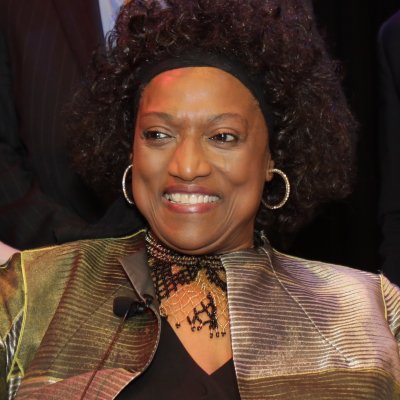
Jessye Norman

Operatic soprano and recitalist

Recorded said elsewhere, not written here
I went to the opera practically every night. I went to something practically every night, just learning and seeing and absorbing, and what I noticed is that there were singers that were only sort of slightly older than I whose voices sounded as though they were many decades older than that, and didn’t sound pretty, and I needed to understand what was happening. I mean there were singers that were 28 or 30 years old or something, and I would speak to them afterwards to say, “Was your voice tired tonight? Tell me what’s happening,” because I didn’t understand it. Their voices should have sounded fresh and blooming and wonderful, but instead they sounded different, and it was because they were singing a different opera every night, and singing whatever was offered, and I didn’t understand and needed to understand — because no one was telling me these things — why they just didn’t say no. Why didn’t they just say, “Oh no, I don’t think I should.”

Academy of Achievement (achievement.org) source ↗

Others on this question

View all 91 →
Ralph Nader Lawyer and consumer advocate; author of Unsafe at Any Speed
Too many people who go to the best schools, and get great grades, are confronted with a choice of trivial work that is very high paid, and has some sort of surface status, like senior partner in a law firm, or corporate executive, but most of the work can be done by anybody.
Recorded Academy of Achievement interview, 16 February 1991 source ↗
Andre Geim Condensed matter physicist; Nobel laureate in Physics, 2010
Instant information about everything and everyone often allows an individual opinion to compete with consensus and paranoia with evidence. It is a time when one blunt honest statement can finish a life-long political career, and one opinionated journalist can bully a government or a royal family. Science is not immune from such pressures. For example, how many Nobel prize-winning experiments – you think – would have been stopped, if ethics or health-and-safety regulations at that time were as zealous as they are today? I can think of more than a few.
Recorded Nobel Banquet, Stockholm City Hall, Nobel Prize Outreach, 10 December 2010 source ↗
Jocelyn Bell Burnell Radio astronomer; discoverer of pulsars
The next generation of telescopes will see millions of events per night with computers that sift through huge amounts of data. If we had had access to a computer, we would never have programmed it to look for something so unexpected. How do you pick up the things you don't know exist, the things you can't tell it to look for? My project was to study quasars, and then we accidentally stumble over these things called pulsars. They were totally unexpected, totally unknown – and it's been huge fun.
Recorded Louise Walsh, University of Cambridge 'Journeys of Discovery' interview series, 1 January 2020 source ↗
Hiroshi Mikitani Founder, chairman and chief executive of Rakuten
Of course, my decision faced plenty of criticism. One of my fellow Japanese CEOs went so far as to call the plan “stupid” – notable, in a country where executives do not generally criticize one another in the press. Clearly, I would have to fight an uphill battle for cultural acceptance. But I was not deterred. A seismic shift demands that we adapt to a new landscape, and a seismic economic shift is exactly what Japan has undergone in recent decades, driven by the forces of globalization and digitization. The only way to compete in this interconnected internet age is to speak the language of the market – and that language is English.
Recorded Mikitani's own essay, originally published on LinkedIn, Inc. (republishing Mikitani's own LinkedIn essay) source ↗

More from Jessye Norman

View profile →
Question What made you decide to stop something you were known for, and how did you know it was time? Time & hindsight
As a very young singer, I was invited to the opera house in Berlin by the then-director of the opera house, Egon Seefehlner, and I had one opera to my name that I knew. He felt that there was a lot that I could learn there, which was very true, and I was so lucky to be able to have this opportunity. The thing that was happening is that I kept being offered operas that I knew that I wasn’t ready to sing, just from an experience point of view, as well as being 24 years old. So I was always asked to sing things that I thought, “Well no, I really don’t think I should sing that now. I need to sing that maybe in five years, or maybe in 10 years, but not right now. Couldn’t I please sing something else?” And that became a difficulty for me. And after being at the opera house for three years, and singing Elsa and Elisabeth — the Wagner roles that are not sort of the heavy Wagner roles — and then Mozart operas that suited my voice at the time, I was continually invited to sing things that I just felt I shouldn’t. So I took it upon myself to go to speak with the artistic director to say that I thought I should leave the opera house, and come back in some years when my maturity sort of chronologically would have caught up with the invitations that I was being offered. Of course, considering that he’d taken me into the opera house when I knew one role, he wasn’t all that happy. I thought he’d say, “Oh, what a smart girl. Oh yes, absolutely. That’s what we’ll do.” No, no. He was absolutely furious.
Recorded Academy of Achievement (achievement.org) source ↗

More on values & belief

Also answered this

Jocelyn Bell Burnell, Maryam Mirzakhani, Lee Berger, Yves Bonnefoy, John Hopfield, Mark Zuckerberg

Search the directory for somebody in particular.

Explore further

Report this answer