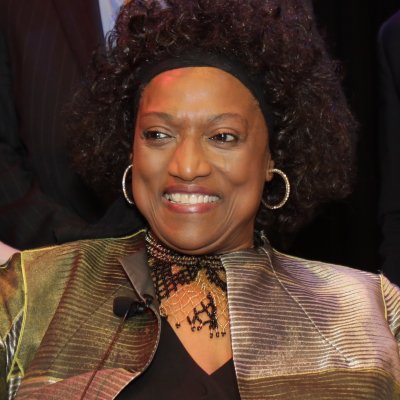
I want to be able to express, I want to be able to communicate, and I want to be able to understand what it is I’m doing, and I want the people whose language it is to understand what I’m doing.
Academy of Achievement (achievement.org) source ↗
The question
What are you unwilling to optimise?
I want to be able to express, I want to be able to communicate, and I want to be able to understand what it is I’m doing, and I want the people whose language it is to understand what I’m doing.
Academy of Achievement (achievement.org) source ↗
Earlier wording is kept rather than replaced. This is the record of how the answer moved, not evidence that it should not have.
Corrected against the source.
I’ve had this concern all the time, but I can only hope that if one writes with appreciation and delicacy and respect, then it’s okay. I have to say that I’ve written a hundred times as much as I’ve published, because if there’s any thought of offense or embarrassment, then I will put the thing quietly away.
Proceed slowly and take care. […] To ensure that you proceed slowly, write by hand.
The highest form that civilization can reach is a seamless web of deserved trust. Not much procedure, just totally reliable people correctly trusting one another. That's the way an operating room works at the Mayo Clinic. If a bunch of lawyers were to introduce a lot of process, the patients would all die. So never forget, when you're a lawyer, that you may be rewarded for selling this stuff, but you don't have to buy it. In your own life, what you want is a seamless web of deserved trust. And if your proposed marriage contract has forty-seven pages, my suggestion is you not enter.
We also believe in straight-talking, telling it as it is, using simple language that people understand, telling people about the downsides as well as the potential upsides, and even telling the bad news that no one wants to utter, like our lack of belief in the sustainability of the Icelandic financial sector that already we had months before the collapse hit us.
As a very young singer, I was invited to the opera house in Berlin by the then-director of the opera house, Egon Seefehlner, and I had one opera to my name that I knew. He felt that there was a lot that I could learn there, which was very true, and I was so lucky to be able to have this opportunity. The thing that was happening is that I kept being offered operas that I knew that I wasn’t ready to sing, just from an experience point of view, as well as being 24 years old. So I was always asked to sing things that I thought, “Well no, I really don’t think I should sing that now. I need to sing that maybe in five years, or maybe in 10 years, but not right now. Couldn’t I please sing something else?” And that became a difficulty for me. And after being at the opera house for three years, and singing Elsa and Elisabeth — the Wagner roles that are not sort of the heavy Wagner roles — and then Mozart operas that suited my voice at the time, I was continually invited to sing things that I just felt I shouldn’t. So I took it upon myself to go to speak with the artistic director to say that I thought I should leave the opera house, and come back in some years when my maturity sort of chronologically would have caught up with the invitations that I was being offered. Of course, considering that he’d taken me into the opera house when I knew one role, he wasn’t all that happy. I thought he’d say, “Oh, what a smart girl. Oh yes, absolutely. That’s what we’ll do.” No, no. He was absolutely furious.
I went to the opera practically every night. I went to something practically every night, just learning and seeing and absorbing, and what I noticed is that there were singers that were only sort of slightly older than I whose voices sounded as though they were many decades older than that, and didn’t sound pretty, and I needed to understand what was happening. I mean there were singers that were 28 or 30 years old or something, and I would speak to them afterwards to say, “Was your voice tired tonight? Tell me what’s happening,” because I didn’t understand it. Their voices should have sounded fresh and blooming and wonderful, but instead they sounded different, and it was because they were singing a different opera every night, and singing whatever was offered, and I didn’t understand and needed to understand — because no one was telling me these things — why they just didn’t say no. Why didn’t they just say, “Oh no, I don’t think I should.”
Adam Zagajewski, Mario Molina, Ursula K. Le Guin, Ricardo Semler, Warren Buffett, Halla Tómasdóttir
Search the directory for somebody in particular.