The question

Do you rely more on inspiration or discipline to make your work?

Originally asked

The Creative Independent, to working artists, its interview series

A repeated Creative Independent tension, asked as inspiration, muse, discipline, ritual, or the requirement to show up.

You answer as yourself. Nobody on FLAPSS answers as anybody else.

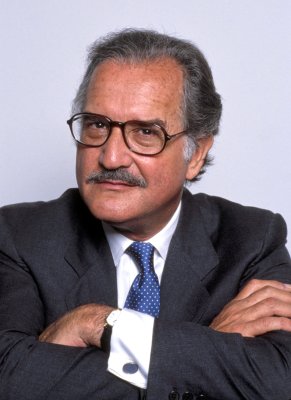
Carlos Fuentes

Novelist and essayist; Mexico's ambassador to France

Recorded said elsewhere, not written here
A writer is no different than a bricklayer or a bus driver in that sense. You must have discipline. Oscar Wilde said that writing is 10 percent genius, 90 percent discipline. You must have discipline for writing. It is not an easy task. It is very lonely. You’re all alone. You are not in company. You are not enjoying yourself in that sense. You are enjoying yourself in another sense. You are delving into your depths, but you are profoundly lonely. It is one of the loneliest careers in the world. In the theater, you are with companions, with directors, actors. In film. In an office. In writing, you are alone. That takes a lot of strength and a lot of will to do it. You must really be in love with what you’re doing to tolerate the huge loneliness of writing.

Academy of Achievement interview, Los Angeles, California, 2 June 2006 source ↗

Others on this question

View all 27 →
Jonathan Lethem Novelist and essayist; National Book Critics Circle Award winner
So, yes, it is very hard work, and there are days where there’s something I have to do in the book, something I have to learn or put myself and the characters through that I am… That makes me fearful or sorrowful. But I do think also that this aspect of writing is over reported at the expense of the pleasurable aspect as well. If writers didn’t love to be in this space between themselves and their language, they probably wouldn’t do it. You’d give up.
Recorded The Talks, published interview, 27 March 2019 source ↗
Gore Vidal Novelist, essayist and playwright
It’s best to start writing when you wake up in the morning, or afternoon, or whenever it is you wake up. Just start then, because you are closer to the dream state than at any other time in the day, which means the imagination is really working on all cylinders, and it means that whatever it is that manufactures sentences in your head is very fresh, and you have all kinds of slants on things that by the end of the day you won’t have, or you will just lose along the way. Further advice I have not.
Recorded Academy of Achievement interview, Los Angeles, California, 3 June 2006 source ↗
Mellody Hobson Co-chief executive and president of Ariel Investments
That moving a lot really committed me to stability and committed me to ... being in control of my destiny. That was something that was very important to me. And it also made me very conservative about money.
Recorded Farai Chideya, News & Notes, Leading Ladies series, NPR, 22 March 2007 source ↗
Carlos Slim Helú Businessman and investor; chairman of Grupo Carso and América Móvil
It takes a combination of ways to do these things, more than discipline. It’s a way of life. It’s like diet or gymnastics. You can know all the gymnastic things, all the exercises. You can know all the diets, but if you don’t do the diets, if you don’t do the exercise, it won’t work. It’s the same if you have some rules, but you don’t live them. It doesn’t work.
Recorded Academy of Achievement interview, Washington, D.C., 2 December 2007 source ↗

More from Carlos Fuentes

View profile →
Question How much rewriting or revision do you typically do? Craft & work
Not that important. I seem to rewrite in my head a great deal. I write in these English ruled notebooks. So I write on the right, and then I correct on the left. Then, when it’s typed out, I even make another correction, and then maybe in the typed sheets also. But not that much. I seem to have a great facility to go right into what I want to say. I do correct, but not like Balzac, who went crazy over the printing presses. He was correcting at the last minute.
Recorded Academy of Achievement interview, 2006 source ↗
Question Which teacher, parent, coach, or friend most made you who you are, and what did you learn from them? Relationships
My father was a great educator for me. He taught me so many things. He named me Carlos after a brother he lost — a very brilliant young man who died at 21 in Mexico. He had written very good poems. He was an intellectual. I think my father wanted to see his brother in me, so he put books into my hands at a very early age. He fostered my literary and artistic inclinations. So he was my best teacher.
Recorded Academy of Achievement interview source ↗

More on craft & work

Also answered this

Suzan-Lori Parks, Gore Vidal, László Krasznahorkai, Arlo Parks, Jonathan Lethem, John Updike

Search the directory for somebody in particular.

Explore further

Report this answer