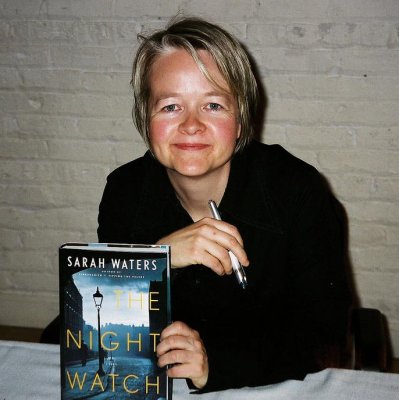
I'm writing with a clear lesbian agenda in the novels. It's right there at the heart of the books.
N/A, N/A, Wikipedia, 1 June 2024 source ↗
The question
What belief do you hold that most people around you would reject or find surprising?Originally asked
Peter Thiel, to job candidates, Zero to One, chapter 1, 2014
Peter Thiel, Zero to One, chapter 1, where it is introduced as his job-interview question. Thiel supplies his own standard: a good answer takes the form "most people believe x, but the truth is the opposite of x."
You answer as yourself. Nobody on FLAPSS answers as anybody else.
I'm writing with a clear lesbian agenda in the novels. It's right there at the heart of the books.
N/A, N/A, Wikipedia, 1 June 2024 source ↗
I started saying in 1985 I don't think we should have a music talking about niggers and bitches and hoes. It had no impact. I've said it. I've repeated it. I still repeat it. To me, that's more damaging than a statue of Robert E. Lee.
I'm a lazy writer. My idea of heaven is not writing. On the other hand, I'm obviously compulsive about it.
Coding is like writing, and we live in a time of the new industrial revolution.
Pix is probably the most successful payment infrastructure run by a government in history. I think Pix has been what has allowed a country like Brazil to leapfrog developed economies like the U.S. and in Europe, and has positioned Brazil today probably five years ahead of the U.S. I don't think anybody understands that, and probably in the U.S. they didn't really expect that.
Writing fiction is not “self-expression” or “therapy”. Novels are for readers, and writing them means the crafty, patient, selfless construction of effects. I think of my novels as being something like fairground rides: my job is to strap the reader into their car at the start of chapter one, then trundle and whizz them through scenes and surprises, on a carefully planned route, and at a finely engineered pace.
Don’t panic. Midway through writing a novel, I have regularly experienced moments of bowel-curdling terror, as I contemplate the drivel on the screen before me and see beyond it, in quick succession, the derisive reviews, the friends’ embarrassment, the failing career, the dwindling income, the repossessed house, the divorce . . . Working doggedly on through crises like these, however, has always got me there in the end. Leaving the desk for a while can help. Talking the problem through can help me recall what I was trying to achieve before I got stuck. Going for a long walk almost always gets me thinking about my manuscript in a slightly new way.
Treat writing as a job. Be disciplined. Lots of writers get a bit OCD-ish about this. Graham Greene famously wrote 500 words a day. Jean Plaidy managed 5,000 before lunch, then spent the afternoon answering fan mail. My minimum is 1,000 words a day – which is sometimes easy to achieve, and is sometimes, frankly, like shitting a brick, but I will make myself stay at my desk until I’ve got there, because I know that by doing that I am inching the book forward. Those 1,000 words might well be rubbish – they often are. But then, it is always easier to return to rubbish words at a later date and make them better.
Whitney Cummings, Yaa Gyasi, Werner Herzog, Tabita Rezaire, Seth Godin, Wendy Kopp
Search the directory for somebody in particular.