Which teacher, parent, coach or friend most made you who you are, and what did you learn from them?
Recorded
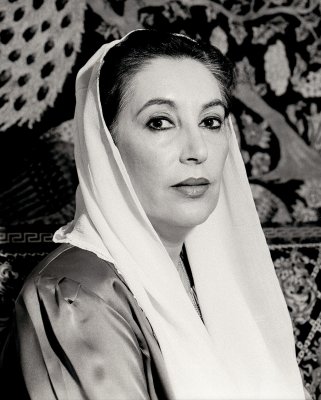
Benazir Bhutto
·
said elsewhere, not written here
A very important influence. Now when I look back on it, it was my father who was against the gender constraints of my time. And my mother, she used to be a working woman herself, she joined the National Guards. She was a captain in the National Guards. She was the first woman in Karachi to own a car and to drive, and people used to talk about her because they said, you know, “We’re not supposed to drive cars.” But when I look back on it, it was my mother who taught that a woman grew up to be married and to have children, and she would tell my father in front of me, “Why do you want to educate her? No man will want to marry her.” So all the time, for her, success depended on having a good catch as a husband, and having children. Whereas for my father, he broke free of those constraints, and he insisted that I have an education. He said, “Boys and girls are equal. I want my daughter to have the same opportunities.”
Academy of Achievement interview
source ↗
There was. The critical moment for me was in the 11th grade. My biology teacher, Mr. McKenzie, decided that what our school needed was a theater arts program and we didn’t have it. There was wrestling, basketball, football, it was a very jock oriented school and there was no theater program whatsoever. So we started a theater program from scratch. We bootstrapped it. He taught it, and I think he might have done it for nothing. We had to build the props and the scenery and the costumes and do everything ourselves. We had to turn the stage into a proper working stage. It took a year, but we started putting on our own productions. I think that was really a pivotal moment. My biology teacher was our muse at that time. And I think the fact that we were having to do everything, that it wasn’t handed to us, may have created a kind of a work ethic that paid off then in independent film production because it’s the same thing. You know, you’re finding scraps and bits and pieces, and putting it all together and putting on a show. And it’s that sense of being able to create some moment of glory, some showmanship — out of nothing, out of baling wire — that is maybe a lesson that was learned there as a result of this man who just decided to have a theater arts program.
Recorded
Academy of Achievement interview
source ↗
So Quigley taught a course called “The History of Civilizations,” and at the end, he said that the great gift of Western civilization to the human race was the idea of progress in a very specific way. He said it was the idea that the future can be better than the present and that every single person, not just the rulers, not just the elected leaders, not just the billionaires, every person has a personal moral obligation to make it so, to keep it going, to make the future better. And it resonated with me. I thought, “That’s the purpose of politics.” It made me really think even more than I had before that I might like a career in public service. It also made me aware of why in the aftermath of something like the 2008 crash you are going to have so much disorientation and anger and frustration because too many people have gotten up every day, and some still do, and looked in the mirror and thought all their tomorrows were going to be like yesterday. It’s the ultimate disempowerment. There’s nothing you can do for yourself, and even worse, for your family. It’s going to be all the same, and Quigley made us understand that our whole culture in Western civilization was designed to counter that, to believe that you personally could make a difference, and I never got over it.
Recorded
Academy of Achievement interview
source ↗
quite early I was picked up by teachers in these small schools in Alabama who encouraged that interest.
Recorded
Academy of Achievement, Academy of Achievement interview, Cambridge, Massachusetts, 1 April 2006
source ↗
He was a little guy who was a great football player at Georgia Tech, and he just was indefatigable. He just would never, ever say die. He absolutely proved to me that persistence was a very big part of making it in life. I never forgot that lesson.
Recorded
Academy of Achievement interview
source ↗
Report this answer