What is one of the best or most worthwhile investments you have ever made — of money, time, or energy?
Recorded Shinya Yamanaka said elsewhere, not written here
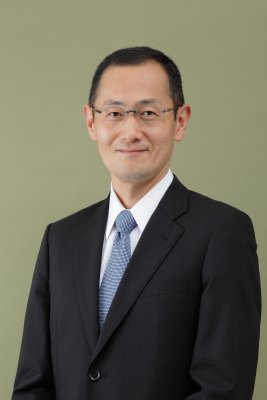
However, it was very natural that a failed surgeon with little experience in molecular biology had a hard time finding a position. A turning point came when I got a fax from Thomas Innerarity at the Gladstone Institute of Cardiovascular Diseases in San Francisco. After a short telephone conversation, Tom was brave enough to give me a postdoctoral position in his lab! Working at Gladstone was one of the best decisions I ever made in my life.

Laureate-written autobiography for Les Prix Nobel, Nobel Prize Outreach, 1 December 2012 source ↗

Others on this question

View all 40 →
Anne Enright Novelist and short-story writer
Remember, if you sit at your desk for 15 or 20 years, every day, not ­counting weekends, it changes you. It just does. It may not improve your temper, but it fixes something else. It makes you more free.
Recorded The Guardian Review, 20 February 2010 source ↗
Lewis Hamilton British Formula One driver
I did boxing because I needed to channel the pain. I did karate because I was being beaten up and I wanted to be able to defend myself.
Recorded The Guardian, 10 July 2021 source ↗
Tadao Ando Architect; Pritzker Prize laureate, 1995
More than 500 children under the age of 18 lost a parent in the Hanshin Earthquake; 88 of them lost both parents and became orphans. I have proposed the establishment of a foundation in order to support the education of these children so that they can sustain their hopes for the future. To that end, I would like to contribute the hundred thousand dollar prize awarded to me today by The Hyatt Foundation towards this new foundation for these young earthquake victims.
Recorded Grand Trianon Palace, Versailles, 22 May 1995, The Hyatt Foundation / The Pritzker Architecture Prize, 22 May 1995 source ↗
Tanni Grey-Thompson British wheelchair racer, 1988–2007; member of the House of Lords
In the whole of my career, there were very few training sessions that I missed. Even when I was pregnant, I trained all the way through. I was back training when my daughter was two weeks old. You've got to commit to this, because it can be really easy to walk away from the track, convince yourself, "Oh, well, I'll do it tomorrow, I'll catch up". You can't and what I say is it's all pennies in the bank. When I say that to my daughter, she rolls her eyes at me, but you put a couple of pennies in every day and when it matters, then you've got this bank to call on, as opposed to you can't stick them all in two weeks before.
Recorded Pursuing Better Together podcast, Arch Insurance, 25 May 2022 source ↗

More from Shinya Yamanaka

View profile →
Question What is the part of your job that people would be surprised is most of your job? Craft & work
Running CiRA with some 250 staff, I have come to spend less time discussing their data with my colleagues and students, and have been absorbed by my duties as the "chief executive officer" of CiRA, including devising strategies to advance both basic and applied research and to obtain sufficient funding. Anxious about the lack of financial resources for the future to allow us to continue hiring research support staffers, I even ran the full Kyoto Marathon in 2012 to raise online donations from the public. It was hard but helped us raise more than 10 million yen.
Recorded Laureate-written autobiography for Les Prix Nobel, Nobel Prize Outreach, 1 December 2012 source ↗
Question What is something everyone in your world agrees about that you think is wrong? Values & belief
In Japan, however, I found myself suffering from Post America Depression or PAD. The environment for researchers in Japan was quite different in many ways from that in the U.S. At the medical school, very few scientists showed interest in the basic biology of mouse ES cells, and there was little thought-provoking discussion with my colleagues. Some of my colleagues advised me to work on something more related to medicine. Furthermore, I could not get enough funding and had to change the cages of the numerous mice by myself every week. What was worse, the Nat1 work was being rejected by many journals. I felt lonely and depressed, and I was about to give up my career as a scientist and return to the path of physician.
Recorded Laureate-written autobiography for Les Prix Nobel, Nobel Prize Outreach, 1 December 2012 source ↗

More on money & investment

Also answered this

Svante Pääbo, Venkatraman Ramakrishnan, Mario Molina, Jocelyn Bell Burnell, Emmanuelle Charpentier, Elizabeth Iro

Search the directory for somebody in particular.

Explore further

Report this answer