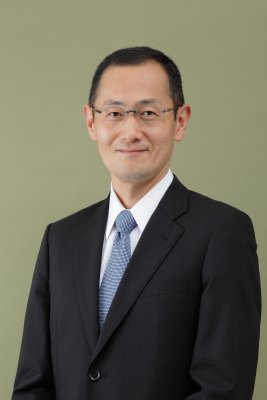
I don’t know. That’s a terrible answer I realise, and everyone wants a nice straight forward answer. I think everyone, all scientists, have these kind of wacky ideas along the way, and some of them work and some of them don’t work. And this was one that, you know, came and was successful and went forward, and again it sounds obvious to say we were lucky – but we were lucky, you know, there’s way more ideas fail than ever succeed, and this was one that, you know, we were very excited about at the beginning, we thought it had a very low probability of success, but it took off, and it took off like gangbusters. That was wonderful to see.
How has a failure, or apparent failure, set you up for later success? Do you have a favourite failure?
Question
What is the book you have given most as a gift, and why?
Taste & recommendation
Question
What are you most proud of?
Identity & self
Question
What problem are you still trying to solve?
Craft & work
Question
What is the most important lesson life has taught you?
Time & hindsight
Question
What advice would you give your twenty-year-old self, and what should they ignore?
Time & hindsight
Question
What is one of the best or most worthwhile investments you have ever made — of money, time, or energy?
Money & investment
Working at the hospital, I found that my surgical skills were not as good as I expected. One time it took me two hours to do a surgical operation which could have been completed in 30 minutes by other surgeons. My supervisors were very tough on new residents like me, and I lost confidence in my ability.
Laureate-written autobiography for Les Prix Nobel, Nobel Prize Outreach, 1 December 2012 source ↗
Others on this question
View all 69 →
David MacMillan
Scottish organic chemist
Recorded
Adam Smith, Telephone interview recorded shortly after the prize announcement, Nobel Prize Outreach, 1 October 2022
source ↗
N. R. Narayana Murthy
Co-founder and former chairman of Infosys
I will begin with the importance of learning from experience. It is less important, I believe, where you start. It is more important how and what you learn. If the quality of the learning is high, the development gradient is steep, and, given time, you can find yourself in a previously unattainable place. I believe the Infosys story is living proof of this. Learning from experience, however, can be complicated. It can be much more difficult to learn from success than from failure. If we fail, we think carefully about the precise cause. Success can indiscriminately reinforce all our prior actions.
Recorded
New York University Stern School of Business pre-commencement lecture, 9 May 2007, Rediff, 28 May 2007
source ↗
Sir Roger Bannister
Middle-distance runner and neurologist; first man to run a mile in under four minutes
I had set my mind on winning the 1500-meter gold medal in Helsinki in 1952. ... And, it all came disastrously wrong when I came fourth instead of winning. ... Instead of retiring in order to devote myself to medicine, I decided to go on for another two years while I was still a student, working clinically in London, and I did that.
Paul Farmer
Physician and medical anthropologist; co-founder of Partners In Health
And some of the things that we saw in the ’80s, really, they were failures, because patients died. But they allowed us to diagnose the systems’ problems and say, “This is where we need a community health worker system. This is where we need to make sure patients have food support while they’re getting these medicines,” et cetera. So those are examples of tragedies that certainly lead to — not just personal epiphanies — but collective epiphanies, where you say, “You know what? We can do this better if we have the system fixed.”
Recorded
Academy of Achievement recorded interview, American Academy of Achievement, 3 July 2009
source ↗
More from Shinya Yamanaka
View profile →A book also pushed me to become a medical doctor. I was deeply inspired by Torao Tokuda, a physician who founded a hospital group in the 1970s that tried to revolutionize the Japanese medical care system.
Recorded
Laureate-written autobiography for Les Prix Nobel, Nobel Prize Outreach, 1 December 2012
source ↗
I strongly feel that this is, that I am able to receive this award because of John Gurdon and also many other researchers in the field. This field has a long history, starting with John Gurdon. So I feel very lucky. I may have played some important role in this long history, but it was not myself who initiated this field. So that’s my feeling right now.
Recorded
Adam Smith, Telephone interview recorded shortly after the prize announcement, October 2012, Nobel Prize Outreach, 1 October 2012
source ↗
we can select one gene out of those 20,000 genes, and completely destroy that one particular gene so that we can understand the function of that particular gene. I got very interested in that technology. It was 1992 or 1993 when I graduated from my Ph.D. school. So I decided to study — I decided to learn about knockout mouse technology. But at that time in Japan, only a few scientists were working on knockout mouse technology
So I think failure is important in my career.
Well, I will bring this technology to clinics. I really want to help as many patients as possible. As you may know, I started my career as a surgeon 25 years ago. But it turned out that I am not talented as a surgeon
Recorded
Adam Smith, Telephone interview recorded shortly after the prize announcement, October 2012, Nobel Prize Outreach, 1 October 2012
source ↗
However, it was very natural that a failed surgeon with little experience in molecular biology had a hard time finding a position. A turning point came when I got a fax from Thomas Innerarity at the Gladstone Institute of Cardiovascular Diseases in San Francisco. After a short telephone conversation, Tom was brave enough to give me a postdoctoral position in his lab! Working at Gladstone was one of the best decisions I ever made in my life.
Recorded
Laureate-written autobiography for Les Prix Nobel, Nobel Prize Outreach, 1 December 2012
source ↗
More on failure & regret
- What has been your biggest disappointment? 366 answers
- Who most deserves an apology from you, and why? 209 answers
- If you could edit your past, what would you change? 203 answers
- What is the worst thing anyone has said to you? 122 answers
- Which moment embarrassed you most? 122 answers
- What is the hardest thing that has happened to you, and what did you carry out of it? 36 answers
Also answered this
Robert S. Langer, Michael Rosbash, Richard Leakey, Christiane Nüsslein-Volhard, Paul Farmer, Michael Houghton
Search the directory for somebody in particular.
Explore further
- All failure & regret questions
- Explore the archive — by field, age, era, and subject