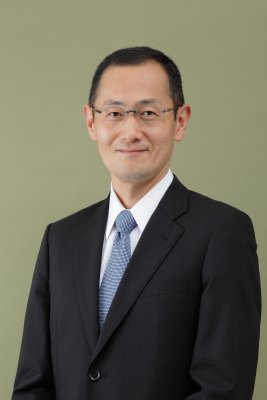
There are many battles. There’s so much that needs to be done. We need to protect the environment. Save this little planet. Not just this little piece of real estate we call America, but save the planet.
Originally asked
Lifehacker, to people about their working day, How I Work
Lifehacker repeatedly used this exact closing prompt in its named How I Work questionnaire.
You answer as yourself. Nobody on FLAPSS answers as anybody else.
Academy of Achievement interviewer, Academy of Achievement interview, 2008 source ↗
Others on this question
View all 11 →we know the fish, we know the worm, we know the fly, but we don’t know the links between and we don’t know, when we go back to the branches in evolution, we really don’t know what happened there when they branched and how they divert and what is the major drive for evolution.
The mystery of summoning up words. Where are they in the mind, in the brain? They appear to be an agency from nowhere. They exist somewhere in our ground or in our air. They come from unknown darkness. From a place we normally don't think about.
We have all these interesting challenges now. No one knows whether automation and robotics, nanotechnology, will kill more jobs than it creates. If it does, that presents a serious problem. What are we going to do? Have a few of us work to support everybody else, or shorten the workweek for everybody? If so, how do we get from here to there? No one knows yet how we’re going to stop cyber terrorism from wrecking honest discourse in democracy and maybe putting our very lives at risk.
More from Shinya Yamanaka
View profile →In Japan, however, I found myself suffering from Post America Depression or PAD. The environment for researchers in Japan was quite different in many ways from that in the U.S. At the medical school, very few scientists showed interest in the basic biology of mouse ES cells, and there was little thought-provoking discussion with my colleagues. Some of my colleagues advised me to work on something more related to medicine. Furthermore, I could not get enough funding and had to change the cages of the numerous mice by myself every week. What was worse, the Nat1 work was being rejected by many journals. I felt lonely and depressed, and I was about to give up my career as a scientist and return to the path of physician.
I got very interested in so-called “knockout mouse” technology. Knockout mouse is a way to study the function of genes. You know, both human and mouse have approximately 20,000 genes. With knockout mouse technology, we can select one gene out of those 20,000 genes, and completely destroy that one particular gene so that we can understand the function of that particular gene. I got very interested in that technology. It was 1992 or 1993 when I graduated from my Ph.D. school. So I decided to study — I decided to learn about knockout mouse technology. But at that time in Japan, only a few scientists were working on knockout mouse technology. That’s why I decided to move to the States, San Francisco
So I think failure is important in my career.
A book also pushed me to become a medical doctor. I was deeply inspired by Torao Tokuda, a physician who founded a hospital group in the 1970s that tried to revolutionize the Japanese medical care system.
I was born in Osaka, Japan. It was 45 years ago. My father has a small factory in Osaka, and we lived next to his factory
my second failure in my career. But that second failure got me interested in knockout mice, mouse technology. So I think failure is important in my career
More on craft & work
- What is the worst job you have done? 229 answers
- What do you consider your greatest achievement? 192 answers
- How do you know when a piece of work is finished? 67 answers
- What do you do when you feel creatively blocked or stuck? 66 answers
- How does a new work begin for you? 63 answers
- How much rewriting or revision do you do? 46 answers
Also answered this
Christiane Nüsslein-Volhard, Mario Molina, Jocelyn Bell Burnell, Tom Lubbock, Desmond Tutu, Rosa Parks
Search the directory for somebody in particular.
Explore further
- All craft & work questions
- The How I Work questionnaire — 3 questions from the same format
- Explore the archive — by field, age, era, and subject