In the last five years, what new belief, behaviour, or habit has most improved your life?
Recorded Ray Dalio said elsewhere, not written here
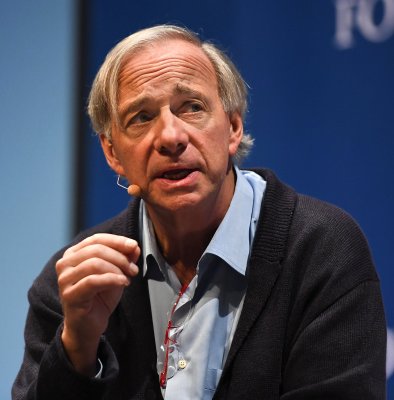
I gained a humility that I needed in order to balance my audacity. I wanted to find the smartest people who would disagree with me to try to understand their perspective or to have them stress test my perspective. I wanted to make an idea meritocracy. In other words, not an autocracy in which I would lead and others would follow and not a democracy in which everybody's points of view were equally valued, but I wanted to have an idea meritocracy in which the best ideas would win out.

TED2017, 24 April 2017 source ↗

Others on this question

View all 20 →
Andrew Ng Co-founder of Coursera and of Google Brain; founder of DeepLearning.AI
I just finished reading BJ Fogg's new book, Tiny Habits: The Small Changes That Change Everything. Fogg explains that the best way to build a new habit is to start small and succeed, rather than starting too big and giving up. For example, rather than trying to exercise for 30 minutes a day, he recommends aspiring to do just one push-up, and doing it consistently. This approach may be helpful to those of you who want to spend more time studying. If you hold yourself accountable for watching, say, 10 seconds of an educational video every day — and you do so consistently — the habit of studying daily will grow naturally.
Recorded Ng's own newsletter, The Batch, DeepLearning.AI, 2020 source ↗
Kazuo Ishiguro Novelist and screenwriter; Nobel laureate in Literature, 2017
The reason why so many vivid, undeniably convincing characters in novels, films and plays so often failed to touch me was because these characters didn’t connect to any of the other characters in an interesting human relationship. And immediately, this next thought came regarding my own work: What if I stopped worrying about my characters and worried instead about my relationships?
Recorded Swedish Academy, Stockholm, 7 December 2017, The Nobel Foundation (nobelprize.org), 7 December 2017 source ↗
Yo-Yo Ma Cellist
But part of practicing to me is actually an active enjoyment. When people ask, “How much do you practice and do you like practice?” Well, I think it’s always getting your mind to go from “I should” to “I want.” It’s like the magic button that only you can locate. When you’re doing the “should” thing, time happens very slowly. Ugh, I’ve been practicing forever! Fifteen minutes. But when you want to do something, an hour has passed. Your control of time depends on whether you should do something or whether you want to do something.
Recorded GQ, GQ interview, 1 January 2020 source ↗
Novak Djokovic Serbian professional tennis player
It was hard at first. I craved the soft, chewy, comforting feel of bread. I craved crunchy pizza dough, sweet rolls, and all the foods that I learned contained wheat—things I had never suspected. For the first 10 days or so, I craved these foods, but I focused each day on staying disciplined; and, fortunately, my family and friends—even though they thought I was crazy—supported me in my quest. But as the days rolled along, I began to feel different. I felt lighter, more energetic. The nighttime stuffiness I had lived with for 15 years suddenly disappeared. By the end of the first week, I no longer wanted rolls and cookies and breads; it was as if a lifelong craving had miraculously abated. Every day I woke up feeling as though I'd had the best night's sleep of my life. I was beginning to believe.
Recorded Adaptation, written by Djokovic, of his book Serve to Win, Men's Journal, 1 August 2013 source ↗

More on daily life

Also answered this

Akio Toyoda, Tim Cook, Mellody Hobson, Sundar Pichai, Brian Eno, Michael Phelps

Search the directory for somebody in particular.

Explore further

Report this answer