The question

What do you do when you feel creatively blocked or stuck?

Originally asked

The Creative Independent, to working artists, its interview series

A recurring Creative Independent question whose wording distinguishes a lasting block from a temporary impasse.

You answer as yourself. Nobody on FLAPSS answers as anybody else.

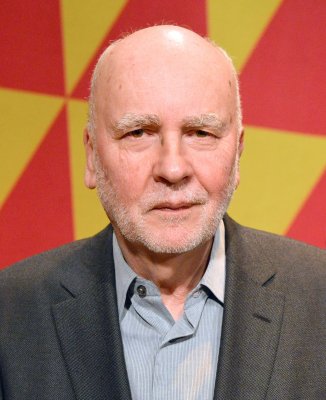
Adam Zagajewski

Poet and essayist

Recorded said elsewhere, not written here
This is a French expression, silence radio, which is used in the navy, for example—when you cannot use the radio because the enemy is near. It’s not an expression I use regularly; I used it once, maybe, to describe my period of inner silence, which mostly happens when I’m back home, coming from Houston. The long weeks or months of silence. So it’s the opposite of inspiration; it’s the time of doing other things. Waiting.

Todd Samuelson, AGNI Online, 25 April 2003 source ↗

Others on this question

View all 82 →
Bill Sellanga Musician, producer and DJ, performing as Blinky Bill
I have a DJ side that I’ve developed, and so when creative blocks hit me I tend to spin a lot more than usual. Also, just trying my hand in other fields. I’m looking at sewing classes the next time I have a creative block.
Recorded Brandon Stosuy, The Creative Independent, 3 August 2017 source ↗
Michael Schenker Rock guitarist
I don’t put myself into that situation. I play and discover. You have to imagine a kid in a sandbox. You’re just having fun. You’re not expecting anything; you’re not looking for anything. You’re not following a trend; you don’t do something that needs to be similar to something else. It is actually from within yourself, which is endless. It’s like a kaleidoscope—you shake it and you have a bunch of new ways of doing things. So I think this block only happens to people who expect something, or who want something or are chasing something or who are trying to write something that sells or whatever. If you don’t look at all of these aspects, if you’re just having fun with notes, it doesn’t happen.
Recorded J. Bennett, The Creative Independent, 14 January 2020 source ↗
Brian Jungen Canadian artist
You can move on, or if something gets overworked and you can put it down, cover it up, or something, and then come back to it and take it back to a place where you were still excited about it. I’m excited about having that opportunity again. I’m probably going to buy some land, but I don’t want to have agriculture be such a huge part of my life. As much as I believe in agriculture—and I think it’s very important that people know how to grow their own food—it’s another thing to take it on as another business and try do that at the same time as having an art career. I would not recommend it.
Recorded Brandon Stosuy, The Creative Independent interview source ↗
Shantell Martin British visual artist
You know, typically I like to draw when I’m in a good mood. It’s difficult for me to start a drawing when I’m not in a good mood because my work, in it’s essence, is very free and very light. For that to take place, you also have to feel quite free and quite light.
Recorded Brandon Stosuy, The Creative Independent interview source ↗

More from Adam Zagajewski

View profile →
Question What is something everyone in your world agrees about that you think is wrong? Values & belief
Yes, because it seems to me that poetry cannot be hermetically closed to thinking. And thinking always enters the field of contradiction. So it also has to do with the way I try to reconcile poetry versus thinking. … I think you’re right that for many American poets, poetry is almost an escape from the cruelty of thinking, from the choices you make when you think. Escaping your life—which may be tragic, but it’s not problematic. So I see it differently, as a necessity to confront these categories.
Recorded Brian Barker and Todd Samuelson, AGNI Online (Boston University), 25 April 2003 source ↗
Question What are you unwilling to optimise? Values & belief
Well, that’s the optimistic reading of it, which you are never able to apply when it happens. You can read it this way when it’s over. Rationally speaking, it’s a period that’s needed, because the danger for every poet, I think, is to write too much. So these are the blessed moments of silence, protecting you from writing too many poems, diluting you and what you have to say in a stream of banal poems. It’s necessary, but still very painful, because I just don’t know what to do if I don’t write poems. I still survive, but it is painful.
Recorded Brian Barker and Todd Samuelson, AGNI Online (Boston University), 25 April 2003 source ↗

More on craft & work

Also answered this

Penny Goring, Justin Chon, Melissa Febos, Margaret Atwood, Matthew Zapruder, Sophie Strand

Search the directory for somebody in particular.

Explore further

Report this answer