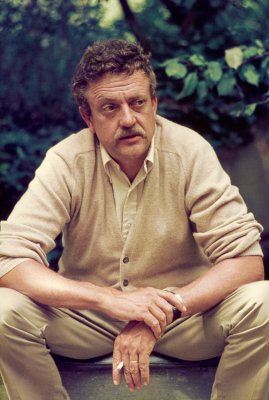
No. Well, I don’t know. It’s biochemical to be redistributed, certainly.
Christopher Kemp, Interview, Salon, 12 December 2001 source ↗
The question
What happens when we die?Originally asked
The Guardian, to a different person each week, The Q&A
A recurring late-stage question in The Guardian Q&A, with materially different answers on publisher-hosted pages.
You answer as yourself. Nobody on FLAPSS answers as anybody else.
No. Well, I don’t know. It’s biochemical to be redistributed, certainly.
Christopher Kemp, Interview, Salon, 12 December 2001 source ↗
The rest is silence.
I don't believe in an afterlife. I don't believe in a single or multiple godhead. I respect people who do, but I don't believe it myself. But there's a big but which enters in here. I am much more conscious than I ever was, for obvious reasons, of what it will mean to people left behind once I'm dead. It won't mean anything for me. But it will mean a lot to them. ... So in one curious way I've come to believe in the afterlife as a place where I still have moral responsibilities, just as I do in this life except that I can only exercise them before I get there. Once I get there, it'll be too late.
I think we live on in people’s memories until those memories go.
We finally get to be with Jesus, face to face.
Yes, well, that’s the reason that I don’t want to be in New York any longer. I don’t want to go to parties any more. There are no familiar faces anymore. You know, you go to a party and you hone in on the couple people you know. There are none of those people for me at parties any more. I’ve lost my sister, my brother, my editor, my publisher. It’s a whole generation gone by. Old war buddies of mine, my colleagues, my family.
I think it would be the moment where I was doing everything right, where I was beyond criticism. It was back in World War II. It was snowing, but everything was black. The trucks were rolling in. I was surrounded by my buddies. And my rifle was between my knees, my helmet on my head. I was ready for anything. And I was right where I belonged. That would be the moment. It would have to be the moment.
I was the third Saab dealer in the United States — you could have a dealership just by asking for one. Had to put up my own money for five cars. Terrible car then, may I say.
Bad things happening to my children and grandchildren.
“Candide” by Voltaire, I guess.
Fine, thank you. I am quite recovered. It was almost a near-death experience. Things weren't going so well for a little while, but I feel strong again.
Neil Gaiman, Tony Judt, David Lynch, Jenny Diski, Midge Ure, Johannes Radebe
Search the directory for somebody in particular.