The question

How do you tell when a piece of work is done?

Originally asked

The Creative Independent, to working artists, its interview series

A repeated process question in The Creative Independent, asked across visual art, music, writing, performance, and mixed media.

You answer as yourself. Nobody on FLAPSS answers as anybody else.

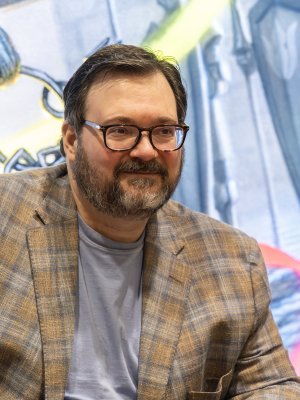
Brandon Sanderson

Novelist

Recorded said elsewhere, not written here
Well, art is never finished, it’s only abandoned, right? That famous quote. A project is done when I feel that I can’t make significant improvements to the story, I’m only going to start taking sideways steps. If I revise it, it doesn’t get better, it just gets different.

Margot Atwell, The Creative Independent, 8 March 2022 source ↗

Others on this question

View all 67 →
Hanif Abdurraqib American poet and essayist
I move back and forth. The Tribe book is easier. I have a proposal and a plan for that, so it’s easier to know when that’s done because there’s a hard end. There’s a certain amount of chapters, and that whole thing. But poetry books, at least in my experience, those tell you when they’re done. My first book told me when it was done. It told me when I had mined everything I could out of the emotional landscape I was trying to create, and it pointed me to an exit strategy. With poetry books, I have been lucky to have my poems do that. My poems tell me how they want to live in the world, when they want to live in the world, and when they’re done being played with… Sometimes, it’s over the course of a month with one poem, or sometimes it takes a little longer than that. I think the hard work is knowing when to pull yourself back so you don’t overextend or let your projects blend together.
Recorded Brandon Stosuy, The Creative Independent interview source ↗
Sandy Tran Chef and chocolatier
I’ll taste it, taste it, taste it, taste it. I ask myself, “How can I make it better? It needs more whatever, salt, vanilla.” Taste it again, again, and again until I think, “Okay, this is it. Let’s not mess with it anymore.” Then I’ll taste it one final time and be like, “Okay, add a percent. Just increase it by one more percent, just a little bit more.” For example, salting a ganache, I’ll salt, salt, salt, salt, salt; taste it. Okay, it can use a little bit more salt. And then I’m like, “Okay, it’s good now.” And then, at the very final moment, I’m going to put a little bit more salt. Walk away. That’s good. Whatever it may be.
Recorded Nereya Otieno, The Creative Independent, 26 June 2026 source ↗
Kay Rosen American painter
With my work you actually know at the beginning what it’s going to be. I plan everything out before I actually start making the piece. There’s always a chance, and it’s happened many times, that it doesn’t work out. I take the canvas off and throw it away. But usually, because it’s sort of done before it’s started, I don’t even have to make that decision. When something doesn’t work, when I’ve had to abandon something, it’s usually been because there was ultimately just no humor in it—or no “A-ha” moment—because there’s something missing. I have a friend whose paintings are never done, he might pick something up years later and add something to it. I’m not that kind of painter, for better or worse. I look at work I did five years ago, and I can’t imagine going back to it. I’m not the same person I was then. I’m not the same person I was even five months ago. When the moment is over, it’s over. I’d rather not spend time rethinking something. Instead, get up. Go outside. Go for a walk. Then make something new.
Recorded T. Cole Rachel, The Creative Independent interview source ↗
Koho Yamamoto Sumi-e painter, calligrapher and teacher
Well, I feel it. If I don’t feel it just the way I want it, then I’d rather destroy it than to keep it.
Recorded Amanda Millet-Sorsa, Koho Yamamoto with Amanda Millet-Sorsa, The Brooklyn Rail, 1 April 2022 source ↗

More from Brandon Sanderson

View profile →
Question How does a new piece of work usually begin for you? Craft & work
It’s different for every project for me. Books are a combination of character, plot, and setting. And every book I write, I could point out and say, oh, there was the first idea . Usually they’re growing separately , a couple ideas for the plot, a couple seeds for characters. An idea for a magic system or a governmental structure. Those will be growing independently in my notes file. I know I have a book when these different elements start to meld together in my brain, and change each other in interesting ways. I’ll start to say, all right, these two ideas belong together. Here’s this character who belongs in this plot. Is there a setting that I’ve been developing that also enhances this?
Recorded Margot Atwell, The Creative Independent interview, 8 March 2022 source ↗

More on craft & work

Also answered this

Boris Fishman, Neel Patel, Lauren Groff, André Aciman, Lucy Ives, Willa Bennett

Search the directory for somebody in particular.

Explore further

Report this answer