Nobody wants to be told about the countless minor horrors and humiliations that become facts of “life” when your body turns from being a friend to being a foe: the boring switch from chronic constipation to its sudden dramatic opposite; the equally nasty double cross of feeling acute hunger while fearing even the scent of food; the absolute misery of gut-wringing nausea on an utterly empty stomach; or the pathetic discovery that hair loss extends to the disappearance of the follicles in your nostrils, and thus to the childish and irritating phenomenon of a permanently runny nose. Sorry, but you did ask … It’s no fun to appreciate to the full the truth of the materialist proposition that I don’t have a body, I am a body.
Originally asked
Krista Tippett, to her guests, On Being
Krista Tippett uses this as a recurring, sometimes-closing On Being question; the wording is intentionally adapted to each guest.
You answer as yourself. Nobody on FLAPSS answers as anybody else.
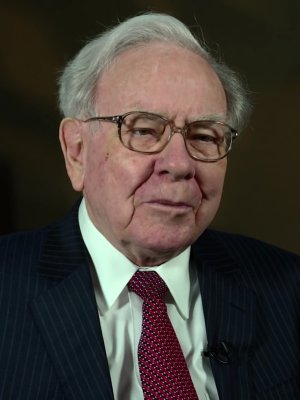
Becky Quick, CNBC “Squawk Box”, recorded in Omaha; CNBC's own transcript of its own broadcast, 31 March 2026 source ↗
Others on this question
View all 14 →When I was a child the mailman came once a day. Now the mail arrives every moment. I used to believe it was preposterous that people could fall in love online. Now I see that all relationships are virtual, even those that take place in person. Whether we use our bodies or a keyboard, it all comes down to two minds crying out from their solitude.
The movement has perfected a rarefied form of America’s addiction to self-rule, which denies much of our humanity: our fragile bodies, our finitude, our need to stare down our deaths (at least once in a while) and be filled with dread and wonder. At some point, we must say to ourselves, I’m going to need to let go.
There were so many needs for us to continue to work for freedom, because I didn’t think that we should have to be treated in the way we were, just for the sake of white supremacy, because it was designed to make them feel superior, and us feel inferior. That was the whole plan of racially enforced segregation.
More from Warren Buffett
View profile →In particular, my decision to sell McDonald's was a very big mistake. Overall, you would have been better off last year if I had regularly snuck off to the movies during market hours.
And now, you've got nine countries, including, you know, a guy in North Korea. I mean, and there will be, something will happen. And we worried enormously about it when there were two. And we had perfectly, we had really pretty sane leaders in Kennedy and Khrushchev. You know, I mean, you were not dealing with unstable people or anything like that.
Some material things make my life more enjoyable; many, however, would not. I like having an expensive private plane, but owning a half-dozen homes would be a burden. Too often, a vast collection of possessions ends up possessing its owner.
My first mistake, of course, was in buying control of Berkshire. Though I knew its business - textile manufacturing - to be unpromising, I was enticed to buy because the price looked cheap. Stock purchases of that kind had proved reasonably rewarding in my early years, though by the time Berkshire came along in 1965 I was becoming aware that the strategy was not ideal. If you buy a stock at a sufficiently low price, there will usually be some hiccup in the fortunes of the business that gives you a chance to unload at a decent profit, even though the long-term performance of the business may be terrible. I call this the "cigar butt" approach to investing. A cigar butt found on the street that has only one puff left in it may not offer much of a smoke, but the "bargain purchase" will make that puff all profit. Unless you are a liquidator, that kind of approach to buying businesses is foolish.
The reaction of my family and me to our extraordinary good fortune is not guilt, but rather gratitude. Were we to use more than 1% of my claim checks on ourselves, neither our happiness nor our well-being would be enhanced. In contrast, that remaining 99% can have a huge effect on the health and welfare of others.
The strategy we've adopted precludes our following standard diversification dogma. Many pundits would therefore say the strategy must be riskier than that employed by more conventional investors. We disagree. We believe that a policy of portfolio concentration may well decrease risk if it raises, as it should, both the intensity with which an investor thinks about a business and the comfort-level he must feel with its economic characteristics before buying into it.
More on values & belief
- Which living person do you most admire, and why? 406 answers
- What is the trait you most deplore in others? 197 answers
- What is something everyone in your world agrees about that you think is wrong? 79 answers
- What are you unwilling to optimise? 30 answers
- What is the most overrated virtue? 10 answers
- What do you need to believe in order to get through the day? 9 answers
Also answered this
Mellody Hobson, Oliver Sacks, Rosa Parks, Barack Obama, Bill Clinton, Kate Bowler
Search the directory for somebody in particular.
Explore further
- All values & belief questions
- Explore the archive — by field, age, era, and subject