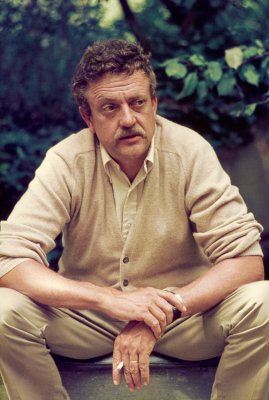
If I were a religious person, my first question would be "Where the hell is God?" But I never expected him to be on the job.
Christopher R. Blazejewski, Interview, The Harvard Crimson, 12 May 2000 source ↗
The question
What important truth do very few people agree with you on?Originally asked
Peter Thiel, to job candidates, Zero to One, chapter 1, 2014
Peter Thiel, Zero to One, chapter 1, where it is introduced as his job-interview question. Thiel supplies his own standard: a good answer takes the form "most people believe x, but the truth is the opposite of x."
You answer as yourself. Nobody on FLAPSS answers as anybody else.
If I were a religious person, my first question would be "Where the hell is God?" But I never expected him to be on the job.
Christopher R. Blazejewski, Interview, The Harvard Crimson, 12 May 2000 source ↗
This light is shining on you. Do you know that it's pushing you?…Most people don't. But it is, because it's got energy. The only thing is, it's so small you don't feel it.
I don't want to look sexy in photographs. I think it's an easy option. I'm so sick of girls pushing their boobs up in Myspace photographs. I hate the way women want to be "hot" all the time.
I understand my definition does not meet most people’s definition of disability.
I think it is an approach that is very ill suited to this particular problem. This whole issue of presenting it as a moral issue to my mind that actually is a capitulation to a kind of neo-liberal ideology which tries to reduce all collective action to cases of individual choices.
I would try to write my war story, whether it was interesting or not, and try to make something out of it. I describe that process a little in the beginning of Slaughterhouse Five; I saw it as starring John Wayne and Frank Sinatra. Finally, a girl called Mary O’Hare, the wife of a friend of mine who’d been there with me, said, “You were just children then. It’s not fair to pretend that you were men like Wayne and Sinatra, and it’s not fair to future generations, because you’re going to make war look good.” That was a very important clue to me.
The real goal is to make your soul go, not to make a living. Practicing art, even in a mediocre way, can make the soul go.
Fine, thank you. I am quite recovered. It was almost a near-death experience. Things weren't going so well for a little while, but I feel strong again.
“Candide” by Voltaire, I guess.
Bad things happening to my children and grandchildren.
I was going to be a journalist. But after the war I studied anthropology, just in order to become educated. I thought it was worth knowing the science of man. I still intended to become a journalist, but there were no jobs, because the reporters who had gone to war were coming back and were entitled to their jobs, and the women who had replaced them were damned if they’d leave, and they shouldn’t have left.
Amitav Ghosh, Richard Ford, David Hare, Alan Cumming, Adam Zagajewski, adrienne maree brown
Search the directory for somebody in particular.