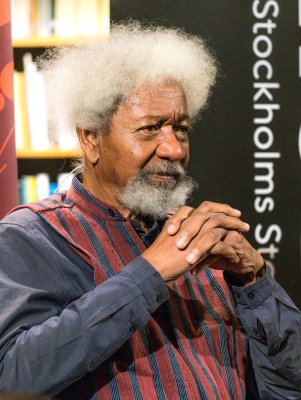
I’m still astonished that somebody would offer me a job and pay me to do what I wanted to do. And to this day, that’s been the astonishment of my life, and delight of my life, and the wonder of my life, and the puzzlement that anybody would be so stupid as to be willing to do that. I hear all these success stories of people, these captains of industry, these forgers of the world, and empire builders and so on. And they talk about all the money they’ve made and become presidents and all that, and I thought, jeez, but look at me. When I was offered a chance to be head of studios I wouldn’t take it. I like to work with the tools of my trade. The tools of my trade is a lot of paper and a pencil, and that’s all it is.
What are you unwilling to optimise?
Question
What advice would you give your twenty-year-old self, and what should they ignore?
Time & hindsight
Question
Which teacher, parent, coach or friend most made you who you are, and what did you learn from them?
Relationships
Question
What is the hardest thing that has happened to you, and what did you carry out of it?
Failure & regret
Question
What is something everyone in your world agrees about that you think is wrong?
Values & belief
That’s a very good question. I think I’m a very lazy writer and by that I mean that I do not battle, I don’t struggle too hard against it. If I have difficulties in the writing, I just go and do other things. I don’t feel a compulsion to write. Of course, when I start writing then it becomes a compulsive activity, because I’ve begun something and I want to continue, want to finish it. … I know there are other writers who sit down religiously every morning, they take their espresso, they put a clean sheet of paper there and they sit looking at that paper until they’ve finished or covered at least a number of those pages. No, I’m not like that. I have to be ready. It has to gestate it for quite a while and then it’s ready to burst forth.
Simon Stanford, NobelPrize.org (Nobel Prize Outreach), 28 April 2005 source ↗
Others on this question
View all 30 →
Chuck Jones
Animator, cartoon director and screenwriter
Annie Proulx
Novelist and short-story writer
Proceed slowly and take care. […] To ensure that you proceed slowly, write by hand.
Alice Waters
Chef, restaurateur and food activist
There’s no such thing as cheap food. It can be affordable, but it can never be cheap. I think that’s something we’ve been indoctrinated by fast food culture to believe, that it can be cheap – that it can be fast, cheap, and easy. But every culture since the beginning of time has thought of food as something precious, and that’s the way I think about it. I want to give my money to the people who take care of the land, and who grow that food.
Derek Sivers
Founder of CD Baby; author of Anything You Want
Do you have a big visionary master plan for how the world will work in twenty years? Do you have massive ambitions to revolutionize your industry? Don’t feel bad if you don’t. I never did. A year and a half after starting CD Baby, it was just me and John, my first employee, running it out of my house. One night, I decided I should think more about the long-term future of this thing. I sat with my diary for a few hours of introspection. Afterwards, I wrote John an email that went like this: “I think there’s a chance that this thing might be huge one day, so we better start preparing for that now. I mean some day, we might have a thousand artists. We might need a third employee! We’d need three computers, and need to figure out how to network them together. We might even need to start moving CDs into the garage, since eventually they might fill up the living room. Yes, I know it sounds grandiose, but I think things are headed that way.” Years later, after I had 100,000 artists and 85 employees, John would often get a good laugh out of this letter I sent him in 1999. Journalists would ask, “What’s your long-term goal?” I’d say, “I don’t have one. I surpassed my goals long ago. I’m just trying to help musicians with whatever they need today.” So please don’t think you need a huge vision. Just stay focused on helping people today.
More from Wole Soyinka
View profile →I just say, “Follow your instincts.” Don’t feel you have to follow the paths of others, because you may not be temperamentally fitted for it. And so you’ll just harm yourself and your cause and others. But just follow your instinct, and don’t ever pretend to be what you’re not.
The early influence in my life I think was my father. That’s the earliest influence. He and his circle of friends. Usually, in our society, children are supposed to be neither seen nor heard. When elders are around, they’re supposed to very respectfully leave them alone. But I was curious. I just loved their debates. They used to get excited over issues, and so somehow I was allowed to eavesdrop, unlike the other children. And I picked up some of the ideas that they had, and I would ask questions. I was known as the questioner. Afterwards, I would ask questions, and my father would indulge me by trying to explain things to me. So that’s one of the reasons I consider him the earliest influence. And also, he had a small library, and I used to go into his library and try and read the books which I found there. Later on, as my circle of adult acquaintances increased, I think the next influence on me was my uncle, the Reverend I.O. Ransome-Kuti, who was another very erudite person, a great educationist. I used to visit them in Igbein, where he lived with his wife and they ran a school. So on weekends sometimes I would go there. And of course it was the usual story. I wanted to listen to them discussing and so on. Don’t misunderstand me. I was also very playful. I loved disappearing by myself, climbing trees, all that I did. But additionally, I was just fascinated by the whole discourse. Exchange of ideas between adults just used to fascinate me for some reason. I was never tired of listening to them. So my uncle was my next great influence.
Writing became a therapy. First of all, it meant I was reconstructing my own existence. It was also an act of defiance. I wasn’t supposed to write. ... I evolved all kinds of mental exercises, even went back to those subjects which I said I hated in school, in particular mathematics. ... You know, anything to keep the mind alive.
Yes, I do. I do, but I were part company with certain schools of writers that I do not believe that it is necessarily the duty of the writer. I don’t believe that. If a writer is true to his vocation, to his or her vocation, the very process of creativity enlarges these human horizons. It provides insights, even when you’re not writing, when your writing’s not dealing with a concrete political situation.
More on values & belief
- Which living person do you most admire, and why? 406 answers
- What is the trait you most deplore in others? 197 answers
- What is something everyone in your world agrees about that you think is wrong? 79 answers
- What have you come to understand about what it means to be human? 14 answers
- What is the most overrated virtue? 10 answers
- What do you need to believe in order to get through the day? 9 answers
Also answered this
Bong Joon-ho, Werner Herzog, Tom Stoppard, Chuck Jones, Annie Proulx, Adam Zagajewski
Search the directory for somebody in particular.
Explore further
- All values & belief questions
- Explore the archive — by field, age, era, and subject