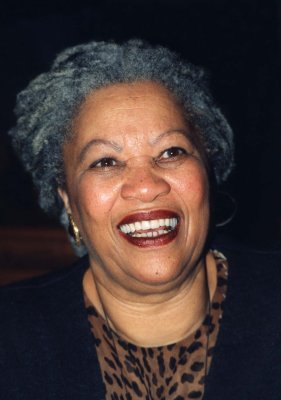
Novelist and editor; Nobel laureate in Literature, 1993
it's not profound regret. It's just a wiping up of tiny, little messes that you didn't recognize as a mess when they were going on
Terry Gross, Fresh Air, NPR, 22 January 2016 source ↗
Novelist and editor; Nobel laureate in Literature, 1993
it's not profound regret. It's just a wiping up of tiny, little messes that you didn't recognize as a mess when they were going on
Terry Gross, Fresh Air, NPR, 22 January 2016 source ↗
they are much more ready to put their family and their children first in a way that I regret that I didn't do.
Roll up your sleeves and work as a bouncer in a sex club or a warden in a lunatic asylum or a machine operator in a slaughterhouse. Drive a taxi for six months and you’ll have enough money to make a film. Walk on foot, learn languages and a craft or trade that has nothing to do with cinema. Filmmaking — like great literature — must have experience of life at its foundation. Read Conrad or Hemingway and you can tell how much real life is in those books.
They become almost like your children. Next to your own flesh and blood, you get very close to them. Their joys are your joys, their sorrows are your sorrows and that goes on forever. It doesn't end when they leave your supervision. That's with you forever.
It was only with her help that I did everything. The tragedy was that after 40 years of marriage she died of cancer. I say that if Martin and I had not married the little country girls we married from Alabama, you never would have heard our names.
I always thought I was able and competent all the while I was rearing them.
Writing before dawn began as a necessity—I had small children when I first began to write and I needed to use the time before they said, “Mama”—and that was always around five in the morning. Many years later, after I stopped working at Random House, I just stayed at home for a couple of years. I discovered things about myself I had never thought about before.
I, at first, thought I didn’t have a ritual, but then I remembered that I always get up and make a cup of coffee while it is still dark—it must be dark—and then I drink the coffee and watch the light come. And she said, “Well, that’s a ritual.” And I realized that for me this ritual comprises my preparation to enter a space that I can only call nonsecular … For me, light is the signal in the transition. It’s not being in the light, it’s being there before it arrives. It enables me, in some sense.
We die. That may be the meaning of life. But we do language. That may be the measure of our lives.
You are your best thing.
Werner Herzog, Simone Campbell, John Wooden, Abraham Verghese, Andrew Young, Pete Rozelle
Search the directory for somebody in particular.