The question

How does a new piece of work usually begin for you?

Originally asked

The Paris Review, to novelists and poets, The Art of Fiction

A recurrent craft question in The Paris Review's Art of Fiction interviews; wording varies between character, theme, first sentence, image, and idea.

You answer as yourself. Nobody on FLAPSS answers as anybody else.

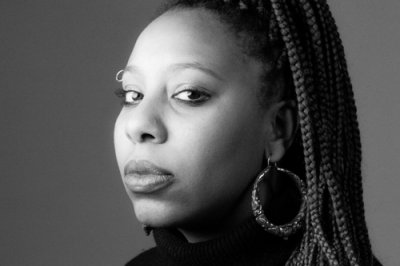
Morgan Parker

author

Recorded said elsewhere, not written here
A little of both. Sometimes I have a skeleton of something. For both essays and poems, the conception process is very similar. So there definitely were some essays that started as poems. It’s just about realizing what the best container is for the thought. Sometimes I need more of an argument, even if it’s an argument with myself, but what’s cool is that I can think about utilizing those techniques no matter what form. It’s about exercising, learning how an essay thinks, and then being able to apply that to a poem if I need to or want to.

Arriel Vinson, The Creative Independent interview, 6 January 2025 source ↗

Others on this question

View all 60 →
Willem Kolff Physician and inventor; builder of the first practical artificial kidney
When I was this young assistant at the University of Groningen my responsibility was for four beds, or rather the patients in four beds. That was all I had to do. And, one of these patients was a young man, 22 years old, who slowly and miserably died from renal failure. He became blind, he vomited, and it was a miserable death. And I, as a very, very young physician, had to tell his mother, in a black dress and a little white cap like the farmers have, that her only son was going to die. I couldn’t do a damn thing about it. So, I began to think, “If I could just every day remove as much urea as this boy creates, which is about 20 grams, then the boy could live.” Well, he died, but I began to work on that.
Recorded Academy of Achievement interview source ↗
Theresa Chromati American painter
The starting process has changed over time. I go back and forth from knowing exactly where I want to place the central figure and doing that first and committing to her and then building the world around her. But more recently, between the body of work I did last year and what I’m working on now, I’ve started to commit to building up the background layers slowly. Putting a wash down and building up a lot of different transparent layers that have their own energies, and then starting to rip that energy apart to then create a new form or a new structure. That language, in general, is also what this is about. Ripping and expanding, shedding and rebuilding, that push and pull of building the surface so that she has this foundation and that it feels like a more consonant structure. I’m liking that relationship to the work.
Recorded Annie Bielski, The Creative Independent interview source ↗
Jóhann Jóhannsson Icelandic musician and composer
It’s different every time. The physical or mental acts of composing are always kind of the same. It really involves, for me, turning off the more critical faculties of the brain and reaching a state where things just flow. It takes many days to get into that because normally you’re in this critical mode, this analytical mode where you’re structuring things and putting things in order. To create the material, to create the building blocks, you have to go into another state, which is much more receptive and much more intuitive.
Recorded The Talks interview, 21 October 2015 source ↗

More on craft & work

Also answered this

Helen Phillips, Andrea Barrett, T.C. Boyle, André Aciman, Precious Okoyomon, Claudia Dey

Search the directory for somebody in particular.

Explore further

Report this answer