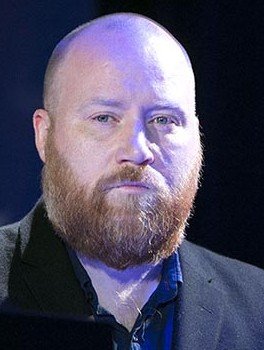
How does a new work begin for you?

Originally asked

The Paris Review, to novelists and poets, The Art of Fiction

A recurrent craft question in The Paris Review's Art of Fiction interviews; wording varies between character, theme, first sentence, image, and idea.

You answer as yourself. Nobody on FLAPSS answers as anybody else.

Recorded Jóhann Jóhannsson said elsewhere, not written here
It’s different every time. The physical or mental acts of composing are always kind of the same. It really involves, for me, turning off the more critical faculties of the brain and reaching a state where things just flow. It takes many days to get into that because normally you’re in this critical mode, this analytical mode where you’re structuring things and putting things in order. To create the material, to create the building blocks, you have to go into another state, which is much more receptive and much more intuitive.

The Talks interview, 21 October 2015 source ↗

Others on this question

View all 69 →
Jocelyn Bell Burnell Radio astronomer; discoverer of pulsars
From one particular piece of the sky an unclassifiable signal sometimes recurred and my brain started to say: “You’ve seen something like this before, haven’t you? You’ve seen something like this before from this bit of the sky , haven’t you?” I got out previous recordings from that bit of sky. It often wasn’t there, but when it was, it was keeping its place amongst the stars.
Recorded Louise Walsh, University of Cambridge 'Journeys of Discovery' interview series, 1 January 2020 source ↗
Precious Okoyomon artist and poet
I write mostly in my bedroom. I don’t have a desk. I have at least 10 or 12 books that I’m reading at the time around me and I flip through different things. I have poems that I’m reading on my computer and I flip through those. I usually start by journaling. I journal every night, and that’s where most of my poems come from. Or notes in my phone that I pick through and Frankenstein morph into poems. In the end, it’s just me trying to boil down my gibberish and self-recriminations into some destruction and rebirth of me trying to give flesh to my memories.
Recorded Willis Plummer, The Creative Independent interview, 14 April 2022 source ↗
Danny Elfman Film composer and songwriter; founder of Oingo Boingo
No, they are three completely different processes. In film, I try to really blank out my mind when I see the film for the first time so that I have no preconceptions. Early on in my career, I tried to do all this prep or even read the script and write music, but none of it ever survived. And I realized the best way to go at it was to be as blank as I can possibly be. When I’m writing classical music, it’s much more nerve-wracking because I’m starting with nothing! And I don’t have a picture to drive me on. I am wired now, for 38 years, that I see a moving picture, I hear music, you know what I mean? But with classical, I got nothing, and at first that was totally terrifying. But I forced myself into it, and then something develops, and it becomes very liberating. With the rock music, it’s a whole different process. I mean, I can’t do anything until I get the message.
Recorded The Talks interview, 12 August 2022 source ↗
David Hare Playwright and screenwriter
Just circumstance. I was running a small theatre group and somebody didn’t deliver a play.
Recorded Jasper Rees, Q&A, The Arts Desk, 10 October 2009 source ↗

More on craft & work

Also answered this

Ernest Greene, Thomas Mars, Jorge Drexler, Jason Williamson, Buck Meek, Ramin Djawadi

Search the directory for somebody in particular.

Explore further

Report this answer