I don’t know. How do you start a project?
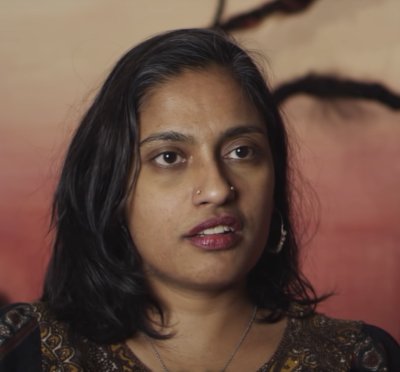
Anupa Mistry, The Creative Independent interview source ↗
The question
How does a new piece of work usually begin for you?Originally asked
The Paris Review, to novelists and poets, The Art of Fiction
A recurrent craft question in The Paris Review's Art of Fiction interviews; wording varies between character, theme, first sentence, image, and idea.
You answer as yourself. Nobody on FLAPSS answers as anybody else.
I don’t know. How do you start a project?
Anupa Mistry, The Creative Independent interview source ↗
I started with the earliest tools: mashers and cutters, knives and knots. I would cast them in paint, and embed them right in the surface. I was using plastilene clay to make the molds. One day my friend Art Schade said, “Why don’t you just make the paintings on the clay ?” It was one of those moments where you hit yourself in the forehead. So I built a big clay table, eight by ten feet. And I could engrave the surface in all kinds of ways.
Well, it’s very simple for me. It’s pretty much always the same. I might have certain things swimming around in my head. We all always do. What’s been on your mind lately? You could ask anybody that, and you’d get a couple of answers. But, I always jump in. I always just try to think of a first sentence. Well, actually, I decide firstly if it’s going to be in third person or first person. And then I just think of something, I just get something moving.
One of the things I worked on with this album was focusing on the lyrics and the melody more so than everything else. A lot of my songs have started with the music and the texture, and then the lyrics and melodies are all framed inside of that. I wanted to do the opposite with this one and have melodies that could stand on their own without the instrumentation. I wanted it to sound just as natural if you were walking in the woods, whistling them as they do with accompaniment. A lot of these songs started with melodies that I would hum into my phone while I was walking somewhere. “Dancing in the Club” and “All Fucked Up” were both written that way.
Having bought the colours, an easel, and a canvas, the next step was to begin. But what a step to take! The palette gleamed with beads of colour; fair and white rose the canvas; the empty brush hung poised, heavy with destiny, irresolute in the air. My hand seemed arrested by a silent veto.
Sometimes it’s about time. When the completion is dictated by some kind of deadline-based condition, then I feel like I know it’s done when there’s the right balance of things in the work. Sometimes that means having to remove a chapter or a figure or a whole set of ideas from the work because there wasn’t enough time and space for all of those things to be treated with equal sensitivity and care, or because keeping every element in the mix would obfuscate or dilute what was at the core of the work. To help me arrive at a state of “doneness” or resolution, I do have a few people that I trust and share my work with. You have to be able to take criticism, ideally from comrades and colleagues whose values are aligned with yours. It’s not just about what it looks like, but trying to understand how a project can help me evolve larger guiding principles.
André Aciman, Sara Magenheimer, Ariana Reines, Willem Kolff, Tavares Strachan, Jeff Bezos
Search the directory for somebody in particular.