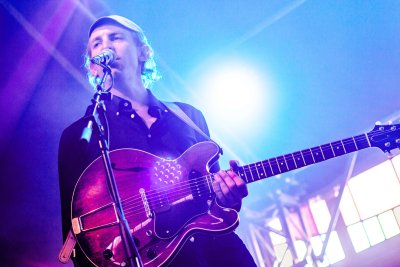
That blank sheet of paper stage is one of the hardest stages, and one of the reasons it’s hard is because at that stage there’s nobody counting on you but yourself. Today it’s easy because we’ve got millions of customers counting on us, and thousands of investors counting on us, and thousands of employees all counting on each other. In that beginning stage it’s really just you, and you can quit any time. Nobody is going to care, so you set about doing the simple things first.
Originally asked
The Paris Review, to novelists and poets, The Art of Fiction
A recurrent craft question in The Paris Review's Art of Fiction interviews; wording varies between character, theme, first sentence, image, and idea.
You answer as yourself. Nobody on FLAPSS answers as anybody else.
Maddie Crum, The Creative Independent interview, 12 April 2021 source ↗
Others on this question
View all 63 →No doubt. I’ve written at times about the spooky element in writing. You go in each morning, and there’s a blank page. Maybe it takes five minutes, maybe it takes an hour. Sooner or later you start writing, and then the words begin to flow. Where does that come from? You can’t pinpoint it. You always wonder, “Will it all stop tomorrow?” In that sense it’s spooky. In other words, you’re relying on a phenomenon that’s not necessarily dependable. That’s a particular kind of fear but there are other fears in writing of an altogether different sort.
It depends on the project. I’m working on a novel now, which started by taking a weird interest in something and circling around it. I think in the early stages, I like to do a lot of really rough draft brainstorming, trying to generate a lot of words, even though I know they’re not going to be part of the final draft. I find first drafts challenging and, actually, I prefer the revision stage, because it seems so daunting to create something out of nothing.
Thank you. Yeah, I don’t write collections. Maybe someday that will happen, but Mercury is based on the Goldberg Variations and so it’s riffing off of that and that Baroque mode of theme and variations. And it is very much structured.
More on craft & work
- What is the worst job you have done? 229 answers
- What do you consider your greatest achievement? 192 answers
- How do you know when a piece of work is finished? 67 answers
- What do you do when you feel creatively blocked or stuck? 66 answers
- How much rewriting or revision do you do? 46 answers
- What is the part of your job that people would be surprised is most of your job? 41 answers
Also answered this
Ramin Djawadi, Black Belt Eagle Scout, Haley Blais, Danny Elfman, Bells Larsen, Jóhann Jóhannsson
Search the directory for somebody in particular.
Explore further
- All craft & work questions
- The The Art of Fiction questionnaire — 3 questions from the same format
- Explore the archive — by field, age, era, and subject