How does a new work begin for you?

Originally asked

The Paris Review, to novelists and poets, The Art of Fiction

A recurrent craft question in The Paris Review's Art of Fiction interviews; wording varies between character, theme, first sentence, image, and idea.

You answer as yourself. Nobody on FLAPSS answers as anybody else.

Recorded John Banville said elsewhere, not written here
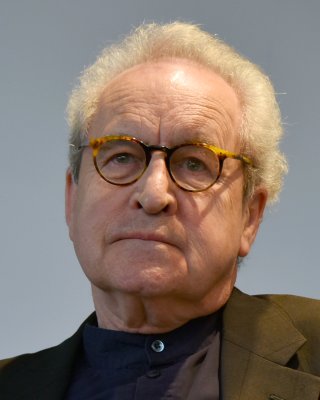
I think it begins as a kind of tension in space.  There’s something out there and it’s waiting for the big bang, and I have to get that into my head.  I have a composer friend in Ireland, and he beautifully said, “I have this scream in my head and I have to get it into the orchestra.  I have to get it into the music.”  But I wouldn’t be quite as dramatic as that.  But I have this tension.  I have this thing that has to be done. And the problem is, you see, once you’ve got the first paragraph down and you’ve got the tone, then the bloody book is written.  All you have to do is fill it in then, which makes it really boring.  I mean I’d like to be like one of those Japanese artists, you know, just go shoop ! and it’s done.  But no, it takes years.

Academy of Achievement interview, 2017 source ↗

Others on this question

View all 70 →
It depends on the project. I’m working on a novel now, which started by taking a weird interest in something and circling around it. I think in the early stages, I like to do a lot of really rough draft brainstorming, trying to generate a lot of words, even though I know they’re not going to be part of the final draft. I find first drafts challenging and, actually, I prefer the revision stage, because it seems so daunting to create something out of nothing.
Recorded Shy Watson, The Creative Independent interview, 7 March 2023 source ↗
I feel some sort of chemistry with the subject.…The bar for me is when it’s interesting enough that I would talk about it on my own time.
Recorded Eva Wiseman, interview, The Guardian, 11 August 2019 source ↗
Phyllis Bramson Visual artist, Teacher
With a lot of fear and trepidation. It’s totally improvisational because I work with collage, and cut up found warehouse paintings. I’ll sometimes stick a fragment or two on, and just try to figure out where to go from there. I’ve begun to think that I make each piece so differently from the other, and I don’t think that’s the way the art world likes things at this point. I think they like increments of change. While you would know it’s my work, I think I just always liked the challenge of how I’m going to compose. I get myself into a lot of trouble and hot water, and I just have to work on it, and work on it. I think that’s why some of my paintings are so awkward and odd, because I’ve had to deal with mistakes that I’ve made, and tried to correct them in some way.
Recorded Annie Bielski, The Creative Independent interview, 19 July 2019 source ↗
At first I’ll think of stuff in my head for a while. The more I think of an idea, the more promising it is— it just naturally occupies space in my brain. Then I start making notes with pen and paper. If it’s a story, it’s more like a moment, or just it’s kind of a more fleeting idea. And if it’s a novel, it’s something that I can see approaching in a lot of different ways, and sticking with for two or three years. I might write a scene or two and just kind of see how it feels. Then I will type an outline. That’s when I really feel like I have a path forward, even though I don’t feel like I have to stick to the outline, but it is very reassuring to me to have it.
Recorded Scarlett Harris, The Creative Independent interview, 29 May 2025 source ↗

More from John Banville

View profile →

More on craft & work

Also answered this

Curtis Sittenfeld, Jia Tolentino, Norman Mailer, Noah Baumbach, Brandon Sanderson, Kate Folk

Search the directory for somebody in particular.

Explore further

Report this answer