The question

Does the thought of dying frighten you?

Originally asked

The Talks, to its interviewees, its interview series

The Talks asks this directly or through an equivalent risk-and-mortality formulation across interviews.

You answer as yourself. Nobody on FLAPSS answers as anybody else.

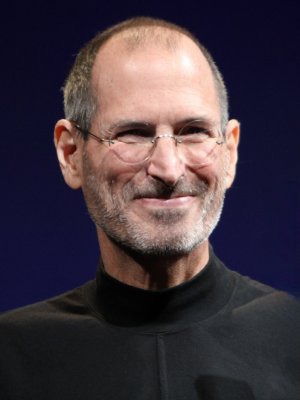
Steve Jobs

Co-founder and chief executive of Apple; co-founder of NeXT; chief executive of Pixar

Recorded said elsewhere, not written here
I've always felt that death is the greatest invention of life. I'm sure that life evolved without death at first and found that without death, life didn't work very well because it didn't make room for the young. It didn't know how the world was fifty years ago. It didn't know how the world was twenty years ago. It saw it as it is today, without any preconceptions, and dreamed how it could be based on that. We're not satisfied based on the accomplishment of the last thirty years. We're dissatisfied because the current state didn't live up to their ideals. Without death there would be very little progress.

Daniel Morrow, Smithsonian Institution Oral and Video Histories, for the Computerworld Smithsonian Awards Program, 20 April 1995 source ↗

Others on this question

View all 18 →
Roger Ebert Film critic
I know it is coming, and I do not fear it, because I believe there is nothing on the other side of death to fear. I hope to be spared as much pain as possible on the approach path. I was perfectly content before I was born, and I think of death as the same state. I am grateful for the gifts of intelligence, love, wonder and laughter. You can’t say it wasn’t interesting. My lifetime’s memories are what I have brought home from the trip. I will require them for eternity no more than that little souvenir of the Eiffel Tower I brought home from Paris.
Recorded Salon, excerpted from Life Itself: A Memoir, 15 September 2011 source ↗
Diana Athill Editor and memoirist
These matters have become discussable with one’s friends, not, of course, as a frequent part of gossip over lunch in the dining room (our only communal occasion) but from time to time, perhaps when admiring someone’s stoicism if their frailty is becoming painfully apparent, or feeling sad at someone else’s inability to accept what seems to be imminent. As a result of this openness, I think that most of the people here would consider it foolish to be frightened of being dead. All of us, however, feel some degree of anxiety about the process of dying.
Recorded The Guardian, 23 September 2014 source ↗
Philip Gould Political strategist and pollster; architect of New Labour
From the moment I resolved and reconciled things with Gail the fear went. I don't feel I've got any fear now. I think acceptance is the key. If you accept death, fear disappears.
Recorded Simon Hattenstone, The Guardian, interview at Gould's home in London, 20 September 2011 source ↗
I don’t think so! You can’t really know that until the moment of your death, at which point you will probably not be afraid because you won’t be there. I have a very old friend who called me last year to say, “Okay I am done. I am not fighting this anymore. I am checking out. I am calling to say goodbye because I am not really conscious most of the time. I am cutting off the pain killers.” He seemed okay. That was not the moment of his death, but it was within two or three days.
Recorded The Talks, 8 February 2023 source ↗

More from Steve Jobs

View profile →
Question What part of your job would surprise outsiders because it takes up so much of your time? Craft & work
My job is to not be easy on people. My job is to make them better. My job is to pull things together from different parts of the company and clear the ways and get the resources for the key projects. And to take these great people we have and to push them and make them even better, coming up with more aggressive visions of how it could be.
Recorded Betsy Morris, Fortune interview, Kona, Hawaii, March 2008 source ↗
Question What do you do when you feel creatively stuck? Craft & work
We called that the 'story crisis,' and we never expected to have another one. But you know what? There's been one on every film. We don't stop production for five months. We've gotten a little smarter about it. But there always seems to come a moment where it's just not working, and it's so easy to fool yourself - to convince yourself that it is when you know in your heart that it isn't.
Recorded Betsy Morris, Fortune interview, Kona, Hawaii, March 2008 source ↗
Question What is the biggest professional obstacle you have faced? Craft & work
At Pixar when we were making Toy Story, there came a time when we were forced to admit that the story wasn't great. It just wasn't great. We stopped production for five months.... We paid them all to twiddle their thumbs while the team perfected the story into what became Toy Story. And if they hadn't had the courage to stop, there would have never been a Toy Story the way it is, and there probably would have never been a Pixar.
Recorded Betsy Morris, Fortune interview, Kona, Hawaii, 7 March 2008 source ↗
Question If you could revise one chapter of your past, what would you change? Failure & regret
But the market was changing. The industry was changing. The scale was changing. And in the end we knew we would be either the last company to make it or the first to not make it. We were right on the edge. We thought we would be the last one that made it, but we were wrong. We were the first one that didn't. We put an end to the companies that tried to do that. We certainly made our fair share of mistakes, but in the end I think we should have taken a bit longer to realize the world was changing and just gone on to be a software company right off the bat.
Recorded Daniel Morrow, Smithsonian Institution Oral and Video Histories, for the Computerworld Smithsonian Awards Program, 20 April 1995 source ↗
Question What does the first hour of your day look like? Daily life
When I was 17, I read a quote that went something like: “If you live each day as if it was your last, someday you'll most certainly be right.” It made an impression on me, and since then, for the past 33 years, I have looked in the mirror every morning and asked myself: “If today were the last day of my life, would I want to do what I am about to do today?” And whenever the answer has been “No” for too many days in a row, I know I need to change something.
Recorded Stanford University 114th Commencement, Stanford News (Stanford University), 12 June 2005 source ↗

More on death & what remains

Also answered this

Diana Athill, Terry Pratchett, Jimmy Carter, Jenny Diski, Henry Marsh, Roger Ebert

Search the directory for somebody in particular.

Explore further

Report this answer