What have you come to understand about what it means to be human?

Originally asked

Krista Tippett, to her guests, On Being

Krista Tippett uses this as a recurring, sometimes-closing On Being question; the wording is intentionally adapted to each guest.

You answer as yourself. Nobody on FLAPSS answers as anybody else.

Recorded Steve Jobs said elsewhere, not written here
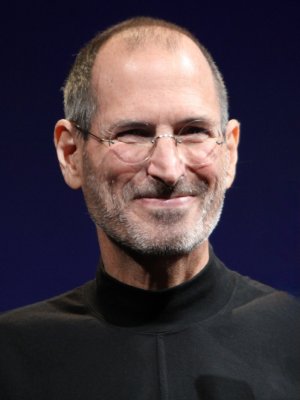
The problem is I'm older now, I'm 40 years old, and this stuff doesn't change the world. It really doesn't. That's going to break people's hearts. I'm sorry, it's true. Having children really changes your view on these things. We're born, we live for a brief instant, and we die.

Gary Wolf, Wired 4.02, February 1996 source ↗

Others on this question

View all 14 →
Paul Kalanithi Neurosurgeon and writer
Everyone succumbs to finitude. I suspect I am not the only one who reaches this pluperfect state. Most ambitions are either achieved or abandoned; either way, they belong to the past. The future, instead of the ladder toward the goals of life, flattens out into a perpetual present. Money, status, all the vanities the preacher of Ecclesiastes described, hold so little interest: a chasing after wind, indeed.
Recorded Stanford Medicine magazine, Spring 2015, 23 February 2015 source ↗
Tony Judt Historian and essayist
I was forced to think very hard about what it meant to be me, what it means to be a person who is only a brain. Pascal's 'thinking reed' really does capture it, because I'm just a bunch of dead muscles thinking.
Recorded Ed Pilkington, The Guardian, 8 January 2010 source ↗
Rosa Parks Civil-rights activist
There were so many needs for us to continue to work for freedom, because I didn’t think that we should have to be treated in the way we were, just for the sake of white supremacy, because it was designed to make them feel superior, and us feel inferior. That was the whole plan of racially enforced segregation.
Recorded Academy of Achievement interview source ↗
Bill Clinton 42nd President of the United States, 1993–2001
There is always an impulse to degrade people who are different from you, to diminish them, to demean them, and it never seems to go away, even when there is ample evidence that when we work together, we do better. It’s not about material progress or personal comfort. It’s about personal identity, and there are still so many forces at work in the human psyche that lead some people to think that their identity requires them to have someone to look down on or to demean or to feel that they’re superior to, and I think that that’s at the root of all this. It’s the only story in human society. Who is the other? Who is one of yours? Cain and Abel.
Recorded Academy of Achievement interview source ↗

More from Steve Jobs

View profile →
Question What would you like to be remembered for? Death & what remains
I think the work speaks for itself. I don't think that people have special responsibilities just because they've done something that other people like or don't like. I think the work speaks for itself. I think people could choose to do things if they want to but we're all going to be dead soon, that's my point of view. Somebody once told me, they said "Live each day as if it would be your last and one day you'll certainly be right." I do that. You never know when you're going to go but you are going to go pretty soon. If you're going to leave anything behind its going to be your kids, a few friends and your work. So that's what I tend to worry about.
Recorded Daniel Morrow, Smithsonian Institution Oral and Video Histories, for the Computerworld Smithsonian Awards Program, 20 April 1995 source ↗
Question What advice would you give your twenty-year-old self, and what should they ignore? Time & hindsight
Your time is limited, so don't waste it living someone else's life. Don't be trapped by dogma — which is living with the results of other people's thinking. Don't let the noise of others' opinions drown out your own inner voice. And most important, have the courage to follow your heart and intuition. They somehow already know what you truly want to become. Everything else is secondary.
Recorded Stanford University 114th Commencement, Stanford News (Stanford University), 12 June 2005 source ↗
Question What is the part of your job that people would be surprised is most of your job? Craft & work
My job is to not be easy on people. My job is to make them better. My job is to pull things together from different parts of the company and clear the ways and get the resources for the key projects. And to take these great people we have and to push them and make them even better, coming up with more aggressive visions of how it could be.
Recorded Betsy Morris, Fortune interview, Kona, Hawaii, March 2008 source ↗
Question If you could edit your past, what would you change? Failure & regret
But the market was changing. The industry was changing. The scale was changing. And in the end we knew we would be either the last company to make it or the first to not make it. We were right on the edge. We thought we would be the last one that made it, but we were wrong. We were the first one that didn't. We put an end to the companies that tried to do that. We certainly made our fair share of mistakes, but in the end I think we should have taken a bit longer to realize the world was changing and just gone on to be a software company right off the bat.
Recorded Daniel Morrow, Smithsonian Institution Oral and Video Histories, for the Computerworld Smithsonian Awards Program, 20 April 1995 source ↗
Question What scares you about getting older? Time & hindsight
It’s often the same with any new, revolutionary thing. People get stuck as they get older. Our minds are sort of electrochemical computers. Your thoughts construct patterns like scaffolding in your mind. You are really etching chemical patterns. In most cases, people get stuck in those patterns, just like grooves in a record, and they never get out of them.
Recorded David Sheff, Playboy Interview, February 1985 source ↗
Question What are you unwilling to optimise? Values & belief
When you’re a carpenter making a beautiful chest of drawers, you’re not going to use a piece of plywood on the back, even though it faces the wall and nobody will ever see it. You’ll know it’s there, so you’re going to use a beautiful piece of wood on the back. For you to sleep well at night, the aesthetic, the quality, has to be carried all the way through.
Recorded David Sheff, Playboy Interview, February 1985 source ↗

More on values & belief

Also answered this

Kate Bowler, Oliver Sacks, Christopher Hitchens, Tony Judt, Paul Kalanithi, Mellody Hobson

Search the directory for somebody in particular.

Explore further

Report this answer