Which writers or artists most influenced your work?

Originally asked

The Paris Review, to novelists and poets, The Art of Fiction

A durable Art of Fiction question asked through named literary influences and artistic models.

You answer as yourself. Nobody on FLAPSS answers as anybody else.

Recorded Elie Wiesel said elsewhere, not written here
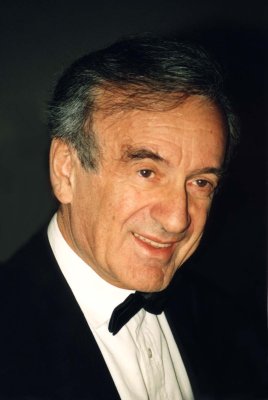
Well, naturally, my grandfather. He was a Hasid, meaning a member of the Hasidic community, and I loved him, I adored him. So thanks to him, I became a Hasid too. And my mother — who actually continued his tradition — she’s the one who brought me to Hasidic Masters. And all the stories I tell now — I’ve written so many books with Hasidic tales — these are not mine, these are theirs, my mother’s and my grandfather’s. My father taught me how to reason, how to reach my mind. My soul belonged to my grandfather and my mother. They enriched me, of course. They influenced me profoundly, to this day. When I write, I have the feeling, literally, physically, that one of them is behind my back, looking over my shoulder and reading what I’m writing. I’m terribly afraid of their judgment.

Academy of Achievement interview, Sun Valley, Idaho, 29 June 1996 source ↗

Others on this question

View all 50 →
Olivia de Havilland Film actress; twice winner of the Academy Award for Best Actress
Thrust into my profession without any training whatsoever, I had to just flounder and just find my way. It was an agonizing experience. It’s like jumping off a diving board in the Olympic contest without knowing how to swim or dive, and I just had to find my way. So one day, I said to Jimmy Cagney, “Jimmy, what is acting?” and he said, “I don’t know.” He said, “All I can tell you is whatever you say, mean it,” and I thought that marvelous counsel.
Recorded Academy of Achievement interview, Washington, D.C., 5 October 2006 source ↗
David Lynch Film director, screenwriter and painter
I don’t know if that is true. There have been 110 or more years of cinema, and it’s impossible for any one of us to make a film that can’t be compared to something that has come before. To me Blue Velvet is Blue Velvet and Rear Window is Rear Window. You could say that Sunset Boulevard or Rear Window has conjured an idea for me, but even though I love them or am inspired by them, life is a 24/7 movie. Ideas come out of that all the time. It’s hard to say it’s cinema that conjures ideas. It’s altogether.
Recorded The Talks, published interview, 15 October 2014 source ↗
Suzanne Farrell Ballerina and ballet master; répétiteur for the Balanchine Trust
That’s an easy question. It was, of course, George Balanchine. He came from Russia via Europe and settled in America in 1933. He started a little company which was not very successful, so he had to start over and over again. Ultimately, he founded the New York City Ballet. I happened to be born at the right time, came to the right place, and had the fortune to audition for him, and work with him, because he is the genius of the century of ballet. I learned how to dance with him.
Recorded Academy of Achievement interview, New York City, 16 December 1990 source ↗
Rashid Johnson Conceptual artist working in sculpture, film and installation
Growing up, it was the music, the style, it was what you saw, what you read, what you looked at, the vernacular that influenced you the most. I carried that, it was so important to me.
Recorded The Talks, published interview, 5 October 2016 source ↗

More from Elie Wiesel

View profile →
Question What are you unwilling to optimise? Values & belief
It went from publisher to publisher to publisher. All of them refused it. They gave the same reasons, until a small publisher picked it up. From 1960 to 1963, three years, it didn’t sell 1500 copies. Nobody wanted to read it. It doesn’t matter. I am not here to sell, I’m here to write.
Recorded Academy of Achievement recorded interview, American Academy of Achievement, 29 June 1996 source ↗
Question Which book changed the way you think, and what did it change? Taste & recommendation
I remember the awakening that occurred in me when I read, for the first time, Franz Kafka. ... That morning I was happy. I wanted to run out and embrace them, all these garbage collectors, because they taught me that there was another world than the world of Kafka, which is absurd and desperate, and despairing.
Recorded Academy of Achievement interview, 29 June 1996 source ↗
Question What is the hardest thing that has happened to you, and what did you carry out of it? Failure & regret
After the war — I was 15 when I entered the camp, I was 16 when I left it, and all of a sudden you become an orphan and you have no one. I had a little sister and I knew, with my mother the first night, that they were swept away by fire. My older sisters I discovered by accident after the war in Paris, where I was in an orphanage. But to be an orphan — you can become an orphan at 50, you are still an orphan. Very often I think of my father and my mother. At any important moment in my life, they are there, thinking, “What an injustice.”
Recorded Academy of Achievement recorded interview, American Academy of Achievement, 29 June 1996 source ↗

More on taste & recommendation

Also answered this

Mohamed ElBaradei, John Lewis, Frances Arnold, Sarah Paulson, Doris Kearns Goodwin, Ph.D., James Cameron

Search the directory for somebody in particular.

Explore further

Report this answer