The question

What is the biggest obstacle you have faced professionally?

Originally asked

The American Academy of Achievement, to its honourees, its oral-history interviews

The Academy of Achievement repeatedly asks honorees to identify a major professional obstacle or challenge and describe confronting it.

You answer as yourself. Nobody on FLAPSS answers as anybody else.

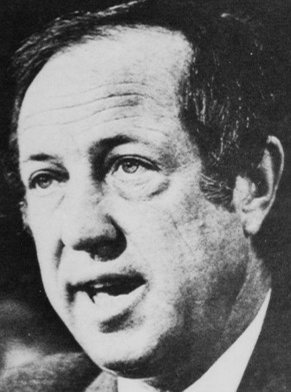
Pete Rozelle

Commissioner of the National Football League, 1960–1989

Recorded said elsewhere, not written here
That was a direct challenge to the NFL constitution, which said you have to have a three-quarters approving vote if you’re going to move your franchise. And we had Davis challenge that in his move from Oakland to Los Angeles. And it was sitting there in the constitution, and I couldn’t just say, “Oh, I’m not going to press this.” I brought it to the attention of the owners, and I said, “I think we have to defend this constitution.” So we had two trials over a couple of years.

Rancho Santa Fe, California, Academy of Achievement, 15 May 1991 source ↗

Others on this question

View all 39 →
Steve Jobs Co-founder and chief executive of Apple; co-founder of NeXT; chief executive of Pixar
At Pixar when we were making Toy Story, there came a time when we were forced to admit that the story wasn't great. It just wasn't great. We stopped production for five months.... We paid them all to twiddle their thumbs while the team perfected the story into what became Toy Story. And if they hadn't had the courage to stop, there would have never been a Toy Story the way it is, and there probably would have never been a Pixar.
Recorded Betsy Morris, Fortune interview, Kona, Hawaii, 7 March 2008 source ↗
Tony Judt Historian and essayist
This cockroach-like existence is cumulatively intolerable even though on any given night it is perfectly manageable. “Cockroach” is of course an allusion to Kafka’s Metamorphosis, in which the protagonist wakes up one morning to discover that he has been transformed into an insect. The point of the story is as much the responses and incomprehension of his family as it is the account of his own sensations, and it is hard to resist the thought that even the best-meaning and most generously thoughtful friend or relative cannot hope to understand the sense of isolation and imprisonment that this disease imposes upon its victims.
Recorded The New York Review of Books, 14 January 2010 issue, 14 January 2010 source ↗
Bill Clinton 42nd President of the United States, 1993–2001
I do think my mother had a lot to do with that. I mean, after all, you know her — it was not near as bad as having your husband die in a car wreck after — he survives World War II. They had a great life planned, and he gets killed in a car wreck, not because of a concussion, but because in a fluke, the tire blows out on his car. He’s thrown out of the car. He lands in a ditch in a field, and the ditch is full of water, and he can’t get out of the ditch before he drowns. There’s — it made it look a little whiny for me to be all bent out of shape about losing an election, and I realized that it was a weird deal. It was 1980. It was Reagan’s election. It was a period not unlike now, widespread resentment over the stagnant economy, the Iran hostage crisis, and I bet I had a hundred people coming to — I’m not exaggerating — coming to me and saying, “God, Bill, I didn’t know you were going to lose. I just voted against you to because I didn’t like some of the things you’d done.” And I remember once — one of the funniest things that ever happened to me. I was driving over to see my mother. I lived in Little Rock, and she lived in Hot Springs 50 miles away, and in the middle of the trip was a little country store owned by a guy who ran the elections in that area and was real smart, so I went in to get a Coke, and started talking to him. And this little boy came up to me in overalls, and he said, “You’re Bill Clinton, aren’t you?” I said, “Yes.” He said, “I helped to beat you. I cost you 11 votes, and it was no accident.” I said, “You did?” He said, “Yeah.” He said, “It was me, my wife, our two boys and their wives, and five of my friends. We just decked you.” I said, “Why’d you do it?” He said, “I had to because you raised my car tax. The car license.” And so we’re standing on the interstate. I said, “Look over there. You remember when I was governor? That highway broke wide open, and even big trucks were off in the ditch, and I had to send the National Guard down here to clean it up, and we had to fix it.” He said, “Yeah, I remember. I don’t care. I still didn’t want to pay it.” So I was laughing at the guy, and I said, “Let me ask you something.” I said, “If I ever ran again, would you vote for me?” He said, “Absolutely.” I said, “You would?” He said, “Sure. We’re even now.” And I went — and there were no cell phones, so I had a dime. I went and put it in the payphone, and I called Hillary, and I said, “You know, I’m not dead yet. We might have to run again.
Recorded Academy of Achievement interview source ↗
Mohamed ElBaradei Director General of the International Atomic Energy Agency, 1997-2009; Nobel Peace Prize 2005
No. Unfortunately, it hasn’t worked out quite that way. At that time, everybody was euphoric that we will have a new world order, you know, a world order that does not rely on nuclear weapons, nuclear deterrence. Unfortunately, it didn’t work that way. ... We still have thousands of warheads in existence. We still have more than 20 — 30 countries relying on nuclear deterrence for their own survival.
Recorded Academy of Achievement interview, 2006 source ↗

More from Pete Rozelle

View profile →
Question What is the best advice you have ever received? Time & hindsight
It was a very simple thing. It was a church camp, I think. I was there about two or three days, very young, and I just remember some counselor telling us that reputation is what people think you are, and your character is what you are. So if you have a bad reputation, you might as well have a bad character, and it pays to have a good reputation and a good character.
Recorded Academy of Achievement interview, Rancho Santa Fe, California, 15 May 1991 source ↗
Question What single thing would improve the quality of your life? Daily life
Because everyone has to have an outlet. Otherwise you can get so involved in your job, or any one thing, that you’re not a very well-balanced person, and you’re not happy either, normally. I think it’s very important to take up an avocation. Sports — that was mine. But gosh, it could be music. It could be any number of things that can help give you that escape from your job or your family problems.
Recorded Rancho Santa Fe, California, Academy of Achievement, 15 May 1991 source ↗
Question What role should instinct play in major decisions? Craft & work
I think to a certain respect, yes. But also, you try to follow the best guidelines you have, the constitutional by-laws. You have to interpret them from time to time, but in the final analysis, in some instances, it would be a gut reaction. But a gut based on preparation and study. Not just a fly-by-night gut reaction.
Recorded Rancho Santa Fe, California, Academy of Achievement, 15 May 1991 source ↗
Question Do you rely on inspiration or discipline to make work? Craft & work
Yes, it’s very important. Whether you’re conducting a league meeting, you want to study up on all the issues and the potential pluses and minuses, and be prepared for anything that might come up. Your dealings with Congress, congressional hearings and so forth, litigation, press conferences. My staff would brief me, of course, prior to the big press conference I have every year at the Super Bowl. And the preparation is always a big factor.
Recorded Rancho Santa Fe, California, Academy of Achievement, 15 May 1991 source ↗
Question What problem are you still trying to solve? Craft & work
I think it’s probably a natural, adversarial position between a commissioner in any sport and their players association, or union. I was very concerned about this problem. I wanted to be sure that we were clean, so I set up a testing program. Their union took it to arbitration, and got it softened a great deal. So now I will be criticized in the future for drug incidents, yet I was unable to execute a testing program that could stop it.
Recorded Rancho Santa Fe, California, Academy of Achievement, 15 May 1991 source ↗

More on craft & work

Also answered this

Mike Krzyzewski, Katalin Karikó, Akio Toyoda, Jocelyn Bell Burnell, Henry R. Kravis, Christopher Hitchens

Search the directory for somebody in particular.

Explore further

Report this answer