Which writers or artists most influenced your work?

Originally asked

The Paris Review, to novelists and poets, The Art of Fiction

A durable Art of Fiction question asked through named literary influences and artistic models.

You answer as yourself. Nobody on FLAPSS answers as anybody else.

Recorded Clare Smyth said elsewhere, not written here
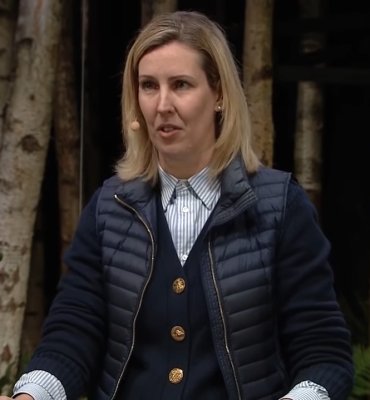
I think that I followed the influences of the people whose style and cooking I admired. When I went to Restaurant Gordon Ramsay in the early days, it was the best and the most exciting cooking in the UK at that time. Later on I worked with Thomas Keller and Alain Ducasse and eventually I chose to go to work in Le Louis XV because when I set foot in the kitchen, I just knew it was for me. I think you can see all of those influences in the techniques and the flavors that I use: there’s a real purity to the way that we cook and a real natural process here at my restaurant, Core, that always stayed with me from my time at Alain Ducasse.

The Talks, published interview, 27 December 2017 source ↗

Others on this question

View all 42 →
Linus C. Pauling, Ph.D. Chemist; winner of the 1954 Nobel Prize in Chemistry and the 1962 Nobel Peace Prize
One was Roscoe Gilkey Dickinson. He had got his doctorate in physical chemistry — x-ray crystallography — in 1920. He was the first person to get a Ph.D. from California Institute of Technology. And he was continuing with x-ray crystallography, determining the structure of inorganic crystals. After I had accepted appointment as a graduate student at California Institute of Technology, A.A. Noyes, the head of the division of chemistry and chemical engineering, wrote to say that he had decided I should work with Roscoe Dickinson on determining the structure of crystals. This was really extremely fortunate for me, in my opinion. I don’t think that there was any field that was more suited to my interests, and I don’t really know why Dr. Noyes selected me out of eight or ten new graduate students to do x-ray crystallography. Dickinson had a remarkable mind. He was a very careful investigator and thinker, a very logical thinker. When he was teaching me x-ray crystallography, he also taught me to ask at each stage in the argument, “What assumptions are being made? How reliable is the conclusion that you draw? What chance is there that one of the assumptions you have made is not correct?” “You should recognize,” he said to me, “that there is in almost every investigation a lack of complete rigor. You should understand just how reliable the arguments are that you are presenting.
Recorded Academy of Achievement interview, Big Sur, California, 11 November 1990 source ↗
Mohamed ElBaradei Director General of the International Atomic Energy Agency, 1997-2009; Nobel Peace Prize 2005
One of my mentors, Tom Frank, a professor of law at NYU, he was really instrumental in making me understand that we need to look at the global picture, and we always need to not take anything for granted, but go very much through a process of critical thinking before we formulate our views. So he was, I think, instrumental in shaping my views as to how to pursue my career in the future.
Recorded Academy of Achievement interview, 2006 source ↗
Gore Vidal Novelist, essayist and playwright
I wrote a little book called Screening History , in which I go in great detail into the movies that affected me growing up. This was in the years of puberty, and so on. The Prince and the Pauper , based on Mark Twain’s novel with the Mauch twins in it. All of the propaganda films I loved, because they were political.
Recorded Academy of Achievement interview, Los Angeles, California, 3 June 2006 source ↗
Olivia de Havilland Film actress; twice winner of the Academy Award for Best Actress
Thrust into my profession without any training whatsoever, I had to just flounder and just find my way. It was an agonizing experience. It’s like jumping off a diving board in the Olympic contest without knowing how to swim or dive, and I just had to find my way. So one day, I said to Jimmy Cagney, “Jimmy, what is acting?” and he said, “I don’t know.” He said, “All I can tell you is whatever you say, mean it,” and I thought that marvelous counsel.
Recorded Academy of Achievement interview, Washington, D.C., 5 October 2006 source ↗

More on taste & recommendation

Also answered this

Adam Gopnik, George Lucas, Rashid Johnson, Gertrude B. Elion, James Cameron, Sarah Paulson

Search the directory for somebody in particular.

Explore further

Report this answer