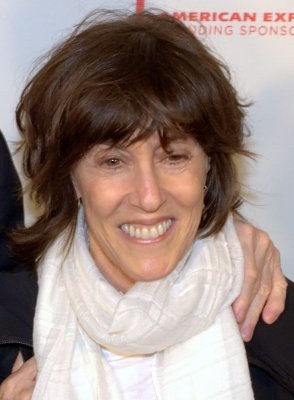
How has a failure, or apparent failure, set you up for later success? Do you have a favourite failure?
Recorded Nora Ephron said elsewhere, not written here
I wish I had learned more from failure than just mortification. I don’t think you learn much from success, and I don’t think you learn much from failure, unfortunately. It’s one of the sad things. You certainly learn that it’s more fun to have a hit than a flop.

Academy of Achievement interview, 21 June 2007 source ↗

Others on this question

View all 69 →
Norman Borlaug Plant pathologist and agronomist; Nobel Peace Prize, 1970
So we had to take this special exam and I flunked it. Erv Upton passed it, and I was scared. I figured if I failed it, I wouldn’t have any chance of getting in. So I failed it beautifully. ... And so it was the first year of this general college, which gave an Associate of Arts degree after two years, and that was expected to be a terminal course. It turned out it wasn’t.
Recorded Academy of Achievement recorded interview, American Academy of Achievement, 12 May 2008 source ↗
Richard Feynman Theoretical physicist; Nobel laureate in Physics, 1965
It was a brilliant idea: You have no responsibility to live up to what other people think you ought to accomplish.  I have no responsibility to be like they expect me to be.
Recorded Excerpt from “Surely You’re Joking, Mr. Feynman”, Engineering and Science / Caltech Magazine, 1985 source ↗
Chimamanda Ngozi Adichie Novelist and essayist
But after one year of medical school I fled. I realized I would be a very unhappy doctor and I really did not want to be responsible for the inadvertent death of my patients. Leaving medical school was a very unusual decision, especially in Nigeria where it is very difficult to get into medical school. Later, people told me that it had been very courageous of me, but I did not feel courageous at all. What I felt then was not courage but a desire to make an effort. To try.
Recorded Wellesley College 137th Commencement, 29 May 2015 source ↗
August Wilson Playwright; two Pulitzer Prizes for Drama
I was writing poetry. But I found the theater such an exciting experience that one day I went home to try. I had one character say to the other guy, “Hey, man, what’s happening.” And the other guy said, “Nothing.” I sat there for twenty minutes and neither of my guys would talk. So 1 said to myself, “Well, that’s all right. After all, I’m a poet. I don’t have to be a playwright. To hell with writing plays. Let other people write plays.” I didn’t try to write a play for a number of years after that first experience.
Recorded Bonnie Lyons and George Plimpton, Interview conducted over lunch at the Sheraton Hotel’s Fourteenth Street Bar, Atlanta, The Paris Review, Issue 153, Winter 1999, 1999 source ↗

More from Nora Ephron

View profile →
Question What is something everyone in your world agrees about that you think is wrong? Values & belief
People think that when you write something it’s cathartic, and I had written a lot of personal articles at Esquire, and people always say, “Oh God, it must have been so great when you finally wrote about having small breasts.” No. You get through that, and then you write it. It is not the writing that is the catharsis.
Recorded Academy of Achievement interview, 21 June 2007 source ↗
Question Which teacher, parent, coach or friend most made you who you are, and what did you learn from them? Relationships
Yes. I had a couple of great, great teachers. The teacher who changed my life was my journalism teacher, whose name was Charles Simms. I always tell this story. I love it. I had already decided that I was going to be a journalist. I didn’t know why exactly, except that I had seen a lot of Superman comics. Lois Lane and all of those major literary characters like that, but Mr. Simms got up the first day of class, and he went to the blackboard, and he wrote “Who, what, where, why, when, and how,” which are the six things that have to be in the lead of any newspaper story. Then he did what most journalism teachers do, which is that he dictated a set of facts to us, and then we were all meant to write the lead that was supposed to have “who, what, where, why, when, and how” in it. He dictated a set of facts that went something like, “The principal of Beverly Hills High School announced today that the faculty of the high school will travel to Sacramento, Thursday, for a colloquium in new teaching methods. Speaking there will be Margaret Mead, the anthropologist, and two other people.” So we all sat down at our typewriters, and we all kind of inverted that and wrote, “Margaret Mead and X and Y will address the faculty in Sacramento, Thursday, at a colloquium on new teaching methods, the principal announced today.” Something like that. We were very proud of ourselves, and we gave it to Mr. Simms, and he just riffled through them and tore them into tiny bits and threw them in the trash, and he said, “The lead to this story is: There will be no school Thursday!” and it was this great epiphany moment for me. It was this, “Oh my God, it is about the point! It is about figuring out what the point is.” And I just fell in love with journalism at that moment. I just fell in love with the idea that underneath, if you sifted through enough facts, you could get to the point, and you had to get to the point. You could not miss the point. That would be bad. So he really kind of gave that little shift of mind a major push.
Recorded Academy of Achievement interview source ↗

More on failure & regret

Also answered this

Agnès Varda, George Lucas, Francis Ford Coppola, Twyla Tharp, Joan Didion, J.K. Rowling

Search the directory for somebody in particular.

Explore further

Report this answer