How close have you come to death?

Originally asked

The Guardian, to a different person each week, The Q&A

A recurring Guardian Q&A prompt asked directly across respondents and years.

You answer as yourself. Nobody on FLAPSS answers as anybody else.

Recorded Winston Churchill said elsewhere, not written here
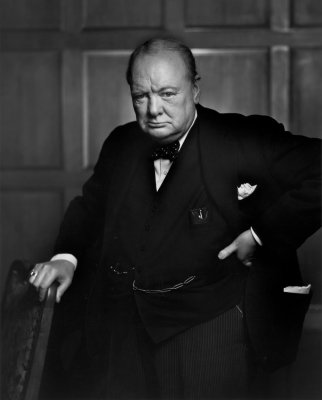
But in a flash there came across me a great project. The chine which the bridge spanned was full of young fir trees. Their slender tops reached to the level of the footway. 'Would it not' I asked myself 'be possible to leap on to one of them and slip down the pole-like stem, breaking off each tier of branches as one descended, until the fall was broken?' I looked at it. I computed it. I meditated. Meanwhile I climbed over the balustrade. My young pursuers stood wonder-struck at either end of the bridge. To plunge or not to plunge, that was the question! In a second I had plunged, throwing out my arms to embrace the summit of the fir tree. The argument was correct; the data were absolutely wrong. It was three days before I regained consciousness and more than three months before I crawled from my bed. The measured fall was 29 feet on to hard ground. But no doubt the branches helped.

Chapter of his autobiography, written at Chartwell in 1930, Winston S. Churchill, My Early Life (Thornton Butterworth, 1930), Project Gutenberg Canada, October 1930 source ↗

Others on this question

View all 210 →
Roger Ebert Film critic
One of these days I will encounter what Henry James called on his deathbed “the distinguished thing.” I will not be conscious of the moment of passing. In this life I have already been declared dead. It wasn’t so bad. After the first ruptured artery, the doctors thought I was finished. My wife, Chaz, said she sensed that I was still alive and was communicating to her that I wasn’t finished yet. She said our hearts were beating in unison, although my heartbeat couldn’t be discovered. She told the doctors I was alive, they did what doctors do, and here I am, alive.
Recorded Salon, excerpted from Life Itself: A Memoir, 15 September 2011 source ↗
Shakin' Stevens Welsh rock and roll singer and songwriter
I had a cardiac arrest in 2010. I also had a close call in the early days in Cardiff when I was in a band called the Denims. We were in a van driving along a narrow mountain road. Somebody wanted to go to the toilet, so we stopped, and afterwards the driver took a wrong turn and we went careering down the mountain. Everyone was screaming, it was like a nightmare. At the bottom was the railway line, but the van stopped just in time. We were very lucky.
Recorded The Guardian, The Q&A, The Guardian, 18 February 2023 source ↗
Jo Nesbø Norwegian writer and musician
Rock climbing in Oslo. During abseiling, I hadn’t tied a knot at the end of the rope and almost slid out. I saw the end of the rope at the last second, so I stopped abseiling.
Recorded The Guardian, The Q&A, The Guardian, 4 April 2026 source ↗
Cory Taylor Novelist and screenwriter
How many times I could have died before now, and in how many different ways. And yet I came close only once: a speeding sedan ran a red light, hit three other vehicles, and jack-knifed into my rear wheel split second after I’d stepped out of my parked car. A bystander described the scene to me later. “You were a millimetre away from losing your legs,” he said.
Recorded Edited extract from Dying: A Memoir, Text Publishing, The Guardian, 17 May 2016 source ↗

More from Winston Churchill

View profile →
Question What is the hardest thing that has happened to you, and what did you carry out of it? Failure & regret
Prisoner of War! That is the least unfortunate kind of prisoner to be, but it is nevertheless a melancholy state. You are in the power of your enemy. You owe your life to his humanity, and your daily bread to his compassion. You must obey his orders, go where he tells you, stay where you are bid, await his pleasure, possess your soul in patience. Meanwhile the war is going on, great events are in progress, fine opportunities for action and adventure are slipping away. Also the days are very long. Hours crawl like paralytic centipedes. Nothing amuses you. Reading is difficult; writing impossible. Life is one long boredom from dawn till slumber. Moreover, the whole atmosphere of prison, even the most easy and best regulated prison, is odious. Companions in this kind of misfortune quarrel about trifles and get the least possible pleasure from each other's society. If you have never been under restraint before and never known what it was to be a captive, you feel a sense of constant humiliation in being confined to a narrow space, fenced in by railings and wire, watched by armed men, and webbed about with a tangle of regulations and restrictions. I certainly hated every minute of my captivity more than I have ever hated any other period in my whole life. ... Therefore in after years, when I was Home Secretary and had all the prisons of England in my charge, I did my utmost consistent with public policy to introduce some sort of variety and indulgence into the life of their inmates, to give to educated minds books to feed on
Recorded Chapter of his autobiography, written at Chartwell in 1930, Winston S. Churchill, My Early Life (Thornton Butterworth, 1930), Project Gutenberg Canada, October 1930 source ↗
Question What did you want to be when you were growing up? Identity & self
At the end he asked me if I would like to go into the Army. I thought it would be splendid to command an Army, so I said 'Yes' at once: and immediately I was taken at my word. ... I was told later that he had only come to the conclusion that I was not clever enough to go to the Bar. However that may be, the toy soldiers turned the current of my life.
Recorded Chapter of his autobiography, written at Chartwell in 1930, Winston S. Churchill, My Early Life (Thornton Butterworth, 1930), Project Gutenberg Canada, October 1930 source ↗
Question What do you do when you feel creatively blocked or stuck? Craft & work
At that moment the loud approaching sound of a motor-car was heard in the drive. From this chariot there stepped swiftly and lightly none other than the gifted wife of Sir John Lavery. 'Painting! But what are you hesitating about? Let me have a brush—the big one.' Splash into the turpentine, wallop into the blue and the white, frantic flourish on the palette—clean no longer—and then several large, fierce strokes and slashes of blue on the absolutely cowering canvas. Anyone could see that it could not hit back. No evil fate avenged the jaunty violence. The canvas grinned in helplessness before me. The spell was broken. The sickly inhibitions rolled away. I seized the largest brush and fell upon my victim with Berserk fury. I have never felt any awe of a canvas since.
Recorded Essay first published in the Strand Magazine in 1921–22 and collected in Amid These Storms, 1932, Winston S. Churchill, Painting as a Pastime, Project Gutenberg Canada, 1932 source ↗
Question What happens when we die? Death & what remains
I cannot pretend to feel impartial about the colours. I rejoice with the brilliant ones, and am genuinely sorry for the poor browns. When I get to heaven I mean to spend a considerable portion of my first million years in painting, and so get to the bottom of the subject. But then I shall require a still gayer palette than I get here below. I expect orange and vermilion will be the darkest, dullest colours upon it, and beyond them there will be a whole range of wonderful new colours which will delight the celestial eye.
Recorded Essay first published in the Strand Magazine in 1921–22 and collected in Amid These Storms, 1932, Winston S. Churchill, Painting as a Pastime, Project Gutenberg Canada, 1932 source ↗
Question What is an unusual habit or an absurd thing that you love? Daily life
Until this time I had never been able to drink whisky. I disliked the flavour intensely. I could not understand how so many of my brother officers were so often calling for a whisky and soda. I liked wine, both red and white, and especially champagne; and on very special occasions I could even drink a small glass of brandy. But this smoky-tasting whisky I had never been able to face. ... Once one got the knack of it, the very repulsion from the flavour developed an attraction of its own; and to this day, although I have always practised true temperance, I have never shrunk when occasion warranted it from the main basic standing refreshment of the white officer in the East.
Recorded Chapter of his autobiography, written at Chartwell in 1930, Winston S. Churchill, My Early Life (Thornton Butterworth, 1930), Project Gutenberg Canada, October 1930 source ↗
Question How much rewriting or revision do you do? Craft & work
First of all, you can correct mistakes much more easily. One sweep of the palette-knife 'lifts' the blood and tears of a morning from the canvas and enables a fresh start to be made; indeed the canvas is all the better for past impressions.
Recorded Essay first published in the Strand Magazine in 1921–22 and collected in Amid These Storms, 1932, Winston S. Churchill, Painting as a Pastime, Project Gutenberg Canada, 1932 source ↗

More on death & what remains

Also answered this

Jon Sopel, Edmund Hillary, Anita Rani, Louis Theroux, Edwina Currie, John Lewis

Search the directory for somebody in particular.

Explore further

Report this answer