The question

How close have you come to dying?

Originally asked

The Guardian, to a different person each week, The Q&A

A recurring Guardian Q&A prompt asked directly across respondents and years.

You answer as yourself. Nobody on FLAPSS answers as anybody else.

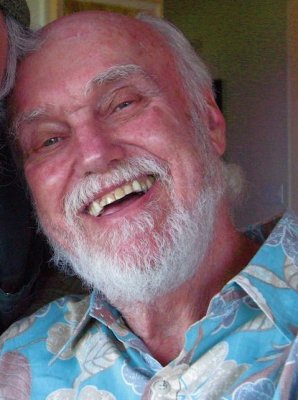
Ram Dass

Spiritual teacher and author

Recorded said elsewhere, not written here
I was close to death, and I didn't rush into my spirit. I spent the time in the hospital just looking at the pipes on the ceiling. ... I failed because this was a trauma, a trauma, and I'm not reacting to it spiritually.

Ross Simonini, The Believer, issue 115, by Skype from Hawaii, 20 November 2017 source ↗

Others on this question

View all 209 →
Orlando Bloom English actor
At 20, I fell from a fourth-floor window and broke my back. For four days they said I’d never walk again, but I had a miraculous recovery.
Recorded The Guardian, The Q&A, The Guardian, 20 March 2021 source ↗
Edmund Hillary Mountaineer and explorer; first ascent of Everest, 1953
I had one experience on the ice-fall with Tenzing. We were actually descending after having been further up the mountain, and it was getting close towards dark so we wanted to get through the ice-fall before darkness fell. We were roped together, but I was rushing down ahead in the lead. About halfway down there was a narrow crevasse. I guess it was about four feet wide, but just a bit too wide to step across. On the lower lip was a great chunk of ice stuck against the ice wall, and we’d used that as sort of a stepping stone to get over the gap. I came rushing down the hill without thinking too carefully. I just leapt in the air and landed on the chunk of ice, whereupon the chunk of ice broke off and dropped into the crevasse with me on top of it. It was interesting how everything seemed to start going slowly, even though I was free-falling into the crevasse. My mind, obviously, was working very quickly indeed. The great chunk of ice started tipping over and I realized, if I wasn’t careful, I’d be crushed between the ice and the wall of the crevasse. So I just sort of bent my knees and leapt in the air. I was still falling, but now I was a couple of feet clear of the chunk of ice. Time really seemed to pass even though I was falling clear, and I realized that unless the rope came tight fairly soon, I would come to a rather sticky end on the bottom of the crevasse. Up top, Tenzing had acted very quickly. He had thrust his ice axe into the snow, whipped the rope around it, and the rope came tight with a twang, and I was stopped and swung in against the ice wall. The great chunk of ice just carried on and smashed to smithereens at the bottom of the crevasse. Then really the rest was what I would have called a routine mountaineering matter. I had my ice axe and my crampons on my feet, so I chipped steps in the side. I was able to bridge the crevasse, and I worked my way up to the top and got safely out. I wouldn’t have said at any stage, because it all happened so quickly, fear really didn’t have much opportunity to emerge. My only idea was to get safely out of this unfortunate predicament. And of course, without Tenzing’s very competent mountaineer’s response, I certainly wouldn’t have made it. But once he had stopped me, then I was able to, using the techniques of mountaineering, to get myself safely to the top again.
Recorded Academy of Achievement interview source ↗

More from Ram Dass

View profile →
Question What is the hardest thing that has happened to you, and what did you carry out of it? Failure & regret
everyone saw me as a victim of a terrible illness. But what happened to my body was far less frightening than what happened to my soul. The stroke wiped out my faith. It took me so far from my guru that I felt my oxygen cord had been cut. ... I couldn't put the two together. Then I thought, maybe the stroke is a form of grace, and I hunted for that: how could the stroke be seen as grace? ... The stroke was giving me lessons, advanced lessons. ... It brought me into my soul, and that's grace.
Recorded Sara Davidson, Keynote talk at a conference on body and soul, Hyatt Regency, San Francisco, reported in the New York Times Magazine, The New York Times Magazine, 21 May 2000 source ↗
Question What lesson has mattered most in your life? Time & hindsight
Well, I—I've experienced that the stroke was grace. It was grace, for me, to play, to get inside, grace. I was dependent. These are things that I—those, those were graceful things. You know, pushed. And just go inside, to be—you're a quote "author" and it's a cultural thing, that role, to get into your head. But it's a head game. It's a head game. And I wanted to get down to my spiritual identity. And the stroke placed me at the spiritual identity.
Recorded Ross Simonini, The Believer, issue 115, by Skype from Hawaii, 20 November 2017 source ↗
Question What has life taught you about being human? Values & belief
The stroke cut out a lot of my external trips: my sports car and golf and my cello. This [ points to hand ] is just not much use with a cello, and I was—forced inside, and finding myself living in my inside. And that has made me be part of my soul. And that's perceiving my incarnation from here [ points to heart ], rather than from here [ points to head ]. And since this is words, I start from here, go over there.
Recorded Ross Simonini, The Believer, issue 115, by Skype from Hawaii, 20 November 2017 source ↗

More on death & what remains

Also answered this

Adrian Edmondson, Maggie O'Farrell, Meera Syal, Cory Taylor, Eve Ensler, Sara Pascoe

Search the directory for somebody in particular.

Explore further

Report this answer